Introduction
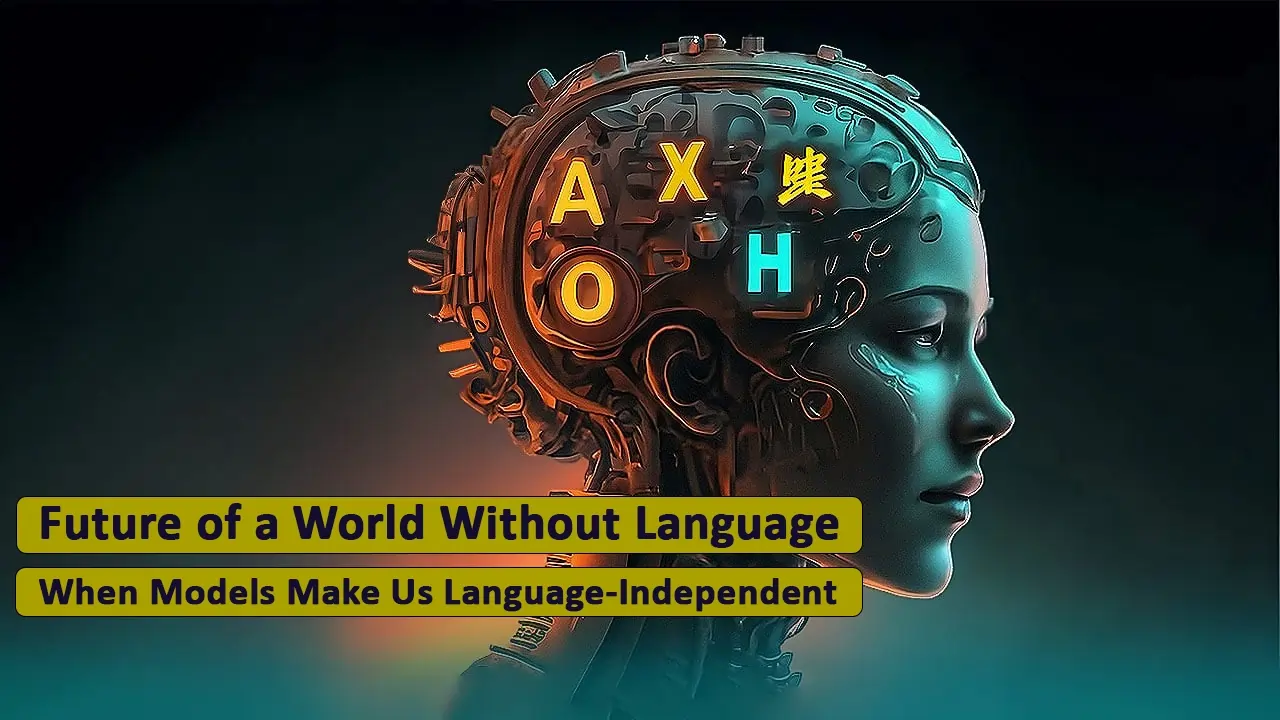
You wake up in the morning, and without uttering a single word, your smart assistant knows exactly what breakfast you want, which outfit is appropriate for today's meeting, and even how you're feeling today. It's the future that artificial intelligence models are building. A world where language is no longer our only means of communication, but machines easily interact with us through images, emotions, movements, and even our thoughts.
But what does this transformation mean for humanity? Can we truly envision a world where words lose their significance? In this in-depth article, we explore these fundamental questions and take a comprehensive look at a future where language may no longer be necessary.
Communication Revolution: From Words to Concepts
Understanding Without Words
One of the most amazing capabilities of
multimodal AI models is that they can understand complex concepts without needing verbal explanations. For example, you show the model an image of a damaged building and it immediately:
- Detects the dangerous condition of the building
- Identifies types of structural damage
- Suggests repair solutions
- Even calculates estimated costs
All of this without you writing a single word. This is just the beginning of the story.
Evolution of Human-Machine Interactions
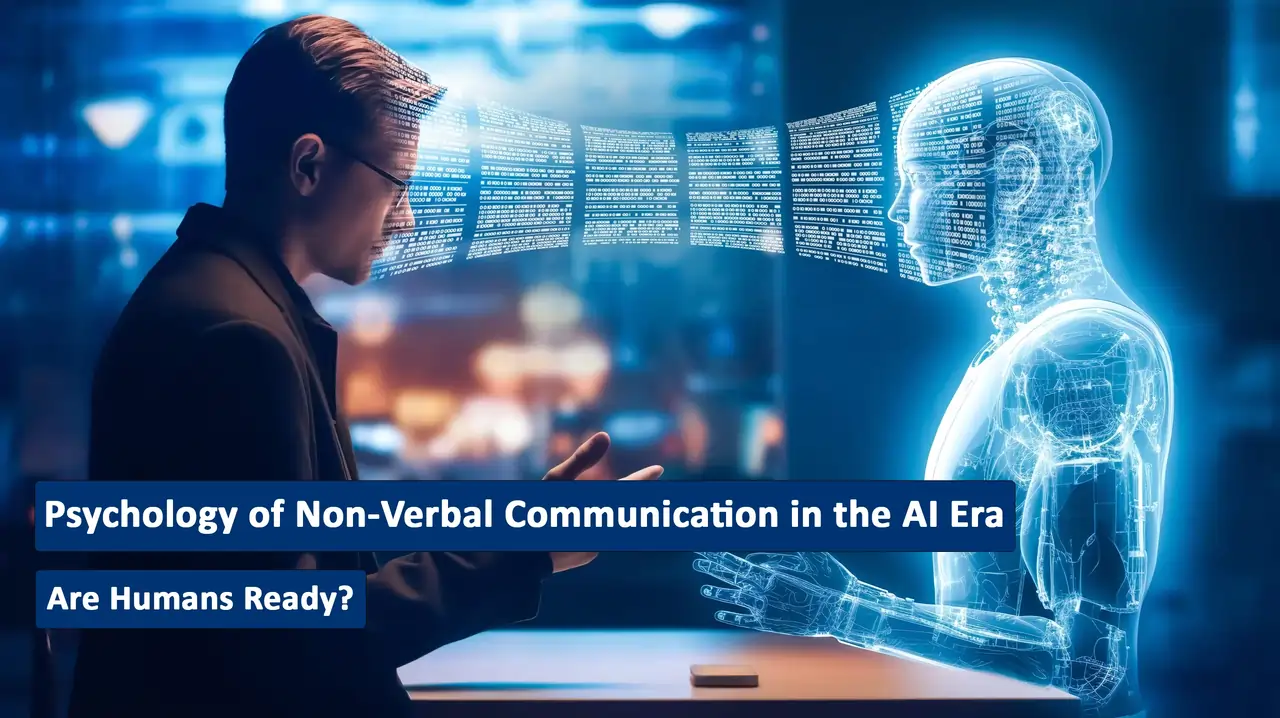
- Read facial emotions from images
- Analyze voice tone
- Interpret body movements
- Understand situational context
This means you no longer need to express your feelings in words - smart systems understand them on their own.
Advanced Models: Founders of the Language-Free World
Vision Transformers: Digital Eyes
- At a glance identify hundreds of details
- Understand complex spatial relationships
- Discover hidden patterns
- Analyze texture and texture
Imagine entering a room and your smart assistant immediately understands you want to rest (from your body posture), dims the lights, and plays relaxing music - all without verbal commands.
Image Generation Models: From Imagination to Reality
Real example: You just draw a simple sketch on paper and the system understands what architecture you want to design, what style you prefer, and even what budget constraints you have - all from your simple lines.
Video Models: Narration Without Words
- Show a facial expression
- Present a visual situation
- Convey an emotion
And the model creates a complete video narrative itself.
Brain-Computer Interfaces: The End of the Language Era?
Direct Thought-to-Machine Communication
- Convert brain signals into commands
- Decode simple thoughts
- Detect intentions before verbal expression
Imagine thinking "I'm hungry" and immediately the system starts ordering food, suggests your favorite menu, and even adjusts delivery time based on your schedule.
Neuralink and the Future of Communication
Companies like Neuralink are developing technologies that can:
- Convert complex thoughts directly into commands
- Share memories
- Transfer experiences
- Directly convey emotions
This means no need to "describe" a feeling or experience - you can transfer it directly to others.
Application Areas: Language-Free World in Practice
Medicine: Diagnosis Without Medical History
| Capability | Language-Free Operation |
| Medical Image Analysis | Disease detection from scans without verbal reports |
| Vital Signs Monitoring | Problem detection from sensor data |
| Patient Behavior Analysis | Pain or discomfort detection from movements and facial expressions |
| Treatment Prescription | Treatment suggestions based on biometric data |
Practical example: A patient who cannot speak (coma or stroke patient) - just by monitoring brain signals, eye movements, and physiological changes, the system can detect their pain level, needs, and even treatment preferences.
Education: Learning Without Teaching
- Learn from your learning patterns
- Present content visually
- Measure progress without tests
- Automatically identify weaknesses
Imagine a student learning a scientific concept just by observing it in virtual reality and interacting with it, without reading a book or listening to explanations.
Business: Management Without Meetings
- Analyze team performance from activity data
- Identify conflicts from communication patterns
- Discover talents without verbal evaluation
- Make strategic decisions based on real data
For example, the system can understand from work patterns, task completion speed, Slack interactions, and even voice tone in video calls that which team member is stressed and needs rest or more support.
Deep Challenges and Concerns
Losing the Richness of Language
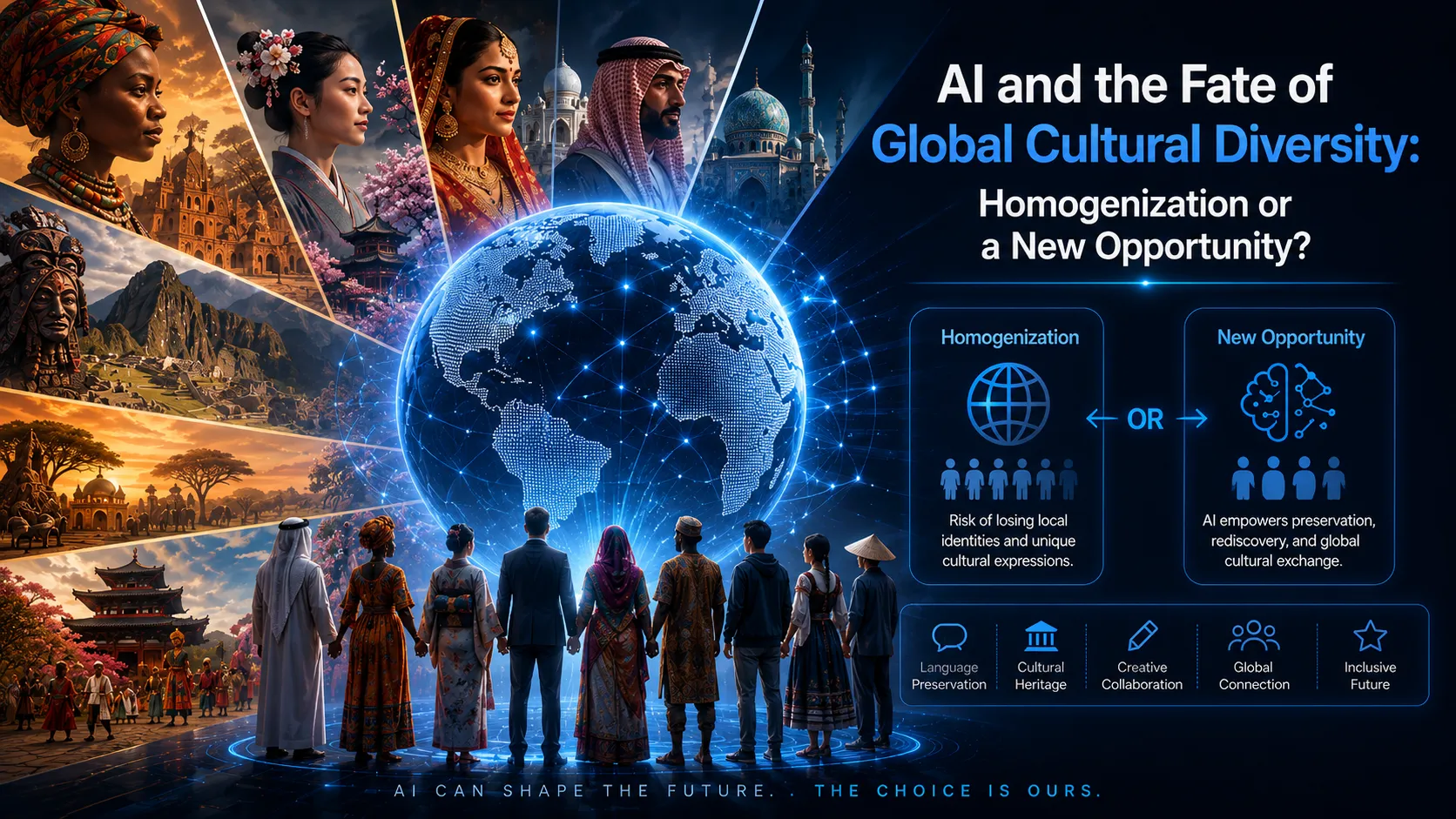
Language is not just a communication tool - it carries culture, history, and identity. Persian poetry, classical literature, linguistic humor - what happens to all of these in a language-free world?
AI's impact on art and creativity shows that while machines can create artworks, can they understand the
emotional depth of a Hafez poem or the
semantic layers of a Kafka story?
Privacy: Technology's Black Spot
- No thought is private
- Every emotion is monitorable
- All behaviors are recorded and analyzed
This level of transparency can seriously threaten individual freedom.
Digital Divide: New Inequality
Access to these advanced technologies is not available to everyone. This can lead to deeper inequality:
| Group | Technology Access | Consequences |
| Developed Countries | Complete and advanced | Ultra-fast communication, high productivity |
| Developing Countries | Limited and scattered | Falling behind in global competition |
| Wealthy Classes | Advanced brain-computer interfaces | Huge competitive advantage |
| Low-Income Classes | Old technology or no access | Deprivation from opportunities |
Cognitive Dependency: Human Brain Weakness
- Expression ability decreases
- Critical thinking weakens
- Linguistic creativity disappears
- Social skills atrophy
Just like a muscle that isn't used gradually weakens.
Future Communication Scenarios: How We Communicate Without Words
1. Instant Mental Translation: Direct Idea Transfer
In this scenario, humans can transfer their ideas directly in digital form or signals that AI translates.
Real and Tangible Example:
A physics scientist is envisioning a complex theory about quantum mechanics. They cannot explain it in simple language because it's too complex. But the AI system:
- Records their brain signals
- Identifies thought patterns
- Extracts the core concept
- Transfers it in a way another scientist can directly understand - without writing a paper or speaking
This is like copying a file directly from one brain to another, without converting it to text.
2. Visual and Sensory Communication: Shared Mental Experience
Application Scenario:
You want to explain to your friend what scuba diving in the ocean was like. In a language-free world:
- You simply recall the memory in your mind
- The AI system records all emotions, sights, sounds, and even the feeling of water pressure
- Your friend experiences this directly in their mind - as if they were there themselves
The concept of "conversation" transforms from verbal and written format to direct shared mental experience. You no longer say "the sunset was beautiful" - instead you show the sunset in a way that the other person has your exact feeling.
3. Intelligent Interpretive Models: Understanding True Intent
This is perhaps the most advanced scenario. AI can analyze and convey the actual intent and purpose instead of translating words, even if the person cannot express it themselves.
Real-World Example:
A patient with depression wants to explain to their psychologist how they feel, but cannot find the right words. Their emotions are too complex for language to express. In this scenario:
- The AI system analyzes their thought, emotional, and physiological patterns
- Understands the true intent and depth of emotions
- Conveys this understanding to the psychologist in a way they exactly understand what the patient is experiencing
Or an autistic child who cannot speak, but the system can convey their desires, fears, and needs to parents - something language could never provide.
4. Network Coexistence Scenario: Collective Mind
In this advanced scenario, individuals can be connected in a network and form a temporary "collective mind":
- An engineering team is designing a bridge
- All team members connect their minds to an AI network
- Ideas, concerns, solutions flow between everyone without speaking
- Collective and coordinated decision-making happens without meetings or negotiations
5. Complete Cross-Cultural Communication: End of Misunderstandings
One of the most exciting consequences is eliminating cultural and linguistic barriers:
- An Iranian and a Japanese person can communicate completely without a common language
- Cultural concepts that are untranslatable (like "Taarof" in Persian or "Wabi-sabi" in Japanese) are directly transferred
- Misunderstandings from incorrect translation disappear
| Communication Type | Traditional Language Limitation | Language-Free Solution |
| Scientific Idea Transfer | Need to write papers and lengthy explanations | Direct concept transfer from brain to brain |
| Experience Sharing | Limited and incomplete description | Complete transfer of emotions and senses |
| Expressing Complex Emotions | Vocabulary and expression limitations | Direct understanding of true intent |
| Team Collaboration | Long meetings and misunderstandings | Instant idea sharing in mental network |
| Cross-Cultural Communication | Translation problems and misunderstandings | Direct transfer of cultural concepts |
Future Scenarios: Three Probable Paths for Language
Scenario 1: Harmonious Coexistence
In this scenario, language and technology coexist. Humans still use language for deep and meaningful interactions, but benefit from technology for daily tasks.
For example, you recite poetry with friends at a party and enjoy language, but at work, smart systems coordinate tasks without needing to talk.
Scenario 2: Complete Transition
In this scenario, verbal language becomes a specialized skill - like playing an instrument or painting. Most people don't use it, and all communication happens through direct mental interfaces and AI models.
Generation Alpha might be the first generation to grow up in such a world and see language as an auxiliary tool, not primary.
Scenario 3: Return to Language
It's possible that after years of relying on technology, humanity realizes the unique value of language and a return movement begins. Like movements back to nature or organic food.
In this scenario, skillful use of language becomes a competitive advantage and a sign of distinction.
Role of Reasoning Models: Beyond Understanding
- Make complex inferences
- Understand cause-and-effect relationships
- Detect hidden contexts
- Understand real intent
This means they can not only communicate with us without words, but can understand better than ourselves what we really want.
Amazing example: You show a series of photos of your home without saying anything. The system reasons that you probably want to renovate, your budget is limited (from furniture), you like modern style (from decorations), and even provides a complete proposal with design, materials, and budgeting.
Impact on Various Industries
Advertising Industry: End of the Slogan Era
AI in advertising is fundamentally changing how to attract customers. No more need for
creative slogans:
- Completely personalized advertising based on user behavior
- Visual content directly connected to user emotions
- Virtual reality experiences that introduce products without words
Banking Industry: Services Without Conversation
- Analyze your financial situation from purchase patterns
- Suggest appropriate investments without verbal consultation
- Identify suspicious transactions
- Even predict your future financial needs
All without needing to talk to a consultant or fill out a form.
Automotive Industry: Driving Without Commands
- The car understands from your body state where you want to go
- Chooses the route based on your implicit preferences
- Adjusts the car interior based on your emotions
Supporting Technologies: Infrastructure of Language-Free World
Edge Computing: Instant Processing
Edge AI allows all this processing to happen without delay and without connecting to a central server. This means:
- Immediate responses to your needs
- More privacy (data stays on device)
- Higher efficiency in all conditions
Quantum Computing: Unparalleled Processing Power
- Identify more complex patterns
- Increase processing speed exponentially
- Enable deeper understanding of human behaviors
Internet of Things: Network of Sensors
- Every device has information about you
- All devices communicate with each other
- An integrated network of language-free understanding forms
Imagine entering home and refrigerator, TV, heating system, and even bathroom mirror all understand from your state that you had a tough day and automatically create a relaxing environment.
Emotional AI: Understanding Deeper Than Words
Emotional AI is one of the key technologies for creating a language-free world. These systems can:
- Detect complex emotions
- Understand emotional needs
- Provide empathetic responses
- Establish emotional relationships
Real example: A smart system in elderly homes can detect loneliness from movements, facial expressions, and behavioral patterns, and without the elderly saying anything, notify family members or suggest interactive activities.
Deep Ethical Issues
Right to Choose: Freedom vs. Convenience
Ethics in AI is one of the key debates. If systems decide based on our behavior and patterns without asking us:
- Do we still have freedom of choice?
- Can we deviate from system decisions?
- Who is responsible for system errors?
Manipulation: Dangerous Power
If systems can understand and influence us without words, this power can be dangerously abused:
- Subliminal advertising that unconsciously influences us
- Emotion manipulation for product sales
- Thought control through visual and sensory stimuli
Equality and Justice: Who Decides?
- How do we ensure they have no bias?
- How do we ensure fairness in decisions?
- Who determines the standards?
Future of Jobs: New Jobs in the Language-Free Era
With the transformation toward a language-free world, new jobs will emerge:
| Future Job | Job Description |
| Non-verbal Experience Designer | Designing language-free interactions between humans and machines |
| Emotional-Digital Translator | Converting human emotions to machine-understandable signals |
| Brain Interface Ethicist | Monitoring ethical use of mind-reading technologies |
| Language Relearning Teacher | Teaching language skills to those who have lost them |
| Linguistic Cultural Heritage Preservationist | Preserving and maintaining literature, poetry, and linguistic heritage of humanity |
Role of Generative Models in This Transformation
- Generate personalized content without verbal commands
- Create rich visual experiences
- Build completely interactive virtual worlds
- Provide multi-sensory responses
Foundation models, by learning from billions of human interaction examples, can:
- Understand general behavioral patterns
- Generalize to different contexts
- Operate in new situations without specific training
This means they can show appropriate reactions even in situations they've never seen, just from general understanding of human behavior.
Preparing for Transformation: What to Do?
For Individuals
- Learn multiple skills - don't rely only on language
- Get familiar with technology but don't become dependent
- Maintain critical thinking
- Strengthen language abilities - you might need it again
For Organizations
- Invest in multimodal interface infrastructure
- Define ethical standards for technology use
- Train employees for the new world
- Prioritize privacy
For Governments
- Establish protective laws for privacy
- Ensure fair access to technology
- Preserve linguistic cultural heritage
- Public education about opportunities and dangers
The future of AI is not limited to removing language. Rather, it can lead to:
- Deeper understanding between different cultures
- Unmediated communication between people with different languages
- Information access for people with language limitations
- More equality in service access
Conclusion: Is Language Dying or Evolving?
The answer is not simple. Language probably won't die but will evolve. Just like writing didn't eliminate speech, or telephone didn't eliminate in-person meetings - each found its place.
A language-free world doesn't mean a world without communication. Rather, it's a world with new and richer forms of communication. AI models free us from language limitations, but simultaneously place a great responsibility on us: the responsibility of ethical, fair, and humane use of this power.
The future depends on us. We can use this technology to create communication bridges or allow it to create new divides. The choice is ours.
Final question: Are you ready to live in a world where words no longer have their former power? Are you willing to sacrifice part of your human identity for more convenience and efficiency?
The answer to these questions will shape humanity's future.



 Social Impact & Future
 Social Impact & Future
 Social Impact & Future
 Social Impact & Future
 Social Impact & Future
 Social Impact & Future