Introduction
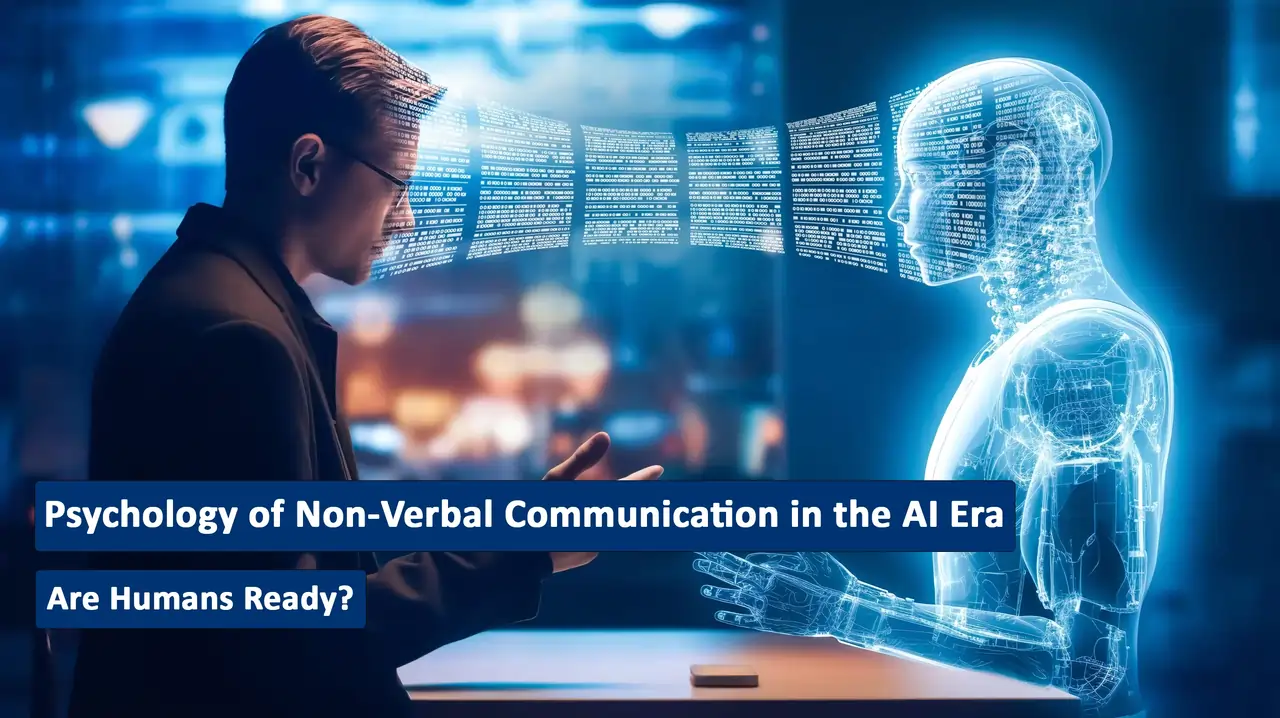
Imagine you can no longer hide your emotions. Every thought that crosses your mind is readable. Every small discomfort you feel is visible to others. Is this freedom or a prison?
In this deep dive, we examine the psychological impacts of non-verbal communication - not from a technology angle, but from the perspective of what this transformation does to our minds, emotions, and identity.
The Human Brain: Designed for Language
Million-Year Linguistic Evolution
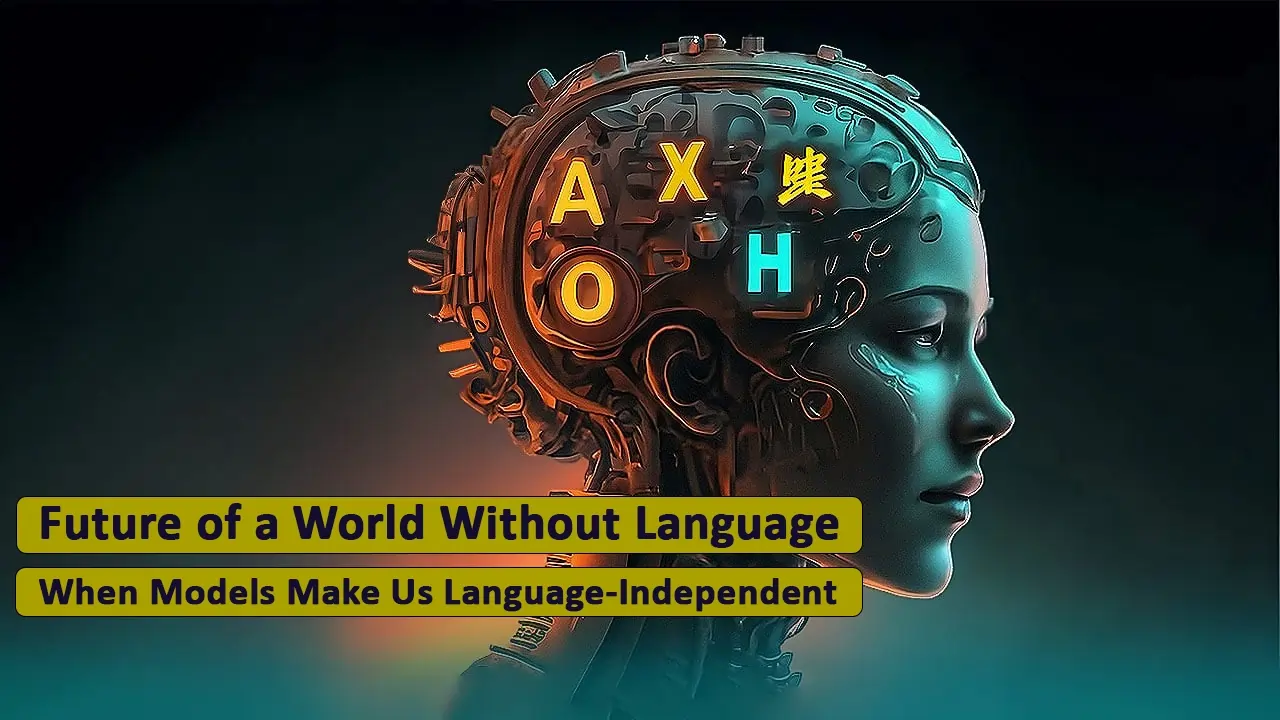
The human brain has evolved for 200,000 years to use language. Specific brain regions such as:
- Broca's area (speech production)
- Wernicke's area (speech comprehension)
- Prefrontal cortex (verbal planning)
All specialized for processing and producing language. Now imagine overnight we bypass this complex system. How does the brain react?
Real Research Example:
Studies on people who have lost their speech ability (aphasia) show that language loss not only affects communication ability, but impacts their personality, memory, and even thinking. Language isn't just a tool - it's part of our cognitive identity.
Neuroplasticity: Hope or Danger?
Fortunately, the brain has neuroplasticity - meaning it can adapt to new conditions. But this adaptation:
- Takes time (usually several years)
- Has cognitive costs (consumes significant mental energy)
- Is irreversible (old abilities may gradually disappear)
Imagine a generation growing up without language -
Generation Alpha might have a completely different brain: stronger in visual and emotional processing, but weaker in abstract and logical thinking.
Deep Psychological Impacts: What Happens to Us?
1. Loss of "Safe Mental Space"
One of the biggest psychological impacts is loss of mental privacy.
Current Status:
- You can think without anyone knowing
- You can have negative emotions and hide them
- You can "practice" in your mind before expressing
Future Status:
- All your thoughts are readable (by AI or connected systems)
- Your emotions are immediately monitored
- No more "safe mental space"
Psychological Consequence:
This can lead to chronic anxiety. Research shows humans need private space for mental health - even from themselves. The ability to "hide" part of yourself is a healthy defense mechanism.
| Psychological Need | With Language | Without Language (Complete Transparency) |
| Privacy | You can hide some thoughts | Everything is readable |
| Expression Control | You decide what to say | System automatically transmits emotions |
| Emotional Distance | You can distance yourself | Constant and direct connection |
| Safe Mental Space | Your mind is a private refuge | Your mind is publicly accessible |
2. Identity Crisis: Who Am I Without Words?
Many philosophers and psychologists believe that language shapes identity. We use verbal narratives to:
- Construct personal identity ("I am someone who...")
- Organize memories
- Give meaning to experiences
Psychological Example:
Research on dementia patients shows that when they lose the ability for linguistic narration, they feel a "loss of self." Even if they have memory, they cannot turn it into a coherent story - and this itself is a type of identity death.
Now imagine a generation that never constructed a verbal identity - are they the same "human" we know?
3. Emotional Fatigue: Continuous Empathy Overload
Emotional AI and direct mental communication mean you
always understand others' emotions.
Problem:
The human brain is designed for limited empathy. We can empathize deeply with 5-10 people, not hundreds. If we suddenly directly experience everyone's emotions around us:
- Emotional Burnout
- Secondary Depression
- Protective Emotional Numbing
Real Scenario:
You're in the subway. With mental communication, you immediately feel one passenger's sadness, another's stress, another's anger simultaneously. Your brain is emotionally bombarded. For protection, it numbs itself - and you become a cold person who can no longer feel.
4. New Anxiety Disorders: Fear of Being Read
Psychologists predict new anxiety disorders will appear:
"Transparency Anxiety":
- Constant fear that others will read your thoughts
- Avoiding social situations
- Continuous attempt to "control mind" (which is impossible)
"Negative Thought Phobia":
- Fear of having negative thoughts (because they're visible)
- Thought suppression (which leads to paradox - the more you suppress, the more it comes)
5. Marriage and Relationships: End of Love or Deepening?
Two Contrasting Scenarios:
Optimistic Scenario:
- End of misunderstandings
- Deep understanding of each other
- More authentic intimacy
Pessimistic Scenario:
- End of romance (no more "mystery")
- Fatigue from complete transparency
- Preference for AI relationships over human (because you have more control)
Psychological Study:
Research shows that some ambiguities are essential for healthy relationships. Couples who tell each other "everything" have less satisfaction than couples who have privacy boundaries. Why? Because individual space is a need, not a flaw.
Different Generational Readiness: Who Will Adapt?
Gen Z and Alpha: Natives of the New World
- Have differently developing brains (stronger visual and emotional areas, weaker linguistic areas)
- Have different concepts of privacy
- See non-verbal communication as natural
But doesn't this mean losing something? Will they ever understand the depth of a Hafez poem or the richness of a Dostoevsky novel?
Gen X and Boomers: Immigrants of the New World
Older generations face enormous challenges:
- Their brains are optimized for language and change is harder for them
- Their cultural values are incompatible with complete transparency
- Mental disorders are more likely in them
| Generation | Adaptability Level | Main Challenges | Potential Advantages |
| Gen Alpha | Very High | Loss of linguistic skills | Fast and deep communication |
| Gen Z | High | Transparency anxiety | Quick adaptation |
| Millennials | Medium | Value conflict | Flexibility |
| Gen X | Low | Severe resistance, depression | Preserving traditional values |
| Boomers | Very Low | Complete incompatibility | - |
New Mental Disorders: When Technology Makes Us Sick
Communication Dependency Syndrome
Similar to addiction, but to direct mental communication:
- Person cannot function without connection to mental network
- Intense loneliness when disconnected
- Anxiety from "not being seen" by others
Clinical Example:
A 22-year-old who has lived with a mental interface since age 15. When his device breaks for any reason, he has a panic attack. He feels his "real" self was in the network and is now lost.
Digital Multiple Identity Disorder
When a person is so involved with AI and mental networks that they no longer know which thoughts are truly theirs:
- Own thoughts vs thoughts received from network
- Own emotions vs empathetic emotions
- Own desires vs AI suggestions
Post-Disconnection Depression
Similar to post-travel depression, but more severe. When someone accustomed to non-verbal communication is forced to return to traditional methods:
- Feeling of extreme slowness and limitation
- Missing "complete understanding"
- Despair from language's limited capabilities
Cultural Impacts: East vs. West
Collectivist Cultures (like Iran, Japan, China)
These cultures might adapt more easily to non-verbal communication because:
- They value collective harmony
- Individual privacy is less sacred to them
- They're accustomed to "implicit understanding" and "reading the room"
Example: In Japanese culture, the concept of "以心伝心" (ishin-denshin) exists, meaning "heart-to-heart communication without words." These cultures are already more prepared.
Individualist Cultures (like America, Northern Europe)
These cultures face more serious challenges:
- Individual privacy is a core value
- Individual autonomy is central
- Complete transparency is incompatible with their values
Likely stronger resistance and higher rates of mental disorders in these societies.
Adaptation Solutions: How to Prepare?
1. Gradual Training from Childhood
- Controlled empathy practice: Learn to understand others' emotions without drowning in them
- Strengthening individual identity: Even with transparency, know where "I" is
- Boundary management: Learn to set emotional boundaries in a transparent world
Suggested Program:
- Age 5-8: Practice recognizing emotions through images and movements
- Age 9-12: Limited use of emotional AI systems (like 1 hour per day)
- Age 13-16: "Digital mental hygiene" education
- Age 17+: Informed decision for full or limited use
2. Designing "Privacy Mode" in Technology
- Private mode: Only some thoughts transmitted (which you choose)
- Semi-open mode: Only general emotions, not details
- Full mode: Complete transparency (only with user confirmation)
Technical Example:
Like Bluetooth that you can turn off, mental interfaces must have complete user control - not always on.
3. Novel Psychological Therapies
Psychologists must develop new approaches:
Communication Adaptation Therapy:
- Helping individuals adapt to non-verbal communication
- Practicing "mental pause" (think before automatic emotion transmission)
- Strengthening sense of control
Identity Restoration Therapy:
- Helping those who feel "loss of self"
- Strengthening internal narration (even if not external)
- Creating a "stable center" amid information flood
4. "Technology-Free" Spaces
Just like national parks that preserve nature, we must have mental communication-free zones:
- Restaurants, cafes, or parks where technology is prohibited
- "Digital vacations" where mental interfaces are turned off
- Traditional communities working only with verbal language
Case Study:
In Japan, some Buddhist temples have declared themselves "mental silence zones" - where no communication technology is allowed. These spaces have quickly become psychological refuges.
AI as Therapist
AI can help treat related disorders:
- Early detection of transparency anxiety
- Providing personalized exercises
- 24/7 mental health monitoring
But AI itself can be the cause of the problem - so we need precise balance.
AI as Adaptation Coach
Smart systems can:
- Gradually familiarize you with non-verbal communication
- Control information transmission speed
- Teach you to build "mental filters"
Practical Example:
An AI system that acts like a "breathing coach" - but for your mind. It teaches you how to stay calm and maintain control in the flood of emotions.
Different Scenarios: What Happens to Humanity?
Scenario 1: Successful Adaptation
In this scenario, humanity succeeds with gradual changes and strong psychological support:
- New generations grow up with technology
- Older generations receive adequate help
- Society establishes ethical laws to protect privacy
- Balance found between transparency and privacy
Result: Humanity evolves - not just technologically, but psychologically advances.
Scenario 2: Collective Mental Crisis
In this scenario, changes happen too quickly without preparation:
- Millions develop anxiety disorders
- Suicide rate increases
- Large portion of society refuses technology
- Deep social divide between "connected" and "disconnected"
Result: Society breaks - two parallel worlds with completely different values.
Scenario 3: Return to Language
After decades of experience, humanity realizes the price of complete transparency is too high:
- Widespread mental disorders
- Loss of creativity (which needs free mental space)
- Collapse of art and literature
Society decides to return to language - but not the old way, with lessons learned.
Result: A new balance - limited technology use, while preserving linguistic values.
| Scenario | Probability | Mental Health Status | Quality of Life |
| Successful Adaptation | 30% | Good - with necessary support | High - real progress |
| Collective Mental Crisis | 50% | Critical - collapse | Low - collective suffering |
| Return to Language | 20% | Medium - after crisis | Medium - preserving humanity |
Scientific Research: What Do We Know?
Studies on People Without Language
Research on deaf-blind individuals (like Helen Keller) shows:
- Humans can think without verbal language
- But the type of thinking is different (more visual and emotional)
- For abstract concepts (like "justice" or "freedom") there are limitations
Telepathic Communication Experiments
Early experiments on brain-to-brain communication have shown:
- People can transmit simple information (like "yes/no")
- But for transmitting complex concepts language is still needed
- People report feeling strange - like "someone is inside my head"
Scientific Conclusion:
Technology isn't ready yet, but human psyche even less so. We need time, not just for technology, but for psychological adaptation.
Mental Rights: Necessary Legislation
New laws must be established:
Right to Disconnect:
- Every person must be able to disconnect at any moment
- No organization can impose "mandatory connection"
Right to Private Mental Space:
- Some thoughts must be inaccessible
- Even with consent, some boundaries shouldn't be broken
Right to Mental Forgetting:
- Transmitted mental information must be deletable
- Like GDPR, but for thoughts
Responsibility of Tech Companies
- Conduct extensive psychological testing
- Study long-term effects
- Design multi-layered safety systems
- Provide free treatment if problems occur
What Should Be Done? Practical Guide
For Individuals
Strengthen Self-Awareness
- Verbal journaling (to know where "real me" is)
- Meditation and "inner voice" practice
- Thinking about values and identity
Define Personal Boundaries
- Decide what you want to share
- Learn to say "no" to social pressures
- Maintain safe mental space
Start Slowly
- Begin with simpler technologies (like AI tools for UX)
- Gradually move toward more complex
- If you feel discomfort, disconnect
For Parents
Prepare Children, But Protect
- AI education with clear boundaries
- Delay full use until adulthood
- Continuous conversations about emotions and experiences
Be a Healthy Role Model
- Use technology in balanced ways yourself
- Show that "disconnecting" is normal
- Create family space without technology
For Professionals
More Research
- Long-term studies on psychological effects
- Develop new diagnostic tools
- Create treatment protocols
Public Education
- Awareness about risks and opportunities
- Provide adaptation solutions
- Help with informed decision-making
Conclusion: Are We Ready or Not?
Short answer: No, we're not ready yet.
Long answer: Humans can be ready, but need:
✅ Sufficient time (at least 2-3 generations for complete adaptation)
✅ Extensive psychological support
✅ Strong ethical laws
✅ Human-centered technology design
✅ Deep research before public implementation
Important Warning:
If technology is implemented before psychological readiness, we will witness an unprecedented psychological crisis. History shows when technology gets ahead of culture and psychology, disaster occurs.
Hope:
But humans are adaptable beings. If we move forward with awareness, care, and empathy, we can build a future where non-verbal communication enriches us, not impoverishes us.
Final Question for You:
Are you willing to sacrifice part of your mental privacy for deeper understanding of others? Or do you want to remain the "traditional" human whose secrets are their own?
Your answer will shape humanity's future.



 Social Impact & Future
 Social Impact & Future
 Social Impact & Future
 Social Impact & Future
 Social Impact & Future
 Social Impact & Future