Introduction
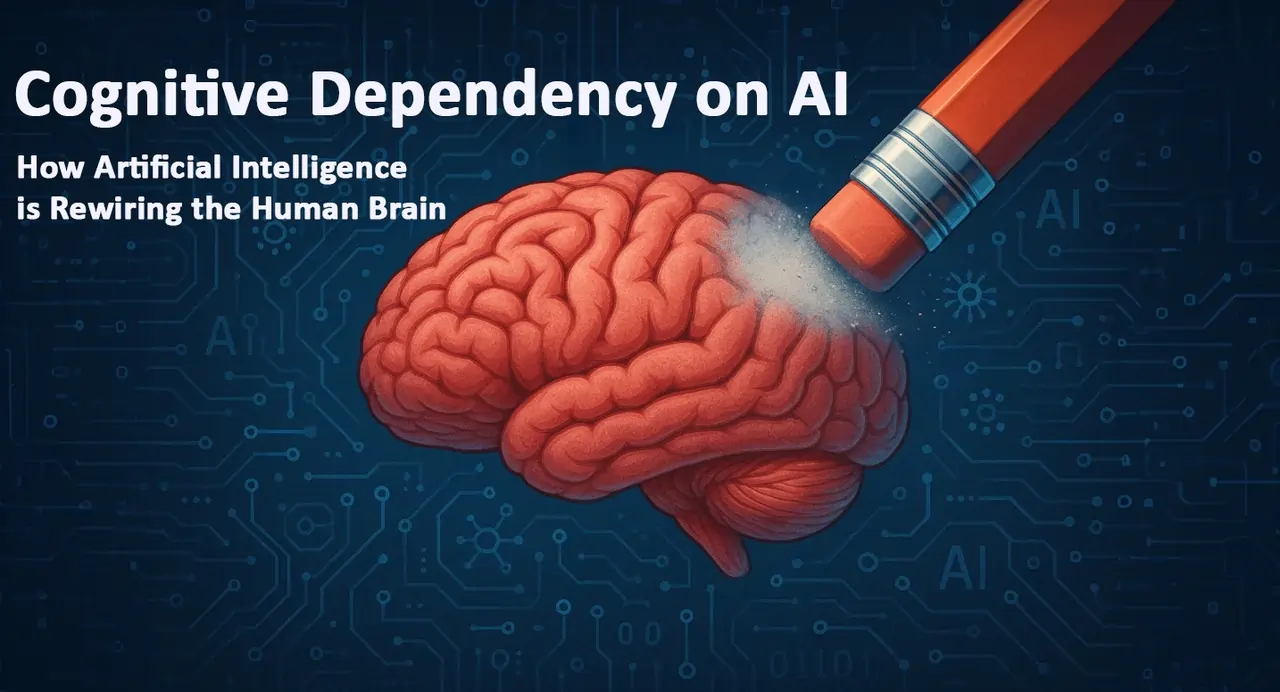
Imagine waking up in the morning, and the first thing you do is open ChatGPT to plan your day. Then you ask Gemini to write your work emails. At lunch, you debate a philosophical issue with Claude. In the evening, you ask an AI tool to write a 20-page report that you only edit. This is the daily reality for millions of people worldwide - but have you noticed what effect this increasing dependency is having on your brain?
New research shows that every time your brain delegates a cognitive task to
artificial intelligence, you're actually weakening your mental muscles. A study from MIT found that students who used ChatGPT to write essays experienced a
32% reduction in relevant cognitive load and an
83% inability to recall the text they had just written. This is a phenomenon researchers call "
cognitive debt" - and it could fundamentally change the future of human thinking.
But this isn't just a one-sided story. Artificial intelligence can be both architect and destroyer of our cognitive abilities. In this article, we'll explore in depth how AI is rewiring the neural structure of our brains, what biological mechanisms are involved in this process, and how we can use these powerful tools without sacrificing our inherent human capabilities.
Decoding "Cognitive Offloading": When Our Brain Gets Lazy
Cognitive Offloading means delegating mental tasks to external tools - something that actually started with the invention of pen and paper. But
large language models like ChatGPT and Claude have taken this phenomenon to a completely new level.
Brain vs. Machine: An Unequal Battle
When you use a calculator, you've only delegated a simple calculation. But when you ask ChatGPT to write an analytical article, you're actually delegating the entire process of analysis, synthesis, reasoning, and creativity. Research shows this is the key difference.
| Tool Type | Cognitive Offloading Level | Brain Impact | Practical Example |
| No Tool (Pure Brain) | 0% | Maximum neural activity and synaptic connections | Writing an article with only personal thinking |
| Search Engines (Google) | 30-40% | Moderate activity, maintained analytical skills | Searching for sources and synthesizing information |
| ChatGPT & LLMs | 70-85% | Minimal brain activity, reduced memory | Complete text generation by AI |
| Smart AI Usage | 20-30% | Maintained cognitive activity, enhanced creativity | Using AI for brainstorming and editing |
The Google Effect: A Prelude to Disaster
Before ChatGPT existed, we had the Google Effect - a phenomenon where people, instead of retaining information, only learn where to find that information. Research by Sparrow and colleagues in 2011 showed that our brains automatically forget information that is easily accessible.
But artificial intelligence has taken this problem to a completely new level. Now we don't just forget the location of information - we also forget the process of thinking. A Microsoft study of 319 knowledge workers showed a significant negative correlation (r=-0.49) between frequent use of AI tools and critical thinking scores.
Neuroscience of Dependency: What's Happening in the Brain?
Now we're getting to the heart of the matter - the actual changes occurring in your brain.
The Stunning MIT Research: EEG and Brain Secrets
MIT researchers conducted a 4-month study equipping 54 students with EEG (electroencephalography) headsets to examine their brain wave activity while writing essays. They divided participants into three groups:
- Pure Brain Group: Without any technological tools
- Google Group: With access to search engines
- ChatGPT Group: With full access to language models
The results were shocking. The group using ChatGPT showed:
- 32% reduction in relevant cognitive load
- 50% reduction in brain connectivity (alpha and theta waves)
- 60% increase in writing speed but with lower cognitive quality
- 83% inability to recall the text they had just written
Most interesting: even when they switched from ChatGPT to pure brain in the fourth session, the negative effects persisted. Their brains seemed to have forgotten how to work at full capacity.
Negative Neuroplasticity: When the Brain "Forgets" How to Think
Neuroplasticity is the brain's amazing ability to restructure and change its neural structures. This mechanism is usually positive - for example, when you learn a new skill, new synapses form.
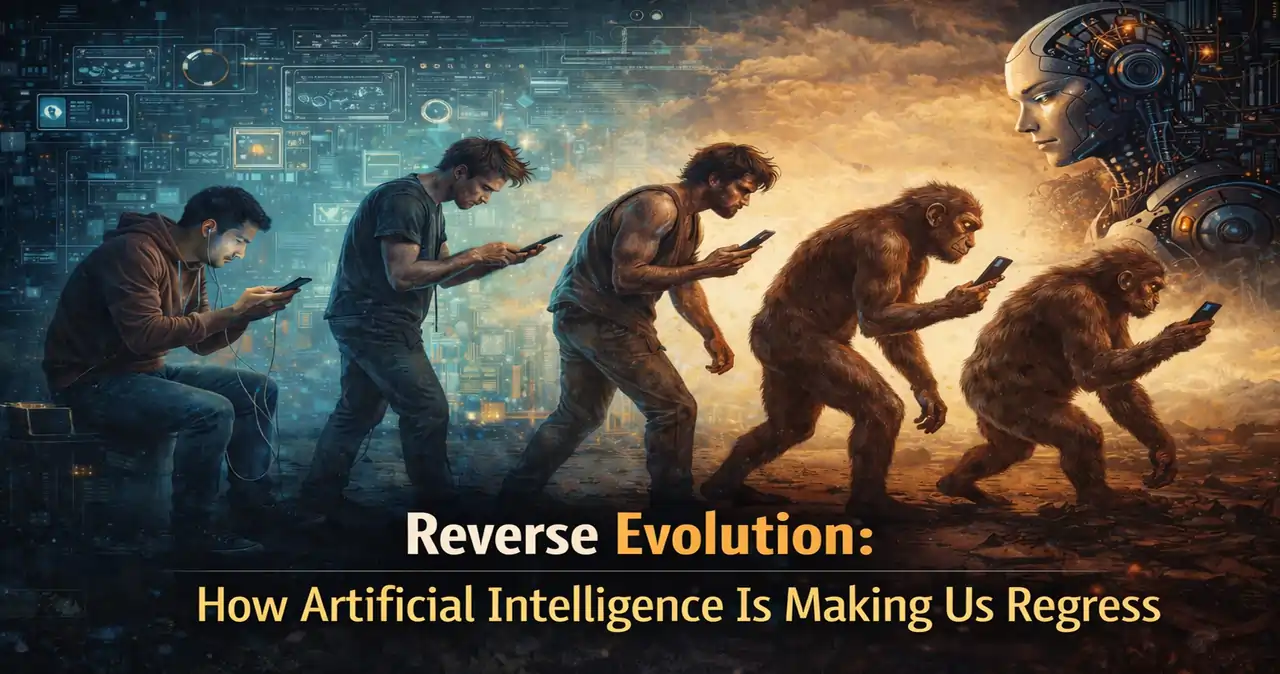
But this is a double-edged sword. When you constantly use AI, your brain learns not to use itself. Areas responsible for planning, reasoning, and creativity - especially the prefrontal cortex and hippocampus - become less active. Research shows this process can lead to:
- Cognitive Atrophy: Shrinking and weakening of neural networks associated with deep thinking
- Reduced Working Memory: Ability to hold and process information in real-time
- Weakened Critical Thinking: Inability to evaluate and analyze information independently
A study published in Frontiers in Psychology titled "From Tools to Threats" warned that excessive use of AI chatbots could lead to AICICA (AI Chatbot Induced Cognitive Atrophy) - a type of cognitive decline caused by dependency on artificial intelligence.
Specific Brain Regions Affected
EEG research has shown that excessive AI use specifically affects these brain areas:
Prefrontal Cortex: The executive control center, decision-making, and planning. When AI makes decisions for you, this area becomes less active.
Hippocampus: Key to converting short-term memory to long-term. When AI stores information, your hippocampus stays idle.
Parietal Lobe: Responsible for information processing and spatial attention. Reduced connections in this area have been observed with AI use.
Three Real Scenarios: Dependency in Action
Scenario 1: University Student
Sarah is a third-year computer engineering student. Last semester, she used ChatGPT for every programming assignment. She just had to describe the problem, and complete code was ready.
But in the midterm exam without internet access, Sarah couldn't even write a simple for loop. Her brain had forgotten how to design algorithms. She realized she hadn't actually learned anything - she'd only learned how to ask ChatGPT.
This example illustrates the real challenge of
machine learning in education - when tools replace the learning process.
Scenario 2: Content Writer
Mark was a content writer producing dozens of articles daily - all with AI help. All he did was minor edits. His income was great, but after six months, he noticed his personal creativity had completely dried up.
When he tried writing without AI, he couldn't even write a simple paragraph. His brain had become accustomed to waiting for ChatGPT to do the work. This is what researchers call "cognitive passivity habit".
Scenario 3: Executive Manager
David was a senior manager at an IT company who wrote all emails, reports, and strategic decisions with help from Claude and GPT-4. He felt his productivity had multiplied.
But in an important meeting with investors requiring immediate responses and quick thinking, he realized he couldn't think automatically. His brain expected time to get help from AI. This cognitive processing delay is one of the side effects of AI dependency.
Greater Dangers: Beyond the Individual
Collective IQ Decline: Reversing the Flynn Effect
The Flynn Effect was a phenomenon showing that human IQ had been continuously increasing from the 1930s to 1980s. But recent research in countries like the US, UK, France, and Norway shows this trend has reversed.
Researchers believe one of the main reasons is over-reliance on digital technology - and now with the emergence of AI, this trend could intensify. Barbara Oakley, cognitive psychologist, warned in an article titled "The Memory Paradox" that as AI tools become more powerful, the human brain may withdraw from hard mental effort.
Digital Divide and Cognitive Inequality
A more serious concern is that access to AI tools isn't equal for everyone. Those with access to advanced tools like
GPT-5 or
Claude Opus 4 can have high productivity. But those without access
fall behind.
This could lead to a
new cognitive stratification: those who know how to use AI versus those who either lack access or don't know how to use it properly. This concern is also raised in
the impact of AI on the future of work.
Digital Dementia: The New Generation Epidemic?
The term Digital Dementia was first introduced by Dr. Manfred Spitzer, a German neuropsychiatrist. He believes excessive use of digital devices can lead to symptoms similar to dementia in young people.
With the emergence of AI, this danger has multiplied. Research shows that Gen Z growing up with AI may:
- Have weaker short-term memory
- Lose the ability to solve problems independently
- Have weaker social skills (especially those interacting with romantic AI chatbots)
These problems intensify when AI use exceeds reasonable limits and becomes a real addiction. Warning signs include use exceeding 4 hours per day, anxiety without AI access, and inability to control usage - exactly like other digital addictions.
A Two-Sided Coin: Potential Benefits of AI for the Brain
But let's be fair - AI isn't necessarily the enemy of the brain. Everything depends on how you use it.
Smart Usage: When AI Becomes a Teacher
Research shows that purposeful and conscious use of AI can actually be beneficial:
1. Increased Working Memory: When AI performs repetitive and low-value tasks, your brain is freed to focus on more complex work.
2. Stimulating Positive Neuroplasticity: Some studies have shown that interacting with AI can create new cognitive challenges that promote neural growth - provided it's not used passively.
3. Personalized Learning:
Deep learning systems can adapt educational programs to individual needs and optimize learning.
Successful Practical Examples
2. Scientific Research: Researchers use
transformer models to analyze massive amounts of data - something impossible without AI. This allows the human brain to focus on
creative thinking and hypothesis formation.
3. Neurological Rehabilitation:
Brain-computer interfaces combined with AI can help brain-injured individuals recover their abilities.
Practical Solutions: How to Prevent Dependency?
The 80-20 Principle: The Golden Rule of AI Use
A simple but effective framework: Do 80% of the work yourself, delegate 20% to AI. This means:
- Ideation Phase: Think yourself, use AI only for supplementary brainstorming
- Research Phase: Research yourself, use AI only to help find sources
- Writing Phase: Write yourself, use AI only for editing and improvement
"Brain-First Activation" Technique
Before going to AI, definitely:
1. Think for 10 Minutes: Sit with paper and pen and think about the problem yourself.
2. Write Down Initial Ideas: Even if incomplete, this process activates neural networks.
3. Then Get AI Help: Not as a replacement, but as a complementary partner.
Cognitive Strengthening Exercises
Just as athletes train their muscles, you must train your mental muscles:
1. "AI-Free" Days: One full day per week work without using AI tools.
2. Manual Problem Solving: Solve mathematical or logical problems with paper and pen.
3. Handwriting: Research shows handwriting promotes memory strengthening and deeper learning.
4. Meditation and Mindfulness: These exercises help the brain maintain concentration and deep processing abilities.
SMART Framework for AI Use
Before using AI, ask yourself these questions:
- Specific: Do I know exactly what help I need?
- Measurable: Can I evaluate the result?
- Augmentative: Is AI complementing or replacing my work?
- Reflective: After using AI, do I reflect on what I learned?
- Time-bound: Have I set specific time limits for AI use?
These techniques and principles, while helpful, require a comprehensive step-by-step program for real brain recovery after AI dependency. If you feel your cognitive dependency is serious and you want to fully restore your mental abilities, follow the 30-Day Brain Recovery Program. This scientific program includes daily exercises, practical checklists, and proven strategies for complete cognitive independence.
The Future: Coexistence or Cognitive Extinction?
Two Extreme Scenarios
Dark Scenario: In this scenario, humans become completely dependent on AI. Future generations
can't think without AI. Basic cognitive skills like problem-solving, creativity, and critical thinking gradually disappear. This is what's discussed in
negative impacts of AI on humans.
Bright Scenario: In this scenario, humans learn to use AI as an augmentation tool. Optimal AI usage training is taught in schools. We reach an era where humans are smarter than before - not because AI does the work, but because they've learned how to collaborate with AI.
The Concept of "Augmented Mind"
Researchers at the MIT Augmented Cognition Lab are working on a concept called Augmented Mind - a mind augmented by AI but maintaining its independence.
This approach includes:
- Using AI as Copilot: Not Autopilot
- Teaching Meta-Cognitive Skills: Learning to think about your own thinking
- Developing Hybrid Learning Environments: Where AI and humans work side by side
The Role of AGI in the Future of Human Cognition
As we approach Artificial General Intelligence (AGI), the question arises: Do humans even need their cognitive abilities?
The answer is clear: Yes. Even if AGI emerges, the experience of being human - with all its emotions, creativity, and inherent consciousness - is something no machine can replace. The goal should be to design AI that enhances human capabilities, not replaces them.
The Role of Parents and Teachers: Raising the AI-Native Generation
The Generation Alpha Challenge
Generation Alpha - children born from 2010 onwards - are the first generation growing up with AI. This generation is fully familiar with
Gemini,
ChatGPT, and
Claude - even before they can write properly.
Parents and teachers must:
1. Set Smart Limits: Not complete prohibition, but balanced use.
2. Teach "AI Literacy": Just as we teach children to read and write, we must teach them how to
intelligently interact with AI. This is
prompt engineering.
3. Strengthen Human Skills: Focus on skills AI can't do - like empathy, true creativity, and philosophical thinking.
The Role of the Education System
Universities and schools must reconsider how they teach. Students can no longer be asked to do assignments that AI can easily complete. Instead:
- Process-Oriented Assignments: Not result-oriented
- Critical Thinking Assessment: Not memorization
- Interactive Projects: That AI can't do alone
Conclusion: The Choice Is Ours
Cognitive dependency on artificial intelligence is an undeniable reality. Research has clearly shown that excessive use of AI tools can lead to cognitive atrophy, reduced memory, and weakened thinking skills.
But this is only one side of the coin. The other side shows that smart, conscious, and purposeful use of AI can enhance our cognitive abilities, not weaken them.
The key to success is balance. Not complete rejection of AI (which is unrealistic), not complete surrender to it (which is dangerous). We must learn to see AI as a thinking partner, not a replacement for it.
The human brain is an evolutionary masterpiece that took millions of years to develop to this form. Using it, training it, and preserving it is not just a personal choice - it's an evolutionary responsibility.
So tomorrow morning when your hand reaches for ChatGPT, pause for a moment and ask: Do I really need this help, or am I just avoiding thinking?
The choice is yours.



 Social Impact & Future
 Social Impact & Future
 Social Impact & Future
 Social Impact & Future
 Social Impact & Future
 Social Impact & Future