Introduction
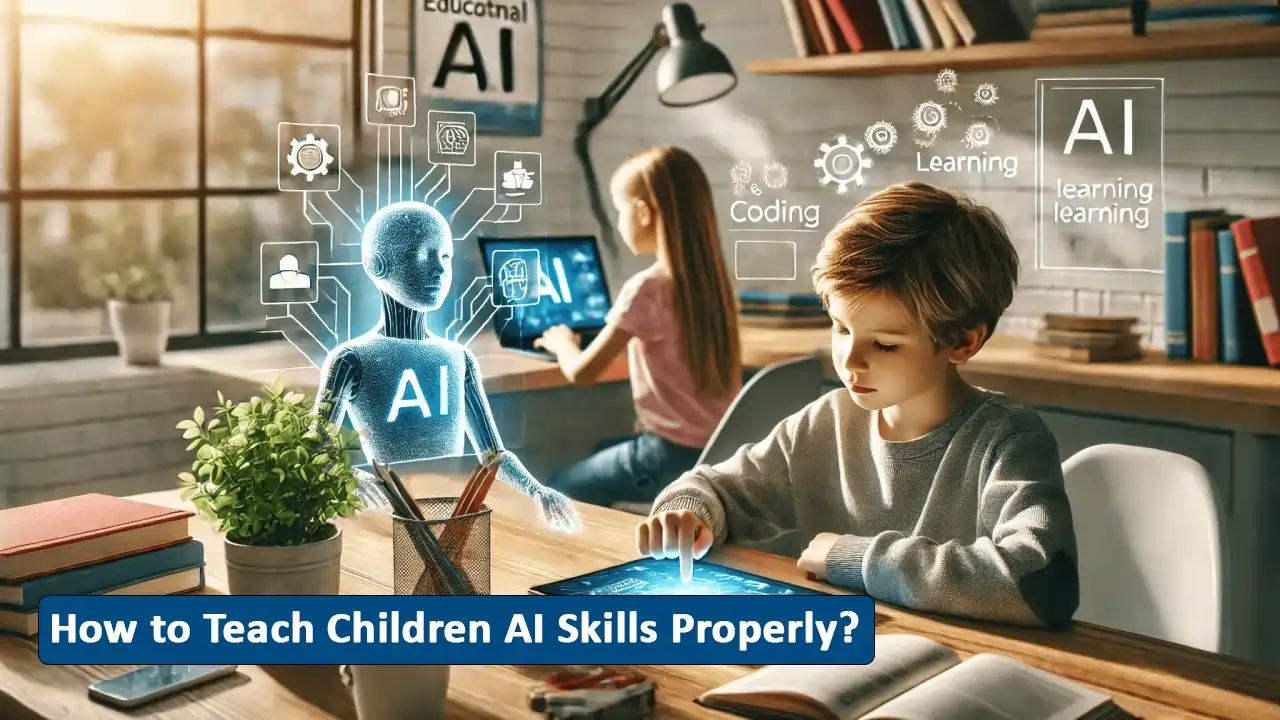
Today's generation of children is growing up in a world where artificial intelligence is an inseparable part of daily life. From voice assistants to smart educational apps, AI is everywhere. But the main question is: how can we prepare children to use this technology responsibly and creatively?
Teaching AI properly to children is not just a technological skill, but the key to empowering them for the future. Children who learn today how to interact with AI will be tomorrow's creators, innovators, and leaders of the digital world.
Why Teaching AI to Children Matters
The Changing Nature of Future Jobs
Children who become familiar with AI:
- Develop problem-solving skills better
- Have stronger computational thinking
- Pioneer in digital creativity
- Are better prepared for collaboration with machines
Reducing the Digital Divide
Early AI education for children helps reduce the digital divide. Children who don't have access to this technology today may be deprived of job and social opportunities tomorrow.
The Right Age to Start Teaching
Ages 5-7: Initial Familiarity
At this age, children can become familiar with simple AI concepts:
- Voice recognition: Using voice assistants to ask simple questions
- Smart games: Games that help learn patterns
- Educational robots: Simple robots that respond to commands
Ages 8-10: Practical Learning
Children this age can understand more complex concepts:
- Visual programming: Using platforms like Scratch to build simple programs
- Familiarity with language models: Simple use of ChatGPT for school projects with parental supervision
- Understanding algorithms: Understanding how AI makes decisions
11 Years and Older: Depth and Creativity
Teenagers can work with more advanced tools:
Key Concepts Children Should Learn
1. What is AI and How Does It Work?
Children should understand that AI is not like the human brain, but a tool that learns from data. This can be explained with simple examples:
Tangible Example: Imagine teaching your child to recognize fruits. Every time you show a red apple, they say "apple". After seeing dozens of apples, the child learns to recognize apples. AI does exactly the same thing, but with thousands of images!
Neural networks work exactly this way - by seeing many examples, they learn patterns.
2. Data: The Food of AI
Children should know that AI cannot work without data. This topic can be taught with a simple game:
Practical Activity: Ask the child to collect 10 photos of different animals and divide them into "bird" and "non-bird" categories. Then explain that AI does the same thing with millions of photos to learn to recognize differences.
3. Critical Thinking About AI
One of the most important skills is teaching children to
not believe everything AI says.
AI hallucination is a real problem that should be taught to children.
Real Example: When you ask ChatGPT about a historical topic, you should check the answer with reliable sources. Show this to your child and explain that AI sometimes makes mistakes.
Educational Tools and Platforms for Children
| Tool | Suitable Age | Key Feature |
| Scratch | 8-12 years | Visual programming and game building |
| Teachable Machine | 10-14 years | Training image and sound recognition models |
| AI Experiments by Google | 8+ years | Interactive AI experiments |
| Code.org AI for Oceans | 10+ years | Learning machine learning concepts |
| Quick, Draw! | 6+ years | Drawing recognition game by AI |
Teachable Machine: Practical AI Training
One of the most exciting tools for children is Google's Teachable Machine. With this tool, a child can:
- Build an image recognition model: For example, teach AI to distinguish between different pens
- Design a sound recognition model: Train AI to distinguish a dog's sound from a cat's sound
- Categorize movements: Teach AI to recognize different hand gestures
Suggested Project: Ask the child to build an emotion recognition system that by showing a happy or sad face, AI can recognize the emotion.
Google Colab: The Next Step
For teenagers ready for more serious learning,
Google Colab is the gateway to the real world of AI. With this platform they can:
- Write real Python code
- Work with TensorFlow or PyTorch
- Build simple deep learning projects
Practical Projects for Children
Project 1: Building a Personal Voice Assistant
Level: Intermediate (11-14 years)
Using simple tools, children can build a small voice assistant that answers specific questions. This project helps them understand
natural language processing.
Simple Steps:
- Define specific commands (e.g., "what's the weather?")
- Program appropriate responses
- Use speech recognition libraries
Project 2: Image Guessing Game with AI
Level: Beginner (8-10 years)
Children can use Teachable Machine to build a game that:
- Recognizes images of objects
- Gives points to the child
- Learns new patterns
Project 3: Story Generation with AI
Level: Intermediate to Advanced (10+ years)
Parents' Challenges and Concerns
Concern 1: Technology Addiction
Many parents worry that AI education will increase the time their child spends with digital devices.
Solution:
- Specific timing for AI work (e.g., 30 minutes a day)
- Combining digital activities with physical activities (building real robots)
- Using AI for practical projects that have physical results
Concern 2: Privacy and Security
Important Principles to Teach:
- Never share personal information with AI
- Use safe and educational platforms
- Always work under parental supervision
- Know that AI stores your data
Concern 3: Losing Basic Skills
Some worry that children, relying on AI, will forget basic skills like writing or calculations.
Balanced Approach:
- Use AI as a helping tool, not a replacement
- Learn the skill yourself first, then use AI for improvement
- Use AI to learn new concepts, not to do homework
Parents' Role in AI Education
You Need to Learn Too
Parents should be familiar with AI themselves to be able to guide their children. The following resources can be helpful:
Appropriate Learning Environment
Create an environment where the child can experiment and make mistakes without fear:
- Celebrate mistakes: When the child makes a mistake, explain that AI learns the same way
- Do joint projects: Build an AI project together
- Welcome questions: Always be responsive to the child's curiosity
Managing Expectations
Explain to the child that:
- AI is not magic, it's a tool made by humans
- AI has limitations and cannot do everything
- Human skills like creativity, empathy, and critical thinking are still vital
The Future That Today's Children Will Build
Children who become familiar with AI today can tomorrow:
Be Technology Builders
Be Global Problem Solvers
AI is a powerful tool for solving big challenges:
Be Ethical Technology Leaders
Children who become familiar with
AI ethics today can ensure tomorrow that technology advances for the good of humanity.
Recommended Learning Path
Stage 1: Familiarity (3-6 months)
- Playing with simple AI tools
- Watching educational videos
- Using voice assistants with supervision
Stage 2: Exploration (6-12 months)
- Building the first project with Scratch
- Training a simple model with Teachable Machine
- Familiarity with basic concepts of machine learning algorithms
Stage 3: Depth (1-2 years)
- Learning Python
- Working with Keras or PyTorch
- Building more complex projects
Stage 4: Expertise (2+ years)
- Working on real projects
- Participating in AI competitions for teenagers
- Starting to learn more complex models
Free Educational Resources
Online Courses
Many reputable platforms offer free courses for children:
- Code.org: Introductory AI courses for children
- MIT App Inventor: Building mobile apps with AI capabilities
- Khan Academy: Programming and computer science courses
Recommended Books
- "AI for Kids" by Chris Wailey
- "Machine Learning for Kids" by Dale Lane
- "Hello Ruby: Adventures in Coding" for younger children
YouTube Channels
- Crash Course AI
- Code.org
- Kurzgesagt (for understanding general AI concepts)
Key Points for Success
1. Be Patient
Learning AI, like learning any other skill, takes time. If the child gets discouraged at first, don't worry.
2. Use the Child's Interests
3. Encourage, Don't Pressure
Some children are more interested in technology. If your child has less interest, don't force them. They might become interested later.
4. Build Community
Help the child connect with other children interested in AI. This can be through:
- Local coding clubs
- Online competitions
- Educational groups
Future Outlook
Generation Alpha and AI
Generation Alpha is the first generation growing up with AI from the start of life. These children:
- Are AI-Native: Like the previous generation that grew up with the internet
- Have different expectations: They expect technology to be smart and personalized
- Will have unique skills: Natural interaction with smart systems
Emerging Technologies
Today's children should become familiar with technologies that will be everywhere tomorrow:
Future Jobs
Today's children may work in jobs that don't have names yet:
- AI-Human Experience Designer
- Machine Ethics Trainer
- Smart Home Systems Architect
- AI Security Specialist
Safety and Security Tips
Protecting Children's Data
One of the most important topics to teach children is digital security:
- Never share personal information with AI: Full name, address, phone number, school name
- Use parents' accounts: Until the child becomes responsible
- Use face images carefully: Especially on online platforms
Teaching Recognition of Inappropriate Content
Children should know:
- AI may generate incorrect or inappropriate content
- Always check AI-generated content with parents
- If you see something strange, immediately inform parents
Cybersecurity and AI
- Some bots are malicious
- Always use reputable platforms
- Don't click on suspicious links and messages
How to Maintain the Child's Interest?
Gamification of Learning
Turn AI learning into a game:
Weekly Challenge: Define a small AI challenge for the child every week:
- Week one: Train AI to recognize 5 objects
- Week two: Build a simple game with Scratch
- Week three: Write a story with AI help
Rewards and Encouragement
- Give virtual badges for completing each project
- Create an "AI Projects Notebook" for the child
- Share successful projects with the family
Connection to the Real World
Show the child how AI is used in everyday life:
- How Netflix suggests movies (recommendation systems)
- How Google Maps suggests routes
- How Spotify finds new music
Fixing Common Mistakes
Mistake 1: Thinking AI is Only for Geniuses
Reality: Every child can work with AI. Like learning any other skill, it just needs practice.
Mistake 2: Must Become a Programmer
Reality: Many AI tools can be used without coding. Programming is just one way to work with AI.
Mistake 3: AI Does Everything
Reality: AI is a tool that gives the best results alongside human creativity. Sole reliance on AI weakens important skills.
Mistake 4: Only Boys Are Interested in Technology
Reality: Artificial intelligence is for everyone. Girls can succeed in this field as much as boys. We must reduce the gender gap in technology from today.
Building a Home Learning Program
Suggested Weekly Program
Monday - Concept Familiarity (30 minutes):
- Watch a short educational video
- Discuss what they learned
- Take notes in AI notebook
Wednesday - Practical Practice (45 minutes):
- Work on practical projects
- Use educational tools
- Record progress in notebook
Friday - Play and Creativity (30 minutes):
- Play with AI tools
- Create creative things
- Share with family
Progress Assessment
No need for grading! Instead:
- Ask the child to explain what they built
- Save projects in a digital folder
- Review progress every month
Practical AI Applications Children Can See
In Education
Children can see how AI helps with learning:
- Educational programs that adjust difficulty level
- Language learning apps like Duolingo
- Homework help tools (with supervision)
At Home
Daily Examples:
- Voice assistants like Alexa or Google Assistant
- Face recognition to unlock phones (facial recognition with AI)
- Fun filters in photo apps
- Smart home security systems
In Entertainment
Teaching Soft Skills Alongside AI
Collaboration and Teamwork
Children should learn:
- How to work with others on AI projects
- How to share their ideas
- How to use feedback
Creative Problem Solving
AI can help children:
- See problems from different angles
- Find new solutions
- Not be afraid of failure and try again
Critical Thinking
Questions children should learn to ask:
- How did this AI reach this conclusion?
- Is this answer logical?
- What data was used to train this AI?
- Does this AI have bias?
Success Stories from Around the World
Finland: AI Education Pioneer
Finland was the first country to include AI education in school curriculum. Finnish children become familiar with AI concepts from age 10.
Singapore: Practical Learning
Singapore focuses on practical projects. Children learn AI by building real robots and practical applications.
Japan: Combining Tradition and Technology
Japan combines AI with traditional skills. Children learn how to use AI to improve traditional arts.
How to Cooperate with School?
Talking with Teachers
Parents can:
- Ask teachers to include AI projects in class
- Share educational resources with school
- Volunteer for AI extracurricular classes
Creating School AI Club
With cooperation of other parents and teachers:
- Launch a coding and AI club
- Hold small competitions
- Invite local experts
The Future of AI Education for Children
Personalized Learning
The future of education with AI will be completely personal:
- Each child learns at their own pace
- Content adapts to the child's interests
- Smart systems identify and strengthen weaknesses
Virtual Reality and AI
Combining VR and AI creates immersive learning experiences:
- Virtual museum tours with AI guides
- Virtual science labs
- Social skills practice with AI characters
Future children will work with AI agents that:
- Can perform complex tasks
- Learn from experience
- Collaborate with humans
Parents' Frequently Asked Questions
Is AI Dangerous for Children?
Like any other technology, AI is a tool. With proper education and appropriate supervision, it is not only not dangerous, but can be very useful.
How Much Time Should They Spend Learning AI?
30-60 minutes a day is enough to start. Quality is more important than quantity.
If I Don't Know AI Myself, How Can I Teach?
Learn together! This is a great opportunity for joint learning. Many resources exist for parents.
Do We Need a Powerful Computer?
No! Many AI educational tools also work on tablets and even smartphones.
Conclusion and Final Words
Teaching AI properly to children is an investment in the future. Children who become familiar with AI today are not only better prepared for future jobs, but can also build a better future.
The key to success on this path is balance:
- Between teaching technology and maintaining human skills
- Between using AI and strengthening personal creativity
- Between familiarity with capabilities and awareness of limitations
- Between technology and real social interactions
With proper training, children can use AI as a tool to enhance their abilities, not become dependent on it. They can be the creators of a world where humans and machines together build a better life.
The start of this path is today. With a simple game, a small project, a conversation about how AI works. Every small step is a step toward a brighter future.
Remember: The goal is not to turn children into machines, but to help them collaborate better with machines and build a world where technology serves humanity.
The future belongs to children who learn today, remain curious, and with their creativity, change the world. You as parents, teachers, and guides have a key role in this transformation. With proper education, all children can shine in the age of artificial intelligence and become tomorrow's world leaders.



 Social Impact & Future
 Social Impact & Future
 Social Impact & Future
 Social Impact & Future
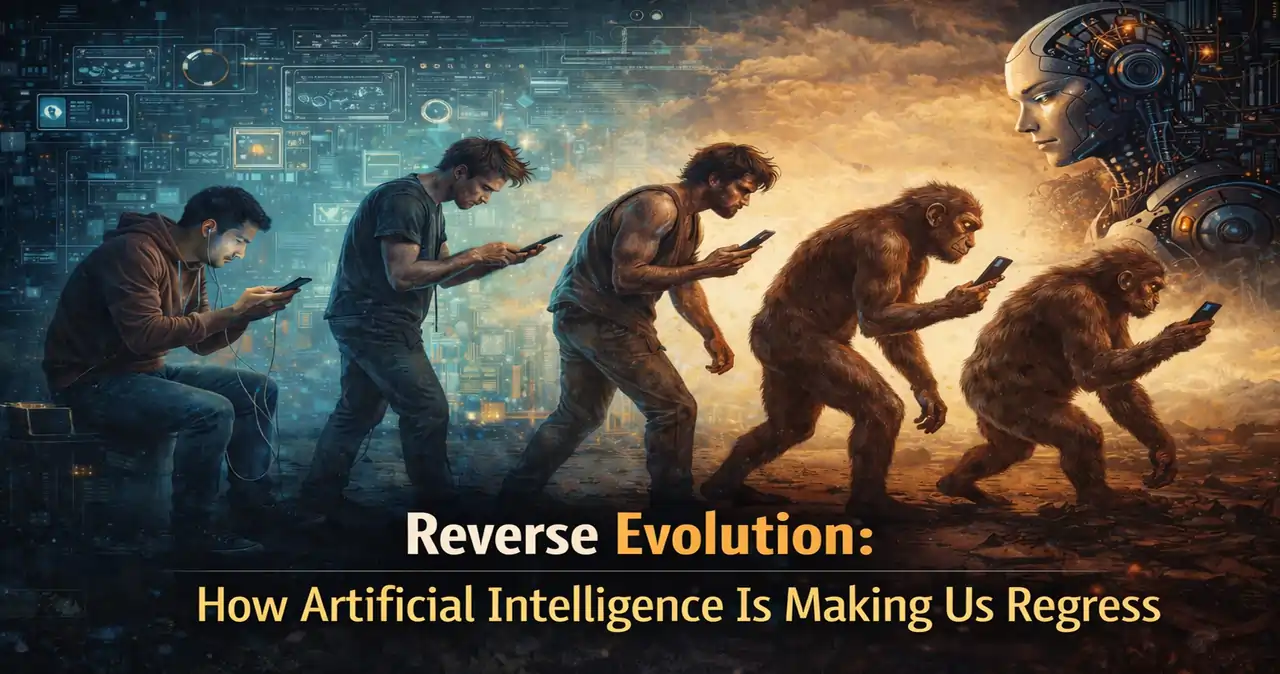 Social Impact & Future
 Social Impact & Future