Introduction
It's morning. You wake up, but before your eyes fully open, your hand automatically reaches for your phone. The first thing you do is check notifications. Instagram's algorithm decides what you see. Spotify's algorithm chooses what music you listen to. Google Maps' algorithm determines your route. And at the end of the day, Netflix's algorithm selects what movie you watch.
Now the fundamental question: Were these decisions really yours? Or did the algorithms decide for you?
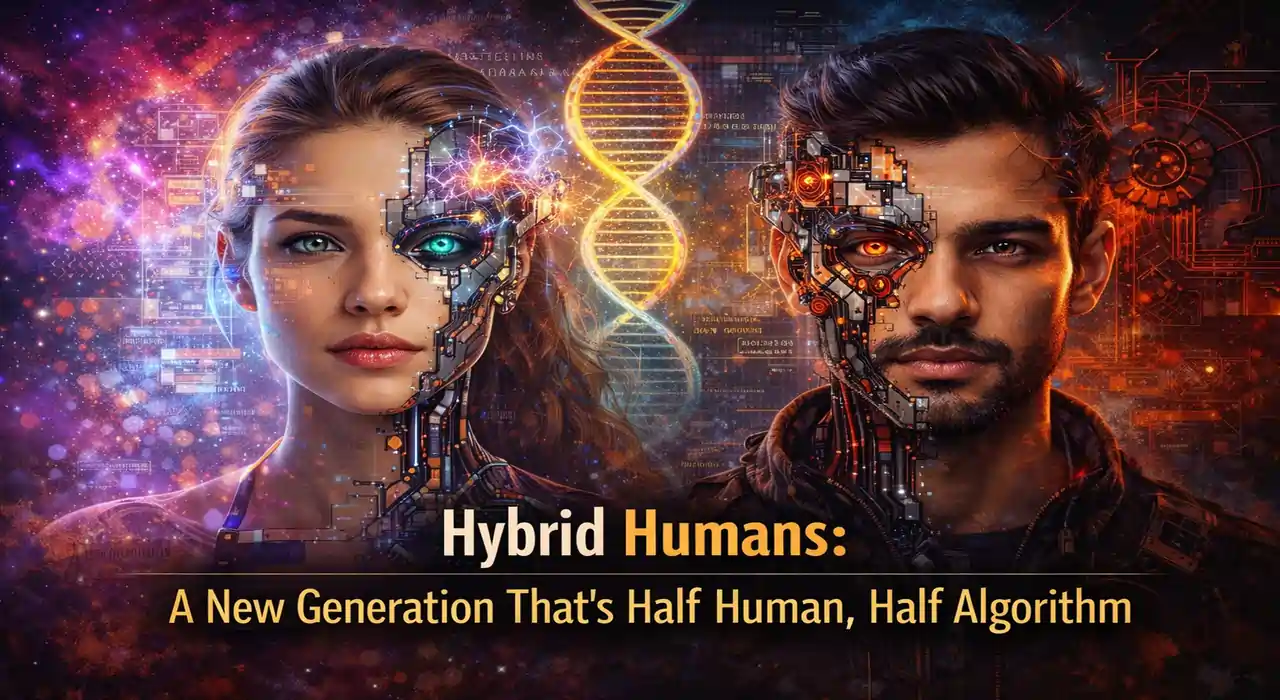
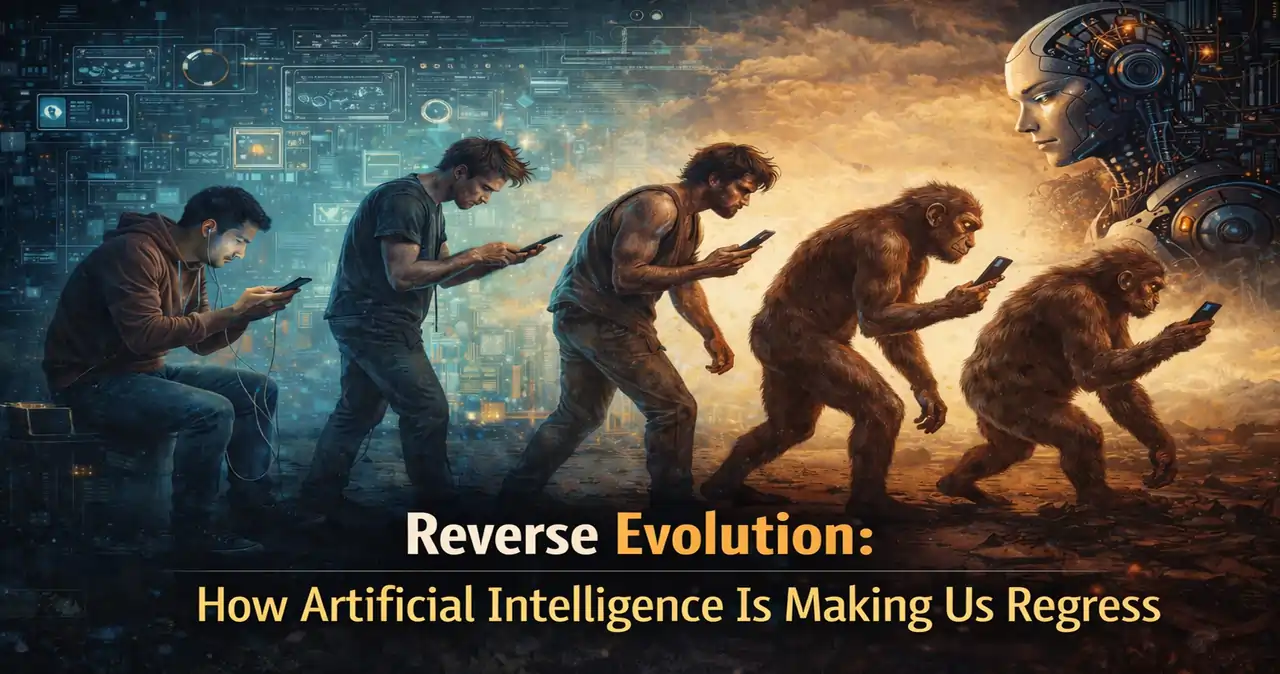
We are becoming a new type of human - Hybrid Humans - beings who can no longer think, decide, or even feel without algorithms. We are half human, half code. And this unprecedented transformation is changing the very nature of "being human".
This article deeply explores this phenomenon: how are we merging with algorithms? What price do we pay for this hybridization? And the ultimate question: can we still call ourselves pure humans?
Defining Hybrid Humans: Who Are We?
Beyond Cyborg: Software Integration, Not Hardware
When we talk about Cyborg, we usually imagine humans with robotic arms or bionic eyes. But Hybrid Humans are something different:
Cyborg: Physical integration of human and machine (like advanced prosthetics,
Neuralink)
Hybrid Human: Cognitive and behavioral integration of human and algorithm, without needing physical devices installed in the body
The fundamental difference is that hybrid humans don't consciously realize they're integrated. You think you're making your own decisions, but algorithms have become an inseparable part of your thinking process.
Daily Examples: You're Probably a Hybrid Human
Let's be honest. How many of these apply to you?
✅ Can't navigate without GPS - even in your own neighborhood
✅ Can't decide where to eat without your phone - must check Google Maps and reviews
✅ Can't answer a simple question without Google - even if you knew the answer before
✅ Can't discover new music without algorithm recommendations - you no longer search for music yourself
✅ Can't choose books, movies, or products without recommendation systems - always rely on ratings and reviews
✅ Can't do simple calculations mentally - immediately open calculator
✅ Can't write English without spell checker - have forgotten spelling of many words
✅ Can't post a photo without filters - must use beautification algorithms
If more than 5 apply to you, congratulations: you're a hybrid human. Your brain no longer works alone, but is a distributed system with part of it running in the cloud.
Stages of Becoming a Hybrid Human
Stage 1: Dependency
Initially, technology is just a helpful tool. You can live without it, but having it is more comfortable:
- Using GPS for long trips
- Googling information you don't know
- Using calculator for complex calculations
At this stage: You still have control. Technology is your servant.
Stage 2: Reliance
Gradually, you feel incapable without these tools:
- Can't find even simple routes without GPS
- Google every small question, even if you know the answer
- Can't do even simple addition without calculator
At this stage: You feel "incomplete" without technology.
Stage 3: Integration
Finally, the boundary between you and algorithm disappears:
- You no longer know which decisions were yours and which were the algorithm's
- Your taste was shaped by recommendation algorithms
- Even your thoughts are influenced by content the algorithm showed you
At this stage: You and the algorithm have become one. You are a hybrid human.
How Have Algorithms Become Part of Us?
1. Memory Outsourcing
Before Google: You had to keep phone numbers, addresses, and important information in your mind.
After Google: You no longer need to memorize. "Why should I remember when I can Google it?"
Result: Your memory has weakened. Studies show people dependent on Google have weaker working memory.
Personal example: How many of your contacts can recite their own phone number from memory? Probably very few. Because there's no need - the phone remembers everything.
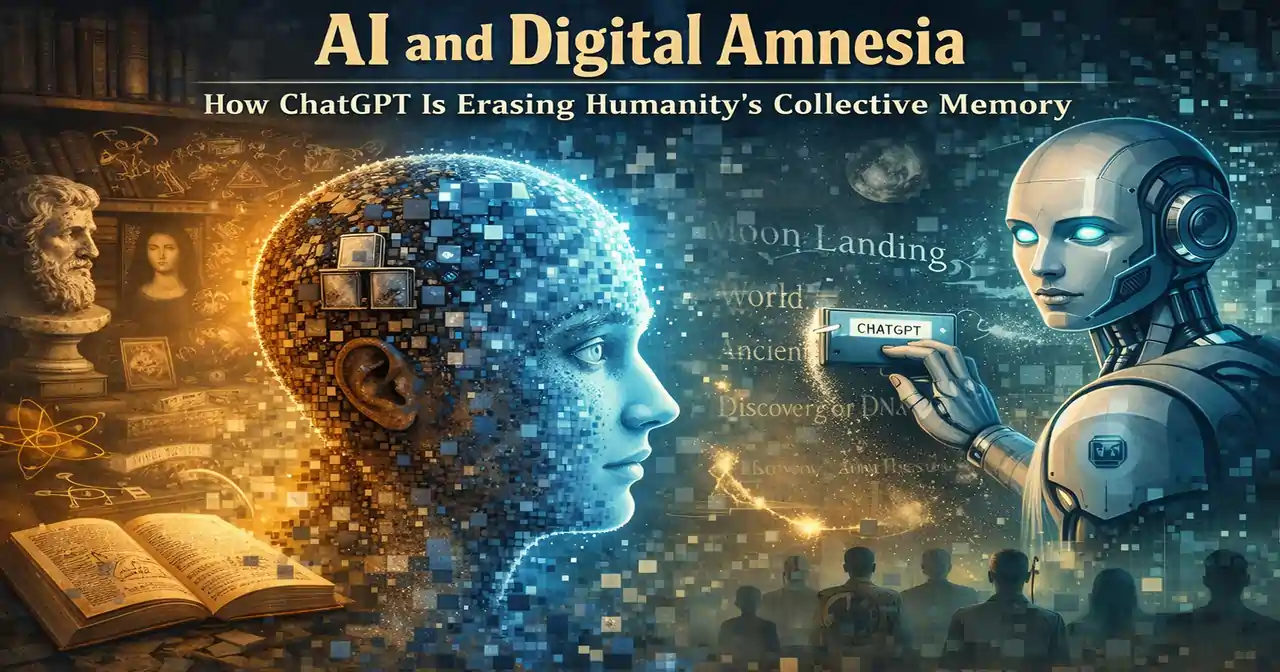
This phenomenon is called Google Effect or Digital Amnesia: We no longer memorize information, we only learn where to find it.
2. Decision Outsourcing
Before: You decided yourself what book to read, what movie to watch, where to eat.
Now: Algorithms make these decisions for you:
- Netflix chooses what movie you watch
- Spotify determines what music you listen to
- Instagram specifies what posts you see
- Google Maps designs your route
- Amazon suggests what to buy
Result: You've lost your decision-making autonomy. And interestingly, you don't even notice, because these decisions seem so natural that you think you chose them yourself.
Real experience: Research shows over 80% of content watched on Netflix comes through the recommendation system, not direct search. Meaning the algorithm determines what you watch.
3. Navigation Outsourcing
Before GPS: You had to read maps, remember routes, and have a sense of direction.
After GPS: You just follow Google Maps' voice, without knowing where you are.
Result: Neuroscience studies have shown that people dependent on GPS have weaker hippocampus - the part of the brain responsible for spatial memory and navigation.
Gen Z example: Many young people today cannot read paper maps or find routes in their own city without GPS. This is cognitive paralysis.
4. Taste Outsourcing
This is perhaps the deepest form of integration: Algorithms are shaping your taste.
How?
You think you decide what music, movies, books, or clothing style you like. But reality is that your taste was shaped by recommendation algorithms.
Real example: If Spotify continuously recommends a specific genre to you, you'll gradually like that genre - not because you innately like it, but because repeated exposure causes liking.
In psychology, this is called Mere Exposure Effect: The more you're exposed to something, the more you'll like it.
Ultimate result: You no longer know what your real taste is, because your taste was created by the algorithm.
5. Creativity Outsourcing
Before: If you wanted to create something creative, you had to think, design, and execute yourself.
Problem: You're losing your creativity muscle. The more you rely on AI for creativity, the less you can be creative yourself.
Real example: Many graphic designers, writers, and programmers feel they can no longer work without AI help. They've become cognitively dependent on these tools.
Table: Traditional Human vs. Hybrid Human
| Domain | Traditional Human (Before 2000) | Hybrid Human (Today) |
| Memory | Memorizing phone numbers, addresses, information | Googles it, memory stored in cloud |
| Navigation | Reading maps, memorizing routes | Following GPS, without route awareness |
| Decision-making | Choosing based on experience and personal judgment | Relying on reviews, ratings, and algorithms |
| Taste | Natural formation through experience | Formation by recommendation algorithms |
| Creativity | Independent ideation and creation | Collaboration with AI, inspiration from suggested content |
| Learning | Reading books, courses, practical experience | YouTube, ChatGPT, AI summaries |
| Communication | Phone calls, letters, in-person meetings | Messengers, emojis, stickers, AI writing messages |
| Identity | Defined by self, family, society | Defined by digital profile, likes, followers |
This table shows we're no longer complete and independent humans. We are distributed systems with much of our functioning running on Google, Meta, and other tech giants' servers.
Psychological Consequences: The Price of Hybridization
1. Identity Crisis: Who Am I?
One of the deepest consequences of becoming hybrid humans is identity crisis. When your decisions, taste, and even thoughts are shaped by algorithms, a fundamental question arises:
Does the "real me" still exist?
Thought experiment: Suppose all your music taste was shaped by Spotify's algorithm. All your friends were found through Instagram's algorithm. All your political opinions were formed from content Twitter's algorithm showed. In that case, what part of you is "really you"?
2. Decision Paralysis Without Algorithm
Real scenario: Your phone breaks and you need to choose a restaurant for lunch. Suddenly you realize you can't decide without Google Maps and reviews. You feel paralyzed.
We call this phenomenon Algorithm Dependency Paralysis: inability to make decisions without algorithm help.
Shocking statistic: Studies show over 70% of people under 30 cannot make daily decisions without consulting their phones.
3. Digital Separation Anxiety
Nomophobia (No-Mobile-Phone Phobia): Fear of being without mobile phone.
Symptoms:
- Severe anxiety when phone isn't available
- Constantly checking phone (average 96 times per day!)
- Feeling incomplete without device
This shows we no longer see our phone as a "tool" but as
part of ourselves. For more on this dependency, read the article on
psychology of digital addiction.
4. Weak Real Social Skills
Hybrid humans often have weak real social skills:
- Can't have deep in-person conversations
- Feel uncomfortable in interactions without digital mediation
- Can't read body language and non-verbal cues
Reason: Most of their communication is through text, emoji, and digital mediation. They're used to having time to think about responses, edit, and then send. But in face-to-face conversation, this opportunity doesn't exist.
Generation Alpha: The First Fully Hybrid Generation
Born 2010 and After: Algorithm Natives
- Their first words may have been spoken to Alexa or Siri
- Their first drawings may have been created with AI
- Their first stories may have been written by ChatGPT
What does this mean?
This generation has no experience of life without algorithms. For them, AI is a natural part of life, like electricity or water.
Real example: Generation Alpha children, when encountering a physical book, might try to "zoom" on its image with their finger, or expect the book to interact with them.
Generational Differences in Hybridization
Gen X (born 1965-1980): See algorithms as tools
Gen Y/Millennials (born 1981-1996): See algorithms as friends
Gen Z (born 1997-2009): See algorithms as part of themselves
Gen Alpha (born 2010-2024): See no difference between self and algorithm
Dangers and Threats: When Hybridization Goes Too Far
1. Vulnerability to Manipulation
Hybrid humans are much more vulnerable than traditional humans:
Why? Because algorithms can be manipulated:
- Filter Bubble: You only see content that aligns with your previous beliefs
- Echo Chamber: You only hear voices confirming your opinions
- Manipulation: Algorithms can change your behavior and opinions
Real example: Facebook documents revealed their algorithm deliberately promoted anger-inducing content because it increased engagement. This means the algorithm can manipulate your emotions.
2. Loss of Cognitive Autonomy
Cognitive autonomy means the ability to think, analyze, and make decisions without external influence.
Hybrid humans have lost this autonomy:
- Can't think without Google
- Can't choose without recommendation systems
- Can't create without AI
Result: They're no longer independent agents, but dependent nodes in a larger network.
3. Disconnection Risk
Imagine one day all Google, Amazon, and Meta servers go down. What happens?
Collective cognitive crisis: Millions of hybrid humans suddenly become incapable:
- Can't find routes
- Can't make decisions
- Can't work
- Can't even find entertainment
This is an existential weakness. We're dependent on systems outside our control.
4. Big Tech Exploitation
Companies controlling algorithms have unprecedented power over hybrid humans:
- Can change your decisions
- Can manipulate your emotions
- Can shape your beliefs
- Can predict your behavior
Advantages: Is Hybridization Bad?
1. Increased Cognitive Capacity
Hybrid humans have expanded cognitive abilities:
- Instant access to all human knowledge
- Ability to process and analyze huge volumes of information
- Much higher learning speed
Example: A programmer with
GitHub Copilot help can write code 3-5 times faster.
2. Higher Productivity
- Designers with AI can design faster
- Writers with AI can write more
- Researchers with AI can discover faster
3. Better Decision-Making (In Some Cases)
Algorithms can make better decisions than humans, especially when:
- Data volume is very large
- Decision requires fast processing
- Emotions shouldn't interfere
4. Democratization of Knowledge and Skills
AI has made advanced capabilities accessible to everyone:
- Anyone can do graphic design with AI
- Anyone can program with AI
- Anyone can create music with AI
The Future: Where Are We Going?
Scenario 1: Full Integration
In this scenario, humans and algorithms completely merge:
When? Experts predict by 2040-2050
Advantages:
- Unlimited cognitive capacity
- Instant learning
- Direct mental communication
Dangers:
- Complete loss of autonomy
- Vulnerability to hacking
- Deep gap between "enhanced" and "normal"
Scenario 2: Backlash & Return
In this scenario, society realizes dangers of hybridization and reacts:
- "Digital minimalism" movements
- Stricter laws to limit algorithms
- Return to simpler, less technological lifestyle
Current examples:
- Phone bans in schools (Norway, Sweden)
- Increased popularity of "Digital Detox"
- Growth of feature phones (non-smartphones)
Scenario 3: Smart Balance
In this scenario, society learns how to properly live with algorithms:
- Digital literacy education from childhood
- Control and limitation tools
- Clear laws to protect cognitive autonomy
This is probably the most realistic scenario.
Practical Solutions: How to Maintain Control?
1. Self-Awareness: Recognizing Dependency
First step is recognizing how dependent you are on algorithms:
Exercise: One week without using:
- Google (for simple questions)
- GPS (for familiar routes)
- Recommendation systems (choose yourself)
You'll realize how incapable you've become.
2. Recovering Lost Skills
Suggested exercises:
- Memorize important phone numbers
- Navigate without GPS
- Mental calculations without calculator
- Writing without AI help
- Decision-making without online reviews
3. Setting Digital Boundaries
Personal rules:
- First morning hour without phone
- Eating without screens
- One day per week "Digital Sabbath"
- Delete unnecessary apps
4. Conscious AI Usage
Golden principle: AI should be your tool, not a replacement for your brain.
How to use correctly:
- AI for research, not decision-making
- AI for inspiration, not complete creativity
- AI for acceleration, not replacing thought
5. Maintaining Real Experiences
Important: Spend time on:
- Deep face-to-face conversations
- Physical experiences (sports, nature)
- Creativity without digital tools
- Learning physical skills
Conclusion: Are We Still Human?
Short answer: Yes, but not the same humans we were.
We're evolving (or perhaps devolving?) into a new species of human - Homo Algorithmicus - humans who can't function, think, or even exist without algorithms.
This isn't necessarily bad. Tools have always been part of humans:
- When knives were invented, our teeth weakened
- When writing was invented, our oral memory weakened
- When cars were invented, our legs were used less
Now algorithms are weakening our brains. But this is part of technological evolution.
The main question isn't whether this is happening (because it is), but how we manage this transformation.
Do we want to become slaves to algorithms? Or do we want to be their intelligent partners?
The choice is ours - while we can still choose.
And perhaps the most important question: Will future generations even notice this difference?
 Social Impact & Future
 Social Impact & Future
 Social Impact & Future
 Social Impact & Future
 Social Impact & Future
 Social Impact & Future