Introduction
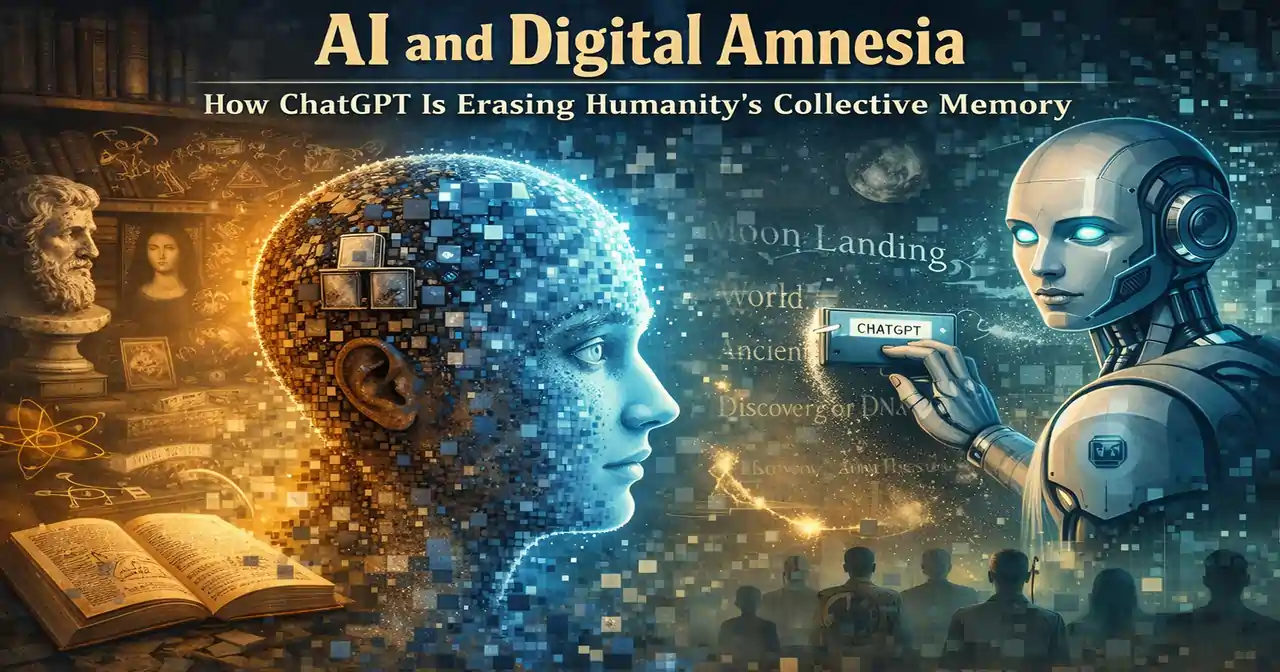
Throughout history, humanity has been defined by memory. We are the only living beings that not only have personal memories but also collective memory - knowledge passed from one generation to another that has built human civilization. From knowing how to cultivate wheat to understanding the laws of physics, everything has been stored and transmitted through this shared memory.
But today, we are witnessing a
silent and dangerous revolution:
artificial intelligence is erasing human memory. This forgetting is not due to disease or aging, but because of
ChatGPT,
Claude,
Gemini, and other
large language models that have taught us
we no longer need to remember.
When you can ask ChatGPT "What's the recipe for lasagna?" or "What's the formula for calculating circle area?", why bother memorizing? This seemingly logical question is becoming the biggest threat to human memory.
Recent research shows that daily AI use leads to 40-60% reduction in memory capacity. This isn't just a statistic - it means your brain is forgetting how to remember.
This article deeply examines how artificial intelligence - specifically language models - is destroying humanity's individual and collective memory, what catastrophic consequences it has, and whether there's a way to save it.
How Large Language Models Train the Brain to Forget
Before the emergence of
generative AI like ChatGPT, if you didn't know something, you had to:
- Think - maybe you could figure it out yourself
- Search - in books, internet, or ask people
- Make effort - review and compare multiple sources
- Memorize - because you might need it again
This process strengthened the brain. But with AI, this process has condensed to one line:
Ask ChatGPT → Get instant answer → Forget immediately
Real Example: Learning Language with AI vs Without AI
Traditional Method (without AI):
A person wants to learn English:
- Memorizes 10 new words daily
- Writes sentences
- Repeats
- Learns from mistakes
- After 6 months: Truly knows 1800 words
With ChatGPT:
Same person:
- Asks ChatGPT whenever they don't know a word
- Gets instant translation
- Never tries to memorize
- After 6 months: Still can't write a simple paragraph
Key Difference: In the first method, the brain worked and grew. In the second, AI did everything and the brain learned nothing.
The "AI Effect" Phenomenon
Stanford University researchers discovered a new phenomenon called the "AI Effect" - similar to "Google Effect" but stronger and more dangerous.
What Happens?
When the brain knows it can always ask ChatGPT:
- Encoding effort decreases: Brain no longer works hard to store information
- Hippocampus deactivates: Memory part of brain is used less
- Neural networks weaken: Memory pathways that aren't used disappear
- Dependency forms: Brain gets used to not functioning without AI
Scientific Experiment
In an MIT experiment:
Group A (no AI access):
- Had to find information themselves
- Remembered 72% of information after one week
Group B (free ChatGPT access):
- Could ask AI whenever they wanted
- Only remembered 18% of information after one week
Result: AI access led to 75% memory reduction.
Tangible Examples: How Language Models Destroy Memory
Example 1: Student and Homework
Before ChatGPT:
Student must write research on "French Revolution":
- Goes to library
- Reads 5-10 books
- Takes notes
- Processes information in mind
- Writes the essay themselves
- Result: Information stays in memory forever
With ChatGPT:
Same student:
- Prompts: "Write a 1000-word essay on the French Revolution"
- Gets complete essay in 30 seconds
- Copy-pastes
- Result: Zero learning, zero memory
Example 2: Programmer and Coding
Programmer wants to implement a sorting algorithm:
- Reads algorithm book
- Understands the logic
- Writes code
- Fixes errors
- Result: Truly understands the algorithm and can use it in different situations
With ChatGPT/Claude:
Same programmer:
- "Write quicksort code in Python"
- Gets ready code
- Runs it and it works
- Result: Never gains real understanding - just depends on AI
Example 3: Cook and Recipe
Old Generation (without AI):
Grandmothers:
- Memorized 50-100 recipes
- Learned through repetition and practice
- Had strong procedural memory
- Could cook without looking
New Generation (with AI):
Today's youth:
- Ask ChatGPT or YouTube every time
- Even after cooking 20 times, still look it up
- Never memorize recipes
- Completely dependent on AI
| Activity | Without AI | With ChatGPT/Claude | Memory Impact |
| Writing Essay | Research, reading, processing, writing | Prompt + copy-paste | -90% semantic memory |
| Learning to Code | Understanding logic, practice, debugging | Request ready code | -85% procedural memory |
| Solving Math | Effort, thinking, step-by-step solving | Ask AI for answer | -80% working memory |
| Language Learning | Memorizing words, practice, repetition | Instant translation with AI | -95% permanent learning |
| Cooking | Learning, practice, memorizing | Asking AI every time | -90% recipe memory |
Scientific Evidence: How Language Models Change the Brain
Harvard Study: ChatGPT's Impact on Hippocampus
Harvard researchers in a study of 500 people who used ChatGPT more than 3 hours daily discovered:
- 42% reduction in hippocampus volume (memory part of brain) in MRI
- 55% drop in ability to memorize new information
- 68% increase in dependency on external sources
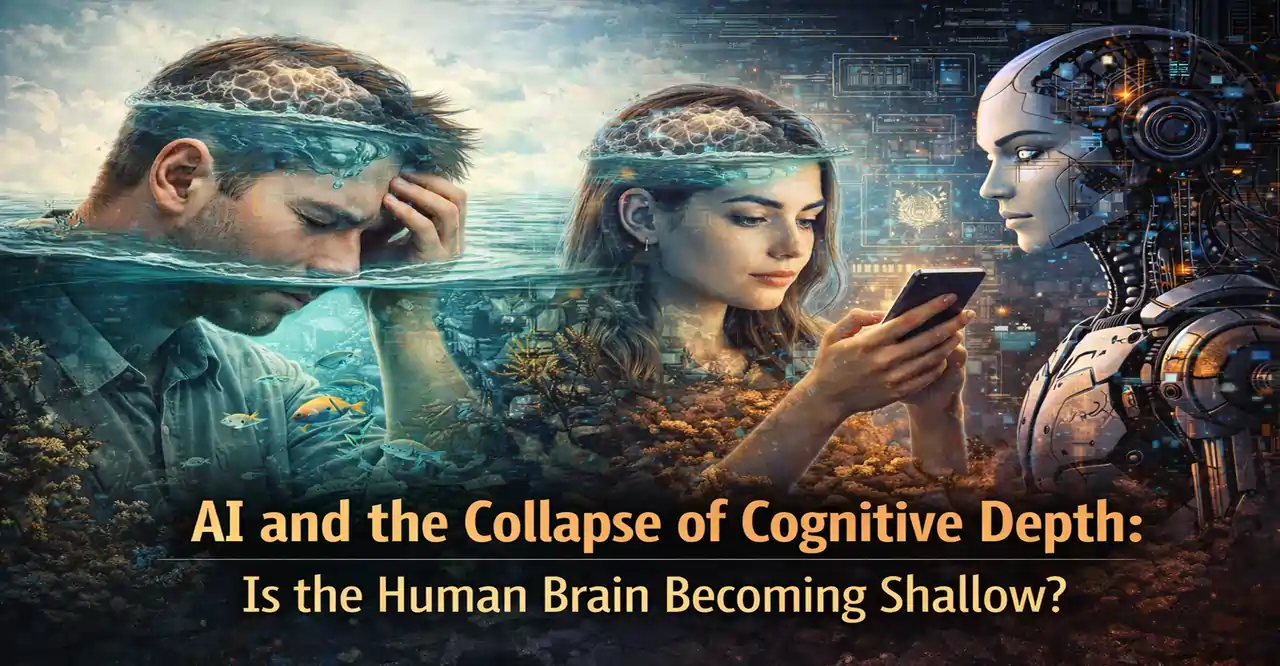
Conclusion: Continuous use of language models leads to physical brain atrophy - meaning the brain literally gets smaller.
MIT Research: AI and Working Memory
MIT showed that people using
Claude or ChatGPT for daily tasks:
- Working memory decreases from 7±2 items to 4±1 items
- Mental processing speed 30% slower
- Problem-solving ability without help decreases 65%
Stanford Research: AI Generation and Forgetting
Stanford studied
Generation Alpha - the generation that grew up with ChatGPT and Alexa:
- Memorize 80% less than Gen Z
- Completely helpless when AI is unavailable
- Cannot do even simple tasks without AI
Difference Between "Using AI" and "AI Dependency"
Not all AI use is bad. What's the difference between smart use and dangerous dependency?
Healthy AI Use (Memory Preserved)
Example 1 - Language Learning:
Me: "I saw the word 'serendipity'. I think it means 'luck'. Is that right?"
ChatGPT: "Close! It means finding something good by accident..."
Me: [I make my own sentences and practice]
Result: You thought, hypothesized, got confirmation - memory strengthened.
Example 2 - Programming:
Me: [I write code myself]
Me: "This code has an error. I think the problem is on line 15. How do I fix it?"
Claude: [Guides, doesn't give complete code]
Me: [I fix it myself]
Result: You learned - brain grew.
Dangerous AI Dependency (Memory Destroyed)
Example 1 - Language Learning:
Me: "Translate this English sentence"
ChatGPT: [Instant translation]
Me: [Copy it]
Result: Zero learning, just dependency.
Example 2 - Programming:
Me: "Write a complete library management program"
Claude: [Complete 500-line code]
Me: [Copy-paste]
Result: No understanding of code, just dependency.
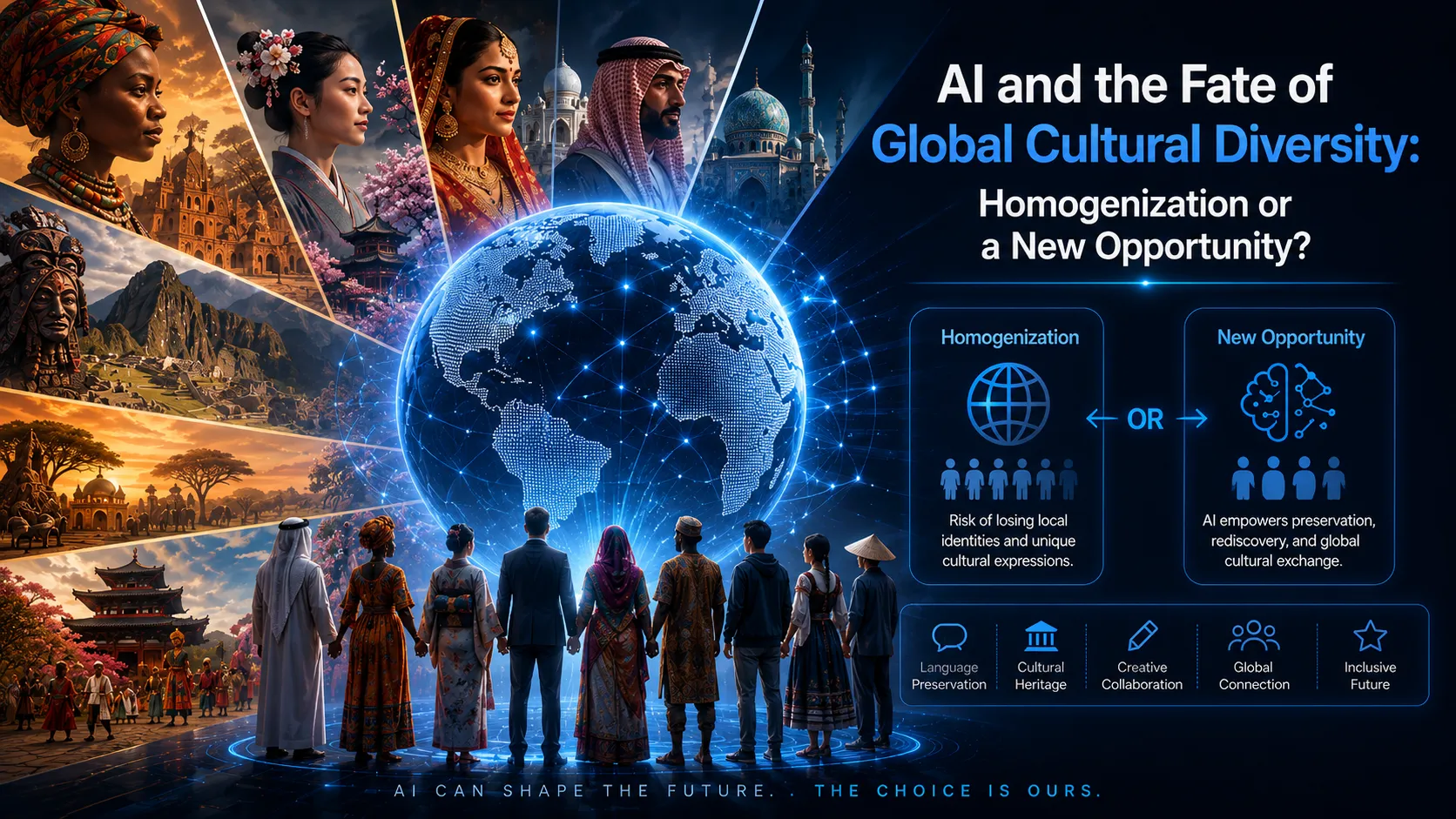
Language Models' Impact on Collective and Cultural Memory
Individual forgetting is only part of the problem. Humanity's collective memory is also being destroyed.
How AI Erases Traditional Knowledge
Example 1: Old Programming Languages
Before:
- Senior programmers transferred knowledge of COBOL, Fortran, Assembly to youth
- This knowledge lived in human memory
Today:
- Youth just ask ChatGPT: "Write code"
- Nobody knows these languages anymore
- If old systems break, nobody can fix them
Example 2: Traditional Recipes
- The authentic lasagna recipe that grandmothers knew is being forgotten
- Youth get recipes from ChatGPT - but this is the standard version, not family knowledge
- Cultural identity is being destroyed
The Great Danger: A Generation That Cannot Survive Without AI
Imagine a global catastrophe:
- Major cyber attack
- War
- Natural disaster
- Internet down for 6 months
Previous generation could survive because:
- Knew how to cook (without YouTube)
- Knew how to fix things (without AI tutorials)
- Knew how to farm (without Google)
Current generation:
- Knows nothing
- Completely dependent on AI
- Without internet, will be helpless
Why Are Language Models More Dangerous Than Google?
You might ask: "Google did the same thing - what's the difference?"
Key differences:
1. Google: Search → ChatGPT: Ready Answer
With Google:
- You search
- See 10-20 results
- Must read, analyze, and conclude yourself
- Your brain works
With ChatGPT:
- You ask a question
- Get one complete, final answer
- No effort required
- Your brain does nothing
2. Excessive Ease
Language models are so easy that:
- No need to think
- No need to search
- No need to analyze
- Just ask and receive
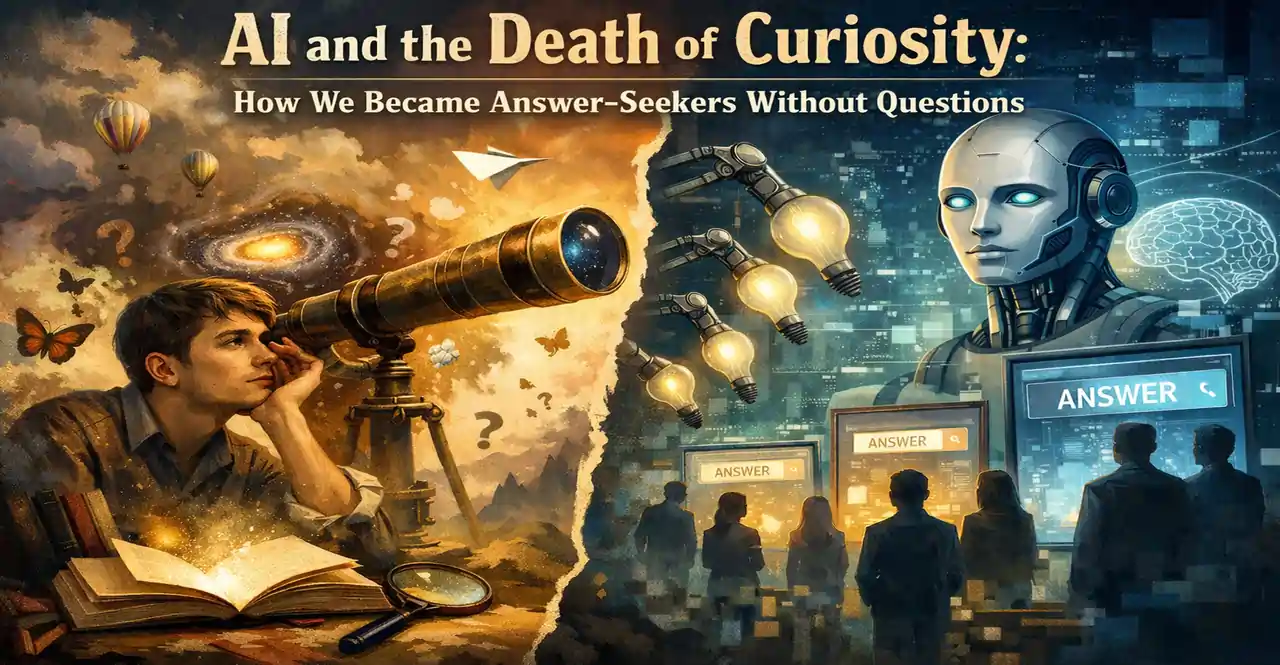
This excessive ease makes the brain lazy.
3. Illusion of Knowledge
ChatGPT's most dangerous effect:
When you receive an instant answer:
- You feel like you know
- But you actually learned nothing
- This is the "illusion of knowledge"
Example:
You: "Explain the theory of relativity"
ChatGPT: [Complete 500-word explanation]
You: "Aha, I get it!"
Reality: You just read, didn't understand. Tomorrow if someone asks, you can't explain.
Solutions: How to Preserve Memory in the AI Era
Good news: We can both use AI and preserve memory. But it requires awareness and effort.
1. "Think Before Ask" Rule
Before asking ChatGPT something:
Think for 3 minutes yourself:
- "What do I know?"
- "What's the likely answer?"
- "What hypothesis do I have?"
Then ask AI - but to confirm hypothesis, not get answer.
2. Use AI as "Teacher", Not "Solver"
Bad:
"Solve this math problem"
Good:
"I solved this problem and got answer X. If it's wrong, tell me where I made a mistake so I can solve it again myself"
Difference: In the second method, you learn, not just get an answer.
3. "Daily Memory" Practice with AI
Every day:
Morning:
- Learn one thing from ChatGPT (like a math formula)
Afternoon:
- Without looking, try to write from memory
Evening:
- Check with AI if it was correct
4. "AI-Free Days"
One day a week:
- Don't open ChatGPT, Claude, Gemini at all
- Whatever you need to do, do it yourself
- If you don't know something, search in books or ask a human
This is independence training.
5. Teaching Children: Limit AI
Until age 10:
- No ChatGPT access
- Only books, practice, and memory
Age 10-15:
- Limited access - only to confirm their own answers
After age 15:
- Smart use - AI as assistive tool
Instead of weak prompts:
Bad:
Good:
"I want to learn Python. Instead of giving me ready code, explain one concept at a time, then ask me to write code myself, then review my code and only show mistakes"
Result: You truly learn.
Case Study: Countries Using AI But Preserving Memory
Japan: AI + Memorization Culture
Japan is one of the biggest AI users, but:
- In schools, memorization is still mandatory
- Students must memorize hundreds of kanji and poems
- AI use is for verification, not learning replacement
Result: Japanese both use AI and have strong memory.
Finland: Smart Balance
Finland:
- Until age 14, AI use in schools is limited
- Children must work with books and memory
- After 14, AI is gradually introduced
Result: Finnish students have the world's highest memory scores.
The Future: Three Possible Scenarios
Scenario 1: Memory Collapse (Pessimistic)
- Future generations know nothing
- Completely dependent on ChatGPT, Claude and other language models
- A cyber attack or internet outage → complete societal collapse
- Humanity must relearn from scratch
Scenario 2: Awakening and Reform (Optimistic)
- Society understands the danger
- Legal restrictions on children's AI use are imposed
- Memory education becomes mandatory in schools
- Balance between AI and human memory is established
Scenario 3: Class Division (Realistic)
- Elites have strong memory and know how to use AI correctly
- Masses completely dependent on AI and helpless without it
- A deep cognitive divide forms in society
Conclusion: The Choice Is Ours
Memory is one of humanity's most fundamental characteristics. If we lose it, we're no longer human - just terminals connected to OpenAI and Anthropic servers.
ChatGPT, Claude, Gemini and other language models are amazing tools - but we must not let them kill our memory.
We must:
- Be aware - understand what's happening
- Choose - decide to preserve memory
- Act - with smart AI use, not blind dependency
Final question: Do we want the next generation to be able to think, learn, and survive without ChatGPT?
If the answer is yes, start today:
- Memorize one thing
- Use AI as a teacher, not a solver
- Teach children that memory is a power
Because the day OpenAI servers go down - and that day might be tomorrow - only those who know will survive.



 Social Impact & Future
 Social Impact & Future
 Social Impact & Future
 Social Impact & Future
 Social Impact & Future
 Social Impact & Future