Introduction
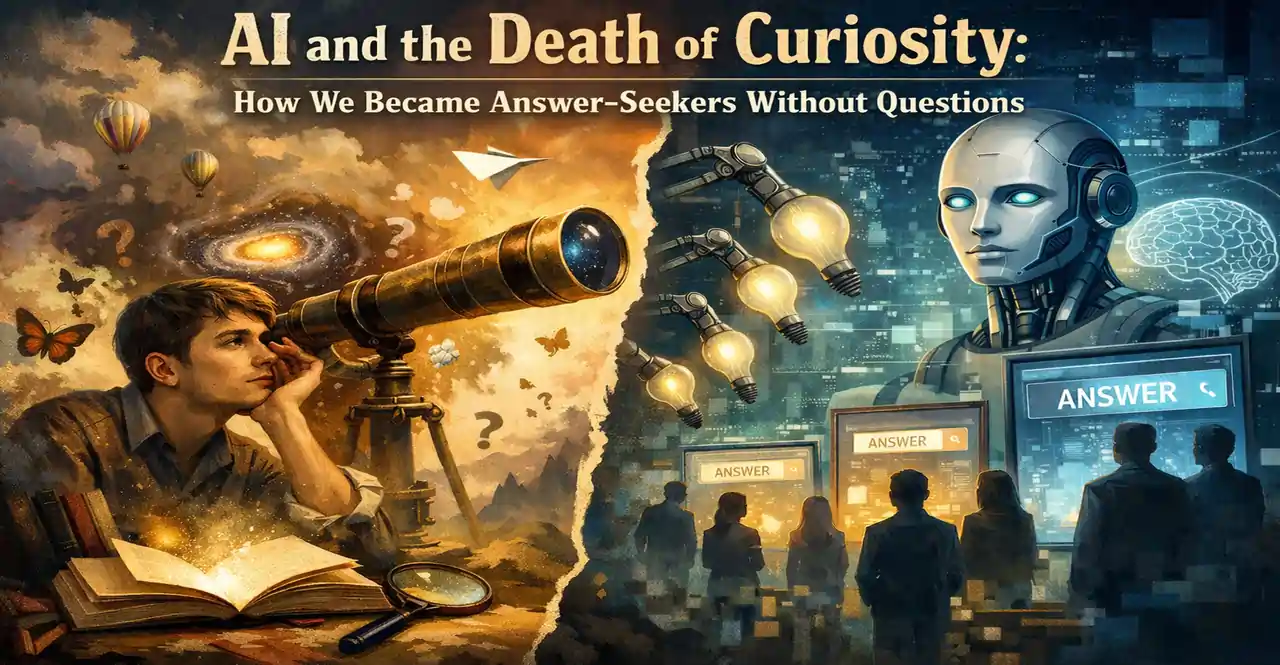
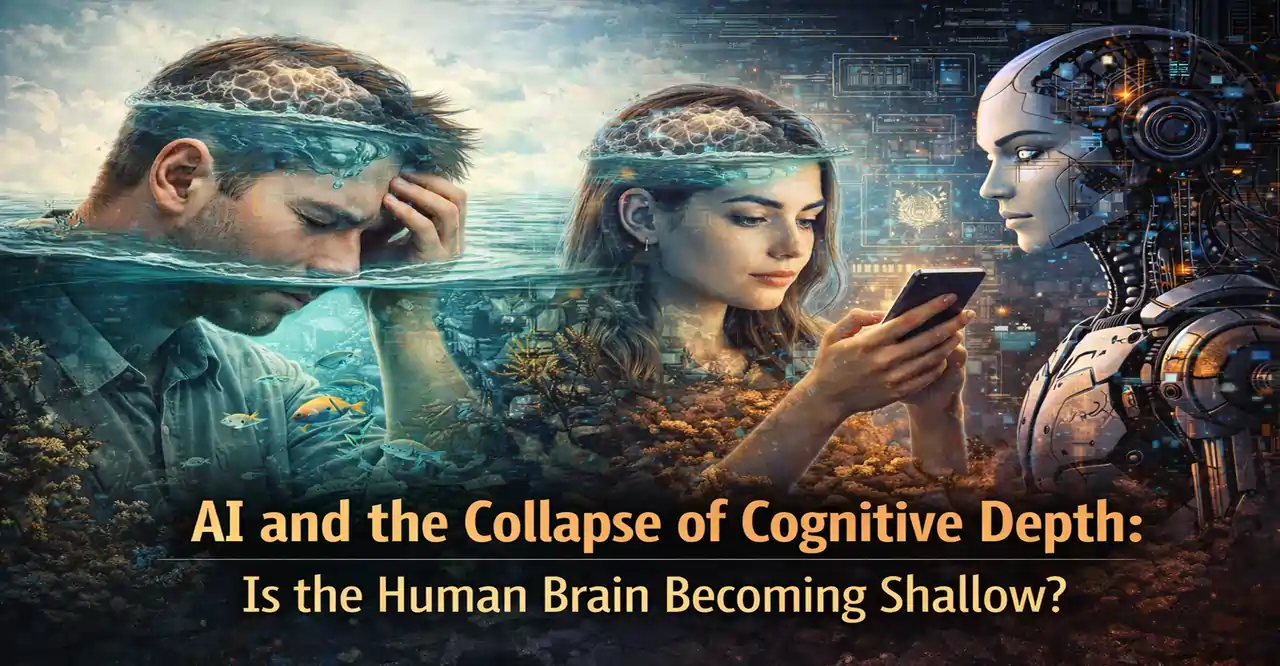
Curiosity is one of the most fundamental characteristics of humans - the very thing that distinguished us from other creatures and built human civilization. From discovering fire to inventing the wheel, from the theory of relativity to quantum technology, it all stemmed from one thing: asking questions. But today, in the age of artificial intelligence, we are witnessing a silent catastrophe - the gradual death of curiosity.
When
ChatGPT can answer any question in 3 seconds, why should you think for yourself? When
Claude can explain any topic to you, why should you research yourself? When Gemini can summarize everything, why should you read yourself?
These seemingly harmless questions are becoming the biggest threat to humanity's intellectual future. We are transforming into a generation of answer-seekers without questions - humans who no longer know how to ask questions because they are always waiting for ready-made answers.
This article deeply examines this phenomenon: how
artificial intelligence is killing humanity's innate curiosity and what this means for our future.
What Is Curiosity and Why Does It Matter?
Before understanding how AI kills curiosity, we need to know what curiosity exactly is and why it's vital for humans.
Scientific Definition of Curiosity
Scientifically, curiosity is an intrinsic motivation to seek new information, discover unknowns, and deeply understand the world. It's a biological need accompanied by dopamine release in the brain - the same chemical that creates the feeling of pleasure.
Types of Curiosity
Psychologists divide curiosity into several categories:
- Epistemic Curiosity (Cognitive Curiosity): Desire to know and learn - like reading scientific books
- Perceptual Curiosity (Sensory Curiosity): Attraction to new stimuli - like seeing a strange landscape
- Social Curiosity: Interest in knowing about others
- Diversive Curiosity: Seeking new and diverse experiences
All these types of curiosity play a vital role in cognitive growth, creativity, and learning.
How Does Curiosity Work in the Brain?
Understanding how curiosity works in the brain helps us understand why AI can destroy it.
The Natural Cycle of Curiosity
The human brain has a curiosity cycle that works like this:
- Encounter with the Unknown: You face something you don't know
- Feeling of Knowledge Gap: You realize you don't know something (this feeling is uncomfortable!)
- Search Motivation: This discomfort drives you to seek answers
- Active Effort: You read books, research, experiment
- Discovering the Answer: The "Aha!" moment - dopamine is released
- Cognitive Satisfaction: You feel good and neural networks are strengthened
- New Curiosity: This success motivates future curiosities
This cycle is the main driver of learning and brain growth. But AI breaks this cycle.
How Does AI Break the Curiosity Cycle?
Now let's see what happens when AI enters this cycle:
The AI Cycle: Death of Curiosity
- Encounter with the Unknown: You face something you don't know
- Brief Knowledge Gap: You only feel ignorant for 2 seconds
- Jump to Ready Answer: You immediately open ChatGPT
- Passive Reception: You receive the answer without any effort
- False Dopamine: You feel good but your brain learned nothing
- No Neural Network Reinforcement: Because you made no effort, the brain doesn't grow
- Gradual Decrease in Curiosity: Because you always have ready answers, you no longer have the motivation to ask questions
| Stage | Natural Curiosity Cycle | Cycle with AI |
| Time to Answer | Hours or days | 2-10 seconds |
| Mental Effort | High - search, research, thinking | Zero - just copy-paste |
| Neural Network Growth | Strong - new pathways created | Weak - only temporary storage |
| Learning Depth | Deep - real understanding | Shallow - temporary awareness |
| Probability of Retention | High - 70-80% | Low - 10-20% |
| Next Curiosity Motivation | Increases - success motivates | Decreases - dependency on AI |
Tangible Examples: How AI Kills Curiosity
Let's see with real examples how this happens:
Example 1: Language Learning
Before AI - 1990s:
A teenager wants to learn English. They see an unfamiliar word: "Serendipity"
- They open a paper dictionary (5 minutes of searching)
- Find the meaning: "fortunate happenstance"
- Read several examples
- Use the word in their own sentences
- Result: The word stays in their mind forever
Today with AI:
The same teenager copies the word into ChatGPT:
- Instant answer: "means finding something good by accident"
- They read and forget
- Result: Tomorrow they don't recognize the same word again
Example 2: Curious Child
Before AI - 2000s:
An 8-year-old child asks: "Why is the sky blue?"
- Parents talk with them
- They read children's science books together
- Maybe do a simple experiment
- Result: The child learns how to follow the discovery process
Today with AI:
The same child calls Siri or Alexa:
- Instant and complete answer
- Child says "Oh, okay" and returns to their game
- Result: They learn that a device always has answers, so no need to think
Example 3: University Student
Before AI - 2010s:
Student must research about "climate change":
- Goes to the library
- Reads 10-15 scientific articles
- Takes notes
- Finds connections between sources
- Forms their own opinion
- Result: Deep understanding of the topic and research skills
Today with AI:
Student prompts: "Write a 2000-word article about climate change"
- ChatGPT gives complete article in 30 seconds
- Student copies it (maybe edits slightly)
- Result: Zero learning, zero curiosity, zero intellectual growth
Scientific Evidence: Studies Showing Curiosity Is Dying
Recent research shows alarming results:
Stanford University Study (2024)
Stanford University researchers showed that students who regularly use
language models:
- Ask 45% fewer questions
- Search for 60% fewer additional sources
- Show 35% less interest in deeper learning
MIT Research on Children
A study at MIT on children aged 6-12 showed:
- Children with access to AI assistants ask 50% fewer "why?" questions
- They give up 40% faster on trying to solve problems
- Their natural curiosity decreases over time, not increases
Oxford University Research
Oxford cognitive psychologists discovered:
- People dependent on AI have lower capacity for open-ended questions
- They prefer to ask "yes/no" questions rather than exploratory ones
- This indicates cognitive poverty in how they think
Impact on Different Generations
Gen Z (born 1997-2012)
This generation was the first to grow up with the internet but still grew up before AI. Research shows:
- They read fewer books than previous generations
- But still have the ability to ask questions
- AI use is changing their thought patterns
Generation Alpha (born 2010 onwards)
Generation Alpha is the first generation growing up with AI. Early data is alarming:
- 70% fewer exploratory questions than Gen Z
- When they don't know something, their first reaction is "Google it" or "Ask ChatGPT"
- The concept of "not knowing and learning" is foreign to them
Prediction for Generation Beta (born 2025 onwards)
If the current trend continues, Generation Beta:
- Might not have the concept of active curiosity at all
- They will be answer-waiters, not knowledge-seekers
- This could lead to a cultural and scientific catastrophe
Why Is the Death of Curiosity a Catastrophe?
You might ask: "So what? Does it matter how we get answers?" The answer is definitively yes. Here are the reasons:
1. End of Innovation
All great human inventions started from curiosity:
- Newton was curious why apples fall → law of gravity
- Einstein was curious how light moves → relativity
- Fleming was curious why fungus killed bacteria → penicillin
If these scientists had ChatGPT and just got ready answers, none of these discoveries would have happened.
2. Lack of Critical Thinking
When you always have ready answers, you don't learn to:
- Ask the right questions
- Critically evaluate answers
- Discover alternative paths
3. Loss of Discovery Joy
One of the deepest human pleasures is the "Aha!" moment - that moment when you discover something yourself. AI takes this pleasure from us.
Research shows that:
- The joy of personal discovery is 10 times stronger than passive information reception
- Dopamine released in spontaneous discovery stimulates the brain for more learning
- When this joy disappears, learning motivation dies too
4. Dangerous Cognitive Dependency
When your brain gets used to always having ready answers,
cognitive dependency is created. This means:
- You can no longer think without AI
- Independent problem-solving ability disappears
- Anxiety and helplessness when facing unknowns
AI's Role in Killing "Why?" Questions
One of the most important questions humans ask is "Why?" This question is the main driver of science, philosophy, and art. But AI is destroying this question.
"Why?" Questions Before AI
A child asks: "Why are leaves green?"
Parent: "Because of chlorophyll"
Child: "What's chlorophyll?"
Parent: "A chemical that absorbs sunlight"
Child: "Why does it absorb light?"
Parent: "Let's go to the library and find out together!"
Result: A chain of curiosity leading to deep learning.
"Why?" Questions After AI
Child: "Why are leaves green?"
Parent: "Let's ask ChatGPT"
ChatGPT: [A complete 200-word answer]
Child: "Okay" [and returns to TikTok]
Result: End of curiosity chain, zero deep learning.
Impact on Creativity and Innovation
Creativity needs exploration space - where you freely ask questions, experiment, and make mistakes. AI closes this space.
Tangible Example: Painter Artist
Traditional Artist:
- Practices for hours
- Experiments with different colors
- Finds their unique style
- Curiosity drives them to discover new techniques
Artist with AI:
- Uses Midjourney
- Gives prompts and gets results
- No personal exploration process
- Result: Beautiful images but no personal creative identity
The Information Paradox: More Knowledge, Less Curiosity
A strange paradox exists in the AI era: we have unprecedented access to information, but show less curiosity.
Why Does This Happen?
- Ease of Access: When something is too easy, its value decreases
- Information Overload: When everything is available, nothing is special
- Lack of Challenge: The human brain grows with challenges - without challenges, motivation decreases
Historical Example
Before the invention of printing, books were rare and expensive. People:
- Read books multiple times
- Analyzed every sentence
- Thought deeply about them
Today, we have access to millions of digital books but:
- The average person reads fewer than 5 books annually
- We abandon most books halfway
- We prefer to read ChatGPT summaries
Impact on Human Relationships and Social Curiosity
Curiosity isn't just about knowledge - it's also about understanding other humans. AI is destroying this type of curiosity too.
Example: Deep Conversations
Before AI:
You talk with a friend about their political opinion:
- You're curious why they think this way
- You ask deep questions
- You really listen to their perspective
- Result: Deeper understanding of another human and strengthened relationship
With AI:
You copy your friend's opinion into ChatGPT:
- "Analyze this person's opinion and give counter-arguments"
- ChatGPT responds
- You send it to your friend without thinking
- Result: Zero real curiosity, zero meaningful connection
Children and the Death of Curiosity: A Generational Catastrophe
Perhaps the most alarming aspect of this issue is its impact on children.
Evolution in Children's Questions
A study at Cambridge University showed:
Children of the 1990s (without internet):
- Asked 300-400 questions daily
- Most questions were "why?" and "how?"
- They waited patiently to find answers
Children of the 2010s (with Google):
- Asked 150-200 questions daily
- Questions became simpler
- Had less patience
Children of the 2020s (with ChatGPT):
- Ask 50-80 questions daily
- Most questions are "what?" not "why?"
- Have almost zero patience
Real Example: Classroom Experiment
A teacher in Tokyo conducted an interesting experiment:
Group A (without AI access):
- Students had to research themselves
- 65% asked follow-up questions
- Studied an average of 8 different sources
Group B (with free ChatGPT access):
- Only 12% asked follow-up questions
- Used an average of 1.5 sources (ChatGPT itself!)
- When AI didn't answer, they were completely confused
Good Questions vs Bad Questions: How AI Reduces Question Quality
Not all questions are equal. Some questions have intellectual depth, some are superficial.
| Question Type | Questions Before AI | Questions in AI Era |
| Depth | "Why did society evolve this way?" | "What is society?" |
| Complexity | "How can I solve this problem from different angles?" | "What's the answer?" |
| Exploration | "What connection exists between X and Y?" | "What's the definition of X?" |
| Critical | "Is this theory valid? Why?" | "Is this theory right or wrong?" |
| Creative | "What if the rules were different?" | "What are the rules?" |
AI drives us toward superficial questions because:
- Superficial answers are faster
- Our brain learns "why bother with deep questions?"
- The quality of our questions reflects the quality of our thinking
Effect on Science and Research: When Scientists Are No Longer Curious
One of the most concerning impacts is the decrease in curiosity among young scientists.
Example: PhD Student
PhD Student in 2010:
- A question forms in their mind
- Researches in the library for months
- Discusses with advisor and colleagues
- They themselves shape and refine the question
- Their dissertation is original and innovative
PhD Student in 2024:
- A question comes to mind
- Asks ChatGPT: "What are the best research questions in field X?"
- Uses AI programming models for data analysis
- Their role becomes "AI manager" not curious researcher
- Their dissertation might be good but lacks the spark of personal curiosity
Solutions: How to Keep Curiosity Alive?
The good news is it's not too late yet. We can save curiosity - but it requires conscious effort.
1. The "Question Before Search" Rule
Before searching for something or asking AI:
- Think for yourself for 3-5 minutes
- Guess what the answer might be
- Write what you know and don't know
- Then search
This seems simple but has enormous impact - it forces your brain to be active.
2. "AI-Free Days"
Declare one day a week as "AI-free day":
- Don't use ChatGPT, Gemini, Claude
- Follow your questions the traditional way
- Read books, talk with humans
3. Question Journal
Have a physical notebook where you:
- Write 5 curious questions daily
- Follow up on some (without AI)
- Leave some unanswered (yes, this is good!)
Why does this work? Because the writing process itself strengthens curiosity.
4. Teach Children the "Why Chain"
Teach children to:
- When they get an answer, ask "why?" 5 times
- Try to find answers themselves
- Not fear failure
Practical Example:
Child: "Why does it rain?"
You (instead of answering): "What do you think?"
Child: "Maybe clouds are crying?"
You: "Interesting idea! Let's see how we can find out what clouds really are"
5. Create "Exploration Space"
At home or workplace, have a space that:
- Contains books, tools, simple scientific materials
- No digital devices
- People are free to experiment and be curious
6. Smart AI Use
AI isn't bad - wrong use of it is. Instead of using AI for answers, use it for better questions:
Bad:
"ChatGPT, give me the answer to this question"
Good:
"I think the answer is X. Are there better questions I should ask to understand more deeply?"
7. Rewards for Curiosity, Not Answers
In schools and families:
- Reward good questions, not correct answers
- Encourage "I don't know, let's find out"
- Value the exploration process
The Future: Three Scenarios
If we continue the current trend, we have three possible scenarios:
Scenario 1: Complete Collapse of Curiosity (Pessimistic)
- Future generations will not have the concept of asking questions at all
- They will be answer-waiters, not knowledge-seekers
- Science and innovation slow dramatically
- Only elites who learned to think without AI progress
- Cognitive class divide is created
Scenario 2: Awakening and Reform (Optimistic)
- Society understands the danger
- Schools launch "curiosity education" programs
- Parents become aware and impose AI limitations
- Balance between AI and human curiosity is established
- Future generations learn to use AI as a tool, not replacement
Scenario 3: Intelligent Coexistence (Realistic)
Case Study: Countries That Preserved Curiosity
Finland: Curiosity-Based Education System
Despite access to all AI tools, Finland still has the highest student curiosity scores in the world. How?
- Schools focus on "learning through play and exploration"
- AI use is limited until age 14
- Teachers are trained to stimulate curiosity, not give answers
- Result: Finnish students still ask deep questions
Japan: "Kaizen" Culture (Continuous Improvement)
In Japan, the concept of Kaizen - continuously asking "how can we be better?" - is part of the culture:
- Even with AI, Japanese maintain the habit of continuous questioning
- In Japanese companies, employees are encouraged to ask 5 "whys" daily
- This leads to continuous innovation even in the AI era
Conclusion: What Is Our Choice?
Curiosity is one of humanity's most valuable assets. Without it, we are no longer human - just biological processors moving information around.
Artificial intelligence is an amazing tool, but we must not let it kill our curiosity. We must:
- Be aware that this is happening
- Decide to preserve curiosity
- Act - by creating habits, educational systems, and new culture
The final question isn't "Does AI make us smarter?" but rather:
Do we want the next generation to know how to ask questions?
If your answer is yes, then start today. Ask questions. Be curious. Explore. And teach your children that the joy of discovery is something no AI can replace.
Question for Reflection: When was the last time you were truly curious - not just wanting a quick answer, but really wanting to know why?
If you can't remember, maybe it's time to rediscover your curiosity.



 Social Impact & Future
 Social Impact & Future
 Social Impact & Future
 Social Impact & Future
 Social Impact & Future
 Social Impact & Future