Introduction
Imagine trying to train an artificial intelligence model to detect a rare disease early, but there are only a few hundred real cases in the entire world. Or picture preparing a self-driving car for a multi-car pileup in heavy rain — a scenario you hope never happens in real life, which means you can never collect real data for it. This is exactly where one of the most exciting ideas in modern AI comes in: data that AI itself creates in order to train the next version of itself.
This is called
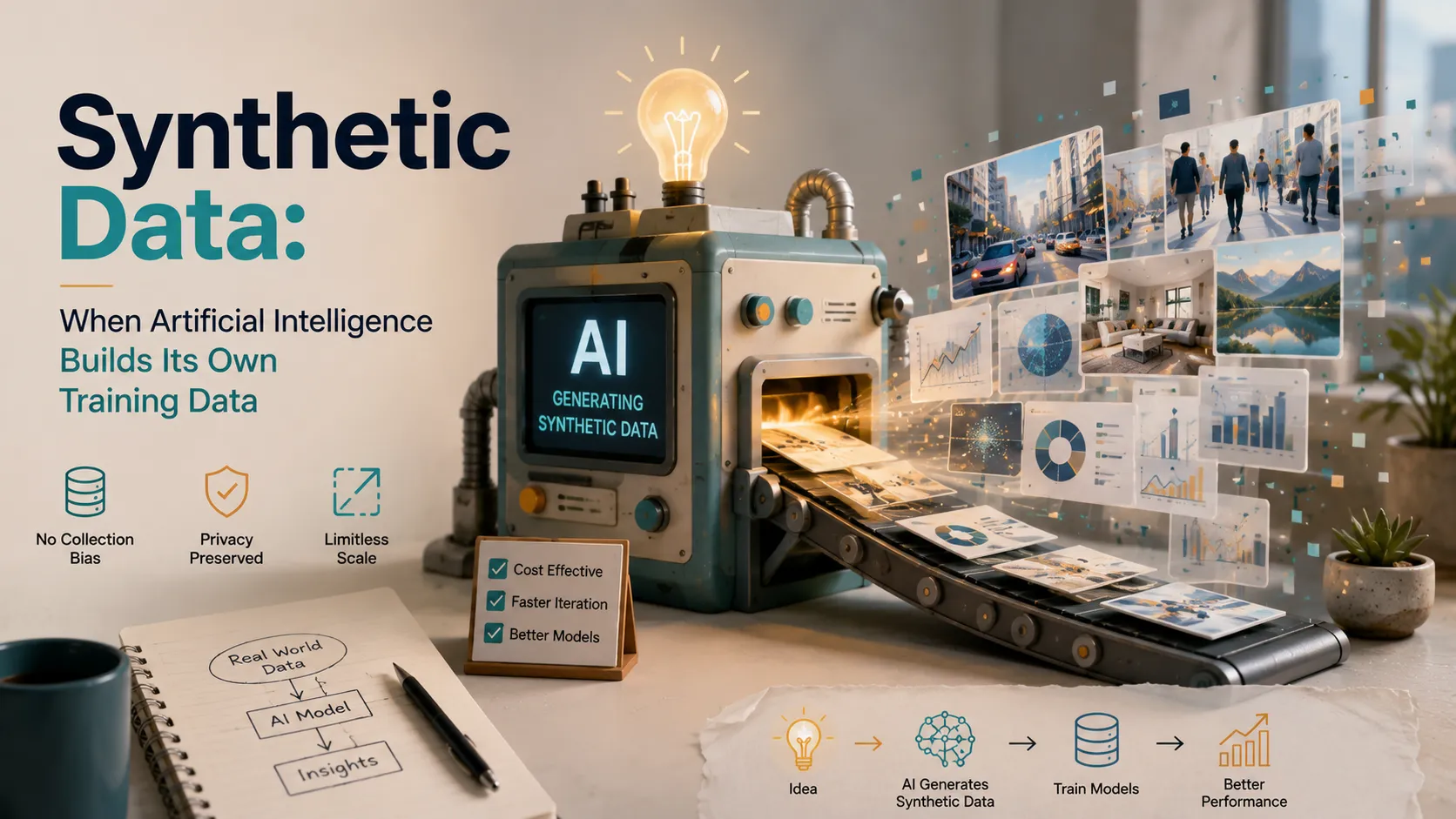
synthetic data — data that, instead of being collected from the real world, is generated by algorithms, yet is statistically and structurally close enough to real data that a
machine learning model can learn from it almost exactly the way it would from real-world data. This is no longer a lab experiment. Today, companies like Google, NVIDIA, Microsoft, and Tesla generate a significant share of their training data this exact way.
In this article, we'll break down what synthetic data really is, how it's created, why it has become critical to the future of AI, and what risks come along with it — all through simple, tangible examples.
What Exactly Is Synthetic Data?
Synthetic data refers to any data produced artificially through algorithms, statistical models, or computer simulations, rather than being recorded directly from real-world events. It can be images, text, audio, video, tabular financial records, or even 3D data from a simulated environment.
Here's the interesting part: synthetic data isn't "fake" or "worthless." When generated properly, it learns the statistical patterns, probability distributions, and hidden relationships between variables from real data, and then produces brand-new samples that preserve those same patterns — without being an exact copy of any real record. That's exactly why, in sensitive fields like patient health records, synthetic data has become a practical way to work around serious
privacy concerns.
Why Is AI So Hungry for Synthetic Data Today?
To understand why synthetic data matters so much, we need to look at three real crises facing the AI industry:
1. A Shortage of High-Quality Data
Today's large language models have effectively consumed a huge portion of the high-quality, accessible text on the internet. Some researchers warn that within a few years, there simply won't be enough high-quality human-generated text left to train even bigger models. This is exactly why major companies have turned to synthetic data generation to fill the gap.
2. The Cost and Time of Collecting Real Data
Collecting, labeling, and cleaning real-world data — especially for large-scale
data analysis — is expensive and slow. Manually labeling medical images by specialist physicians, for instance, is both costly and hard to scale. Synthetic data can generate millions of pre-labeled, ready-to-use samples in a matter of hours.
3. Privacy and Strict Regulations
In fields like banking, insurance, and healthcare, using real user data comes with serious legal restrictions. Synthetic data makes it possible to preserve the statistical patterns of real data without exposing any real identifying information — a topic closely tied to
AI's financial challenges and data security in
digital banking.
4. Rare and Dangerous Scenarios
Some situations are so rare or so dangerous that waiting for them to happen in the real world just to collect data isn't realistic — think complex road accidents or rare failures inside a power plant. Simulating these scenarios is a fast, safe way to generate training data.
How Is Synthetic Data Actually Created?
There are several core approaches to generating synthetic data:
Generative Adversarial Networks (GANs): Two neural networks compete against each other — one generates fake samples, the other tries to detect whether a sample is real or fake. This competition pushes the generator to produce increasingly realistic output. For a deeper dive, check out our article on
Generative Adversarial Networks (GANs).
Physical and 3D Simulation: In robotics and self-driving cars, realistic 3D environments are built where thousands of driving scenarios — different weather and traffic conditions — can be simulated safely.
Text Generation via Language Models: Large language models themselves can generate dialogue, question-answer pairs, or training text to teach the next generation of models — a technique closely connected to
transfer learning.
Data Augmentation: The simplest form of synthetic data is modifying existing real data — rotating, cropping, or recoloring an image, for example. You can read the full breakdown in our article on
data augmentation in machine learning.
Real-World Examples Where Synthetic Data Works Wonders
To really feel the power of this technology, here are some concrete, relatable examples:
- Self-driving cars: Companies like Waymo and Tesla log millions of simulated driving kilometers — a scale that would take years to reach in the real world and would involve real physical risk. This ties directly into the broader story covered in autonomous AI and the future of technology.
- Medical diagnosis: For rare diseases with very few real patient cases, researchers generate synthetic but statistically realistic MRI or CT scan images to strengthen diagnostic models — a trend closely linked to AI and human genetics.
- Bank fraud detection: Since real fraudulent transactions are rare and customer data disclosure is restricted, banks train anti-fraud systems on simulated synthetic transactions instead.
- Smart factories and robotics: A robot that needs to recognize a part under thousands of different angles and lighting conditions first practices in a simulated synthetic environment before ever touching a real production line.
- Drug discovery: Pharmaceutical companies use simulated data to predict how molecules will behave, shortening costly lab-based trial processes — a subject explored in our article on AI and the pharmaceutical drug discovery revolution.
Synthetic Data vs. Real Data: A Clear Comparison
| Feature | Real Data | Synthetic Data |
| Production Cost | High and slow | Low and fast |
| Privacy | High risk of identity exposure | Controllable and safer |
| Coverage of Rare Scenarios | Limited and difficult | Virtually unlimited simulation |
| Scalability | Slow | Very fast, millions of samples quickly |
| Real-World Accuracy | Always precise | Depends on the quality of the generator model |
| Bias Risk | Depends on the sample population | May amplify bias present in the source data |
Key Advantages of Synthetic Data
- Speed and scale: Generate millions of samples in hours instead of months.
- Privacy protection: Train models without exposing any real personal information.
- Full scenario coverage: From everyday cases to the rarest possible conditions.
- Lower labeling costs: Because the data is generated already labeled.
- Fairer algorithms: By generating more samples for underrepresented groups, model bias can be reduced — a topic connected to explainable AI.
Challenges and Risks You Shouldn't Ignore
Synthetic data is not a flawless, magic solution. The most important concerns include:
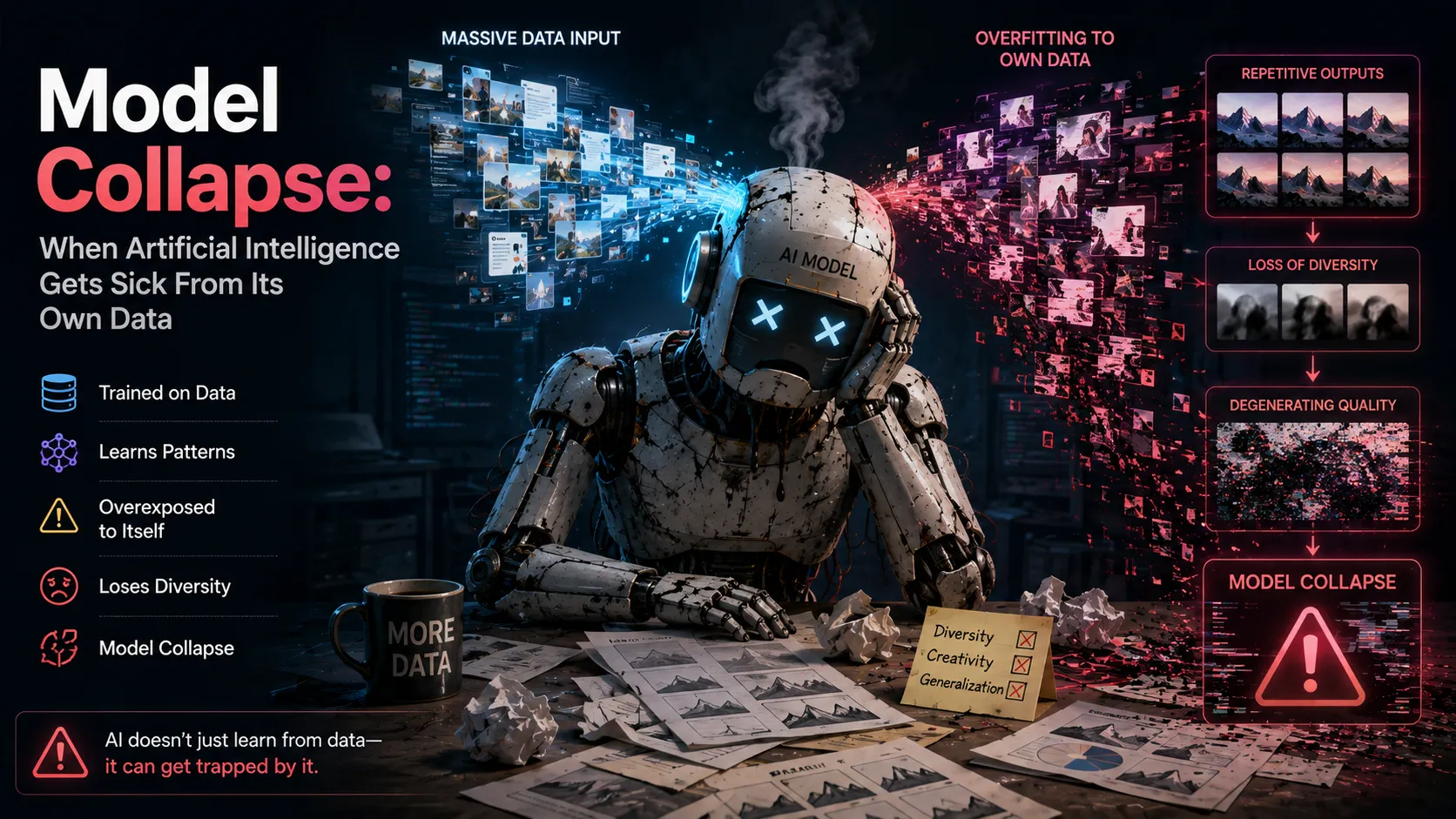
Model Collapse: If a model is repeatedly trained on data generated by itself or similar models, output diversity and quality gradually degrade, and the model starts repeating simplistic, low-variety patterns.
Amplifying Existing Bias: If the original data the model learned from carries bias, the synthetic data generated from it reproduces — and sometimes even intensifies — that same bias.
The Reality Gap: No matter how advanced, synthetic data can miss the small, unpredictable details of the real world — a concept closely related to
AI hallucination, where a model generates something that looks real but isn't.
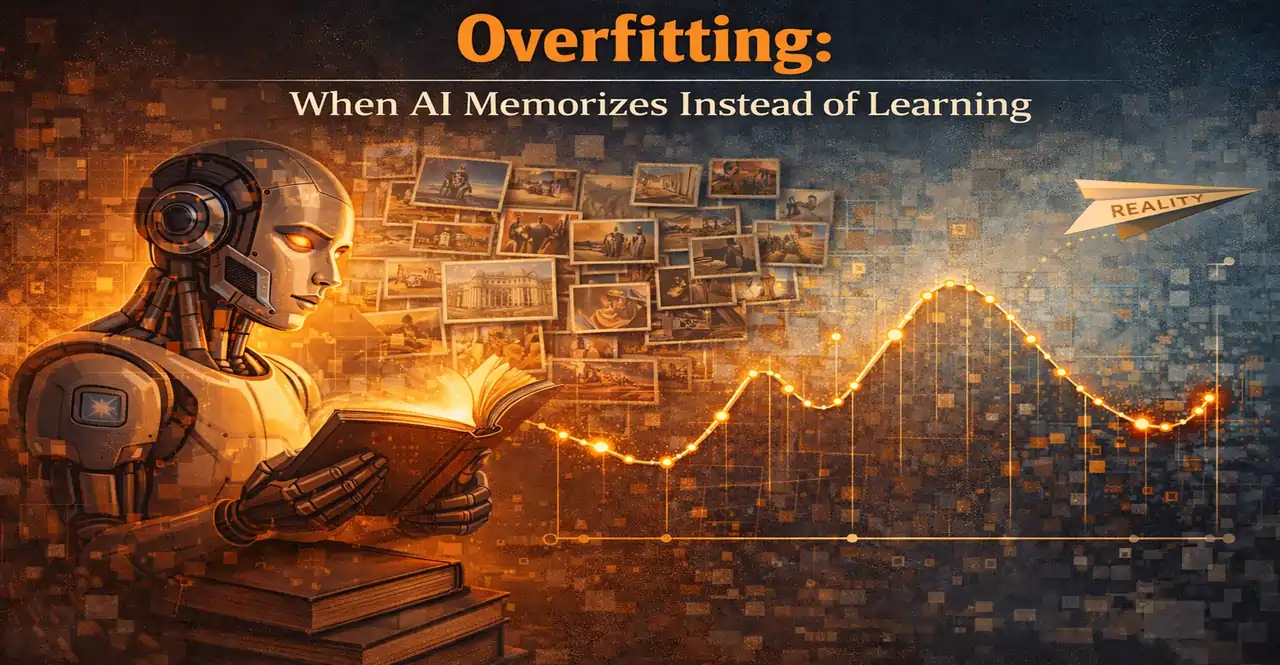
Hidden Overfitting: Misusing synthetic data can lead to
overfitting — the model performs great on synthetic patterns but poorly once it meets the real world.
Industries Getting the Most Out of Synthetic Data Today
From automotive and robotics to banking, insurance, video games, cybersecurity, and even
smart agriculture, almost no industry is untouched by synthetic data. Even in content production and
big data analysis, companies use simulated data to test systems before real-world data ever enters the pipeline.
The Future of Synthetic Data
Analysts expect the share of synthetic data in AI training pipelines to grow significantly in the coming years. Some believe a substantial portion of the data used to train next-generation models will no longer be collected from the real world at all — it will be generated by AI itself. This cycle, combined with advances like
federated learning, which preserves privacy at a distributed level, could pave the way toward more responsible and safer AI development — as long as the risks of model collapse and data bias are taken seriously.
Conclusion
Synthetic data is no longer a niche technical trick — it's the backbone behind many of the recent breakthroughs in artificial intelligence, from self-driving cars to medical diagnostics and drug discovery. This technology lets us build models faster, cheaper, and with stronger privacy protection, while performing better in the real world. But like any powerful tool, using it wisely — balanced with real-world data — is the real key to success.
If you want to see how generative models put this kind of data to work creating images and content, check out our
AI image tools and try it for yourself.



 AI Fundamentals & Algorithms
 AI Fundamentals & Algorithms
 AI Fundamentals & Algorithms
 AI Fundamentals & Algorithms
 AI Fundamentals & Algorithms
 AI Fundamentals & Algorithms