

Blogs / Overfitting: When AI Memorizes Instead of Learning
Overfitting: When AI Memorizes Instead of Learning
Introduction
Consider a student who has memorized every example in the math textbook word for word for an upcoming exam. They can solve those exact same problems perfectly. But when the question is changed even slightly, they become completely confused. This student hasn’t truly learned the concepts—they’ve only memorized the answers.
This is exactly Overfitting in machine learning - one of the most common and dangerous problems that can make an AI project completely useless.
In previous articles, we examined various optimization challenges:
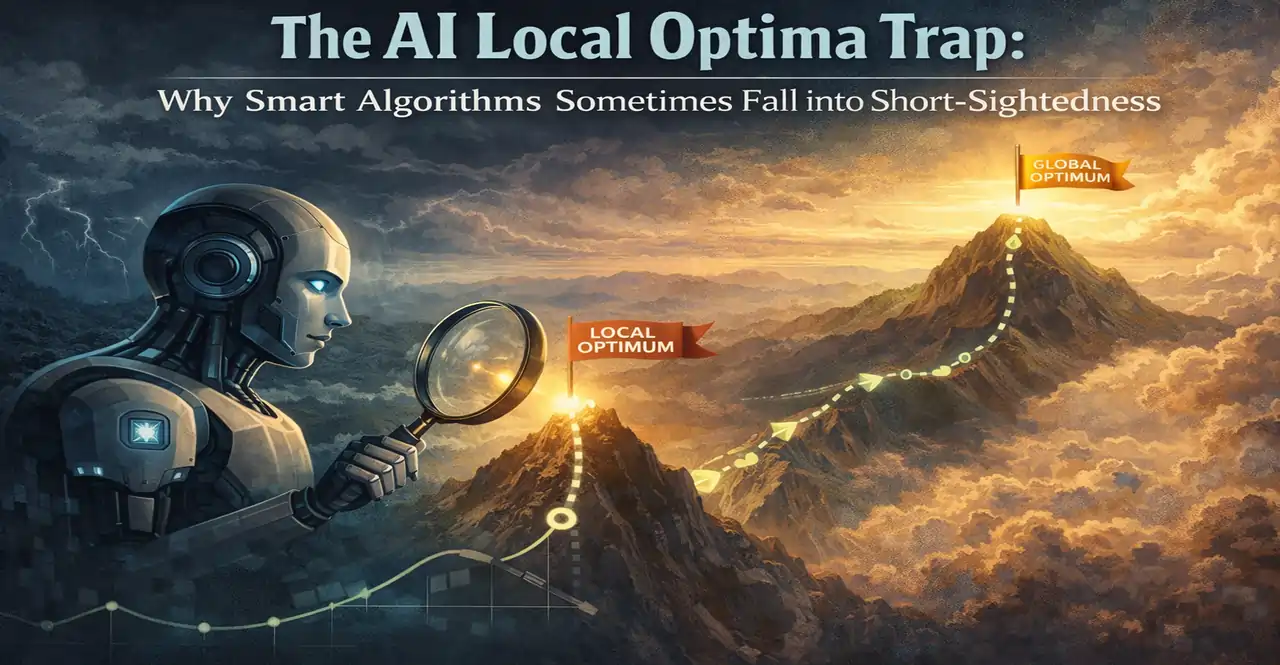
- Local Optima Trap: Getting stuck in average solutions
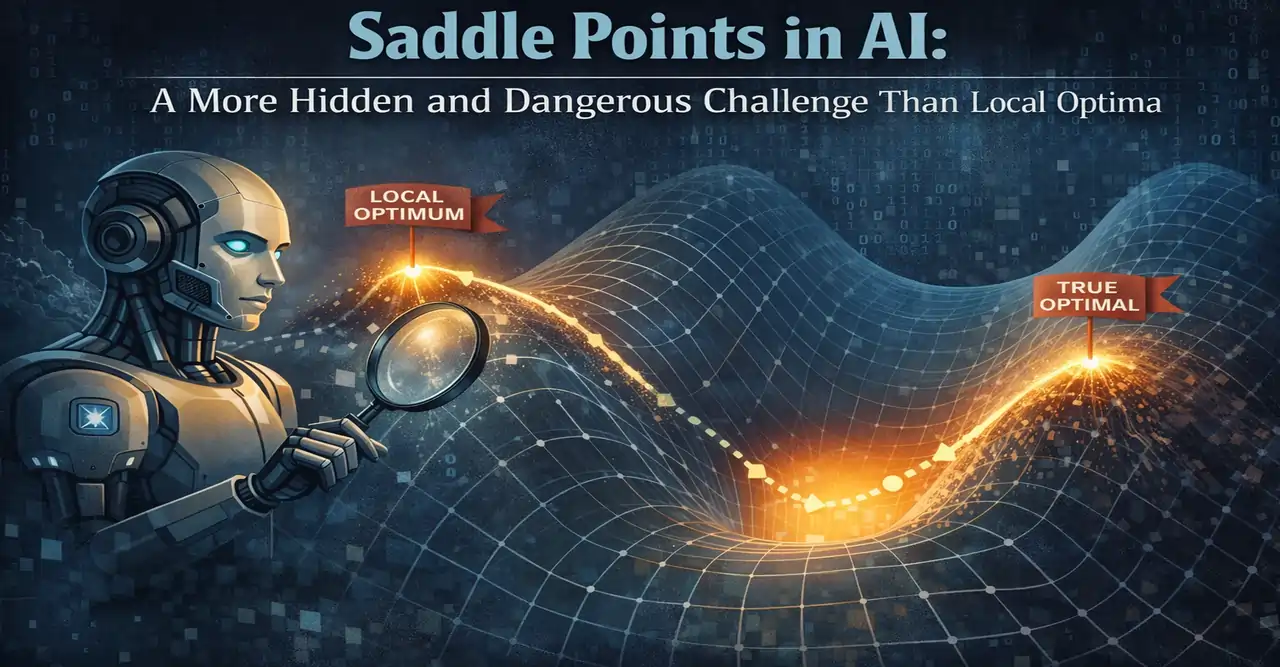
- Saddle Points: Deceptive points in search space
- Plateau: Journey through flat desert
- Optimization Catastrophes: Mode Collapse, Catastrophic Forgetting
But Overfitting is different - this is a learning problem, not optimization. Your model is well optimized, loss is low, but it's useless in the real world!
In this comprehensive article you'll learn:
- Why complex models suffer from overfitting
- How to detect if your model is overfit
- Professional Regularization techniques (L1, L2, Dropout, etc.)
- What is Bias-Variance Tradeoff and how to balance it
- Practical code and real examples
What is Overfitting? Precise Definition
Mathematical Definition
Overfitting means:
Training Error << Validation ErrorExample:Training Accuracy = 99%Validation Accuracy = 65% ← 💥 Overfitting!
Your model is excellent on training data but weak on new data!
Intuitive Definition
Imagine you want to find a function that connects points:
Underfitting:
Simple line passing through points- Too simple- High training error- High validation error
Good Fit:
Smooth curve capturing general pattern- Appropriate complexity- Low training error- Low validation error
Overfitting:
Complex curve passing exactly through all points- Too complex- Training error = 0- Validation error very high!
Computational Example
Suppose we have 10 points and want to fit a polynomial:
python
# Real data: y = 2x + 1 + noisex_train = [1, 2, 3, 4, 5, 6, 7, 8, 9, 10]y_train = [3.1, 5.2, 6.8, 9.1, 10.9, 13.2, 15.1, 16.8, 19.2, 20.9]# Model 1: Degree 1 (simple line) - Underfitting# y = ax + b# Training Error = 0.5# Model 2: Degree 2 (curve) - Good Fit# y = ax² + bx + c# Training Error = 0.1# Validation Error = 0.12 ← Good!# Model 3: Degree 9 (too complex) - Overfitting# y = a₉x⁹ + a₈x⁸ + ... + a₁x + a₀# Training Error = 0.0001 ← Looks great# Validation Error = 15.7 ← 💥 Disaster!
The degree 9 model fits training exactly, but is a disaster on validation because it learned the noise too!
Why Does Overfitting Happen? Root Causes
1. Model Too Complex (High Capacity)
python
# Example: Cat vs Dog classification with 10 training images# Simple model: 100 parameters ✅model_simple = Sequential([Dense(10, activation='relu'),Dense(2, activation='softmax')])# Complex model: 10,000,000 parameters ❌model_complex = Sequential([Dense(1000, activation='relu'),Dense(1000, activation='relu'),Dense(1000, activation='relu'),Dense(1000, activation='relu'),Dense(2, activation='softmax')])
Result: Complex model with 10 million parameters for 10 images will definitely overfit!
Rule of Thumb:
Number of parameters << Number of training samplesGood: 1000 parameters, 100,000 samplesBad: 1,000,000 parameters, 100 samples
2. Small Dataset
python
# Scenario 1: 1000 images# ResNet-50 (25M parameters)# Result: Severe overfitting! ❌# Scenario 2: 1,000,000 images# ResNet-50 (25M parameters)# Result: Works ✅# Scenario 3: 1000 images + Data Augmentation# ResNet-50 (25M parameters)# Result: Better ✅
Rule: For deep networks, you need lots of data!
3. Training Too Long (Too Many Epochs)
python
# Epoch 1: Train=80%, Val=78% ← Good# Epoch 10: Train=95%, Val=90% ← Great# Epoch 20: Train=98%, Val=92% ← Best point!# Epoch 50: Train=99.5%, Val=88% ← Starting to overfit# Epoch 100: Train=99.9%, Val=75% ← 💥 Complete overfitting!
Lesson: More training is not always better!
4. Noise in Data
python
# Training data:# 90% correct labels# 10% incorrect labels (noise)# Very powerful model:# Learns to fit even the noise!# Result: Performs poorly on real data (without noise)
5. Lack of Diversity in Data
python
# Example: Face recognition# All training images: bright light, frontal angle# Model: Only learns these conditions# Test: Image with low light, different angle# Result: Failure! ❌
Bias-Variance Tradeoff: The Heart of the Matter
Definition of Bias and Variance
Bias:
- Error from over-simplification
- Simple model can't learn complex pattern
- High Bias → Underfitting
Variance:
- Error from over-sensitivity to training data
- Model learns noise too
- High Variance → Overfitting
Mathematical Formula:
Total Error = Bias² + Variance + Irreducible ErrorIrreducible Error = Inherent noise in data (uncontrollable)
Comparison Table
| Feature | High Bias (Underfitting) | Sweet Spot | High Variance (Overfitting) |
|---|---|---|---|
| Training Error | High (e.g., 30%) | Low (e.g., 5%) | Very low (e.g., 0.1%) |
| Validation Error | High (e.g., 32%) | Low (e.g., 6%) | Very high (e.g., 25%) |
| Gap | Small (2%) | Small (1%) | Very large (24.9%) |
| Model Complexity | Too simple | Appropriate | Too complex |
| Solution | More complex model, more features | - | Regularization, more data |
Diagnosis: Which Problem Do You Have?
python
def diagnose_model(train_acc, val_acc):gap = train_acc - val_accif train_acc < 0.7 and val_acc < 0.7:return "High Bias (Underfitting) - Model too simple!"elif gap > 0.15: # Gap more than 15%return "High Variance (Overfitting) - Model is memorizing!"elif train_acc > 0.9 and val_acc > 0.85:return "Sweet Spot - Excellent! 🎉"else:return "Needs more investigation"# Example:print(diagnose_model(0.99, 0.65)) # High Variance (Overfitting)print(diagnose_model(0.65, 0.63)) # High Bias (Underfitting)print(diagnose_model(0.92, 0.89)) # Sweet Spot
Regularization Techniques: Anti-Overfitting Toolbox
1. L1 and L2 Regularization (Weight Decay)
Idea: Penalize large weights!
L2 Regularization (Ridge):
Loss_total = Loss_data + λ Σ(w²)λ = regularization coefficient (usually 0.001 to 0.1)
PyTorch Code:
python
# Method 1: In optimizeroptimizer = torch.optim.Adam(model.parameters(),lr=0.001,weight_decay=0.01 # This is L2!)# Method 2: Manual in lossdef l2_regularization(model, lambda_=0.01):l2_loss = 0for param in model.parameters():l2_loss += torch.sum(param ** 2)return lambda_ * l2_loss# In training loop:loss = criterion(output, target) + l2_regularization(model)
L1 Regularization (Lasso):
Loss_total = Loss_data + λ Σ|w|Code:
python
def l1_regularization(model, lambda_=0.01):l1_loss = 0for param in model.parameters():l1_loss += torch.sum(torch.abs(param))return lambda_ * l1_lossloss = criterion(output, target) + l1_regularization(model)
Difference L1 vs L2:
- L2: Makes weights small but doesn't make them zero
- L1: Makes some weights exactly zero (Feature Selection)
2. Dropout: Randomly Turn Off Neurons
Idea: In each iteration, randomly turn off some neurons!
python
class ModelWithDropout(nn.Module):def __init__(self):super().__init__()self.fc1 = nn.Linear(784, 512)self.dropout1 = nn.Dropout(p=0.5) # 50% neurons turned offself.fc2 = nn.Linear(512, 256)self.dropout2 = nn.Dropout(p=0.3) # 30% offself.fc3 = nn.Linear(256, 10)def forward(self, x):x = F.relu(self.fc1(x))x = self.dropout1(x) # Dropout only in trainingx = F.relu(self.fc2(x))x = self.dropout2(x)x = self.fc3(x)return x# Important: Turn off dropout in evaluationmodel.eval() # Automatically turns off dropout
Why It Works:
- Model can't depend on one specific neuron
- Forced to learn diverse features
- Like training ensemble of different models
Dropout Rate Selection:
- p=0.2: For early layers
- p=0.5: For middle layers (standard)
- p=0.7: If severe overfitting
3. Early Stopping: Stop at Right Time
Idea: When validation error starts increasing, stop!
python
class EarlyStopping:def __init__(self, patience=7, min_delta=0.001):"""patience: How many epochs to waitmin_delta: Minimum acceptable improvement"""self.patience = patienceself.min_delta = min_deltaself.counter = 0self.best_loss = Noneself.early_stop = Falseself.best_model = Nonedef __call__(self, val_loss, model):if self.best_loss is None:self.best_loss = val_lossself.best_model = copy.deepcopy(model.state_dict())elif val_loss > self.best_loss - self.min_delta:# Validation loss didn't improveself.counter += 1print(f'EarlyStopping counter: {self.counter}/{self.patience}')if self.counter >= self.patience:self.early_stop = Trueelse:# Validation loss improvedself.best_loss = val_lossself.best_model = copy.deepcopy(model.state_dict())self.counter = 0return self.early_stopdef load_best_model(self, model):"""Load best model"""model.load_state_dict(self.best_model)# Usage:early_stopping = EarlyStopping(patience=10, min_delta=0.001)for epoch in range(100):train_loss = train_epoch()val_loss = validate()print(f'Epoch {epoch}: Train Loss={train_loss:.4f}, Val Loss={val_loss:.4f}')if early_stopping(val_loss, model):print("Early stopping triggered!")break# Load best modelearly_stopping.load_best_model(model)
4. Data Augmentation: Artificial Data Increase
Idea: Create new data from existing data!
For Images:
python
from torchvision import transformstrain_transform = transforms.Compose([transforms.RandomHorizontalFlip(p=0.5), # Horizontal fliptransforms.RandomRotation(degrees=15), # Rotate ±15 degreestransforms.ColorJitter( # Color changebrightness=0.2,contrast=0.2,saturation=0.2),transforms.RandomCrop(224, padding=4), # Random croptransforms.ToTensor(),transforms.Normalize(mean=[0.485, 0.456, 0.406],std=[0.229, 0.224, 0.225])])train_dataset = ImageFolder(train_dir, transform=train_transform)
For Text (NLP):
python
def augment_text(text):"""Augmentation techniques for text"""augmented = []# 1. Synonym Replacementaugmented.append(replace_with_synonyms(text))# 2. Random Deletionaugmented.append(random_deletion(text, p=0.1))# 3. Random Swapaugmented.append(random_swap(text))# 4. Back Translationaugmented.append(back_translate(text, target_lang='fr'))return augmented
5. Ensemble Methods: Power of Combination
Idea: Train multiple models and combine results!
Bagging (Bootstrap Aggregating):
python
from sklearn.ensemble import BaggingClassifierfrom sklearn.tree import DecisionTreeClassifier# Train 10 different models on different data subsetsbagging = BaggingClassifier(base_estimator=DecisionTreeClassifier(),n_estimators=10,max_samples=0.8, # Each model sees 80% of databootstrap=True)bagging.fit(X_train, y_train)predictions = bagging.predict(X_test)
Example with Deep Learning:
python
class EnsembleModel:def __init__(self, models):self.models = modelsdef predict(self, x):predictions = []for model in self.models:model.eval()with torch.no_grad():pred = model(x)predictions.append(pred)# Average predictionsensemble_pred = torch.mean(torch.stack(predictions), dim=0)return ensemble_pred# Train 5 models with different initializationmodels = []for i in range(5):model = create_model()train(model) # Train with different seedmodels.append(model)# Use ensembleensemble = EnsembleModel(models)final_prediction = ensemble.predict(test_data)
Why It Works:
- Each model has different errors
- By averaging, errors cancel out
- Usually adds 2-5% accuracy!
Real Examples: How Big Companies Combat Overfitting
1. ImageNet Classification - ResNet
Challenge: Very deep networks (152 layers) were overfitting.
Microsoft's Solution:
python
# Combination of techniques:class ResNetBlock(nn.Module):def __init__(self):# 1. Residual Connections for gradient flowself.conv1 = nn.Conv2d(...)# 2. Batch Normalizationself.bn1 = nn.BatchNorm2d(...)# 3. Dropout (in later versions)self.dropout = nn.Dropout(0.2)def forward(self, x):residual = xout = self.conv1(x)out = self.bn1(out)out = F.relu(out)out = self.dropout(out)out += residual # Skip connectionreturn out# 4. Heavy Data Augmentationtrain_transform = transforms.Compose([transforms.RandomResizedCrop(224),transforms.RandomHorizontalFlip(),transforms.ColorJitter(0.4, 0.4, 0.4, 0.1),transforms.ToTensor()])# 5. Weight Decayoptimizer = SGD(model.parameters(), lr=0.1, weight_decay=1e-4)
Result: ResNet-152 with 60M parameters, no overfitting!
2. GPT-3 - Large Language Model
Challenge: 175 billion parameters - very high overfitting risk!
OpenAI's Solution:
python
# 1. Huge data (45TB text!)# 2. Dropout everywhereclass GPT3Layer:def __init__(self):self.attention_dropout = nn.Dropout(0.1)self.residual_dropout = nn.Dropout(0.1)self.output_dropout = nn.Dropout(0.1)# 3. Weight Decayoptimizer = AdamW(model.parameters(), weight_decay=0.1)# 4. Gradient Clippingtorch.nn.utils.clip_grad_norm_(model.parameters(), 1.0)# 5. Learning Rate Scheduling with Warmup# 6. Early Stopping based on validation loss
Result: Generalizable model even with 175B parameters!
Comprehensive Checklist: Preventing Overfitting
Before Training ✅
Data:
- Proper train/val/test split (usually 70/15/15)
- Data augmentation for diversity
- Check class balance
- Remove duplicate data
Architecture:
- Start simple, gradually make complex
- Add Dropout (p=0.5 standard)
- Batch Normalization in deep layers
- Number of parameters << number of training samples
During Training 📊
Monitoring:
- Plot train vs val loss
- Calculate gap between train and val accuracy
- Check predictions on random samples
Settings:
- Appropriate learning rate
- Weight decay (L2 regularization)
- Gradient clipping if needed
- Early stopping enabled
After Training 🎯
Evaluation:
- Test on test set (only once!)
- Cross-validation for assurance
- Check confusion matrix
- Error analysis (which samples were misclassified?)
Improvement:
- If overfitting: More regularization, more data
- If underfitting: More complex model, more features
- Ensemble of multiple models
- Fine-tune hyperparameters
Conclusion: The Art and Science of Balance
Overfitting is one of the fundamental challenges of machine learning that requires careful balance between model power and generalization ability.
Key Points:
- Overfitting ≠ Bad Model: Means model is too powerful but has little data or no regularization
- Bias-Variance Tradeoff: The heart of the matter - must find balance
- Regularization is Essential: L2, Dropout, Early Stopping - always use them
- Monitoring is Key: Always check gap between train and val
- Ensemble is Powerful: 2-5% free accuracy!
Industry Lessons:
- Microsoft ResNet: Residual + BatchNorm + Data Augmentation
- OpenAI GPT-3: Dropout everywhere + Weight Decay + huge data
- Kaggle Winners: Cross-Validation + Ensemble + Feature Engineering
Final Recommendation:
Best way to prevent overfitting:
- Start simple
- Gradually make complex
- Always monitor
- Don't forget regularization
- Be patient - needs hours of tuning!
Remember: Good model = Power + Generalization, not just high accuracy on training!
✨
With DeepFa, AI is in your hands!!
🚀Welcome to DeepFa, where innovation and AI come together to transform the world of creativity and productivity!
- 🔥 Advanced language models: Leverage powerful models like Dalle, Stable Diffusion, Gemini 2.5 Pro, Claude 4.5, GPT-5, and more to create incredible content that captivates everyone.
- 🔥 Text-to-speech and vice versa: With our advanced technologies, easily convert your texts to speech or generate accurate and professional texts from speech.
- 🔥 Content creation and editing: Use our tools to create stunning texts, images, and videos, and craft content that stays memorable.
- 🔥 Data analysis and enterprise solutions: With our API platform, easily analyze complex data and implement key optimizations for your business.
✨ Enter a new world of possibilities with DeepFa! To explore our advanced services and tools, visit our website and take a step forward:
Explore Our ServicesDeepFa is with you to unleash your creativity to the fullest and elevate productivity to a new level using advanced AI tools. Now is the time to build the future together!