Introduction
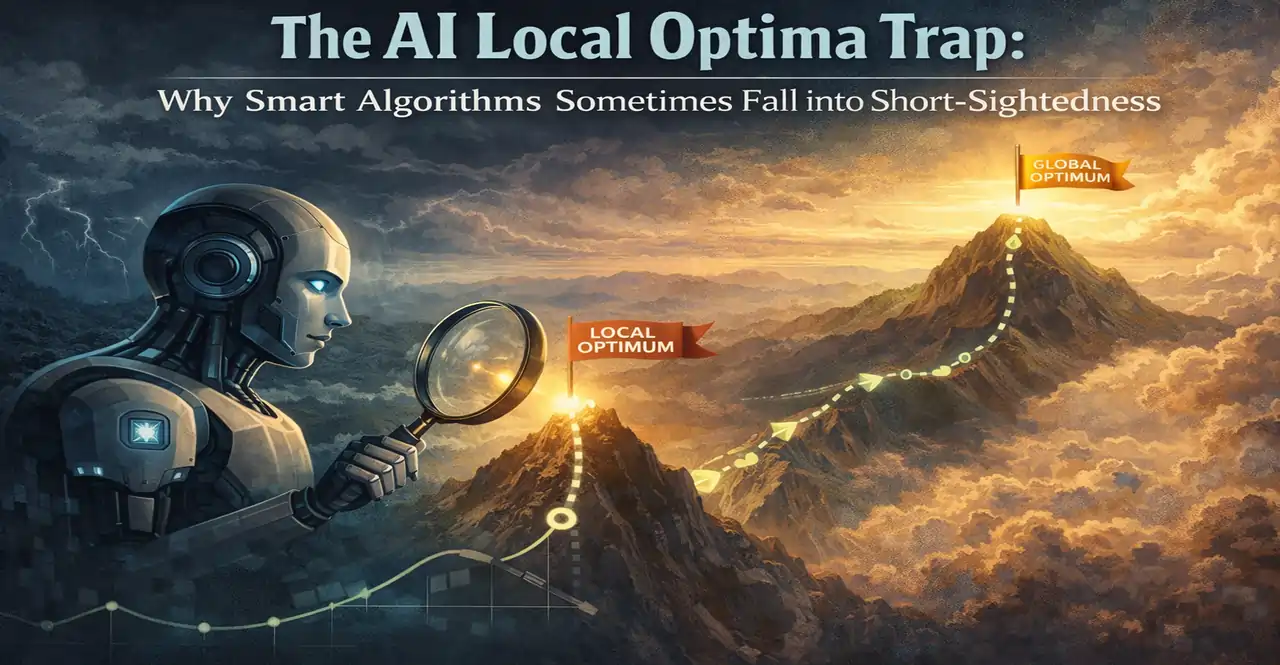
Imagine you're a professional mountaineer trying to climb Mount Everest. You start your ascent at night, and in complete darkness, you can only see a few meters around you. With each step, you try to move upward. After hours of effort, you reach a point where every step you take leads you downward. You're thrilled, thinking you've reached the summit, but when morning comes and the fog clears, you realize you're standing on a small hill, and the actual peak is kilometers away!
This is exactly what's known as the
Local Optima Trap in the world of
artificial intelligence and machine learning. This phenomenon is one of the fundamental challenges in training
deep learning models and optimization algorithms that can make the difference between an average AI system and an exceptional one.
In this article, we'll dive deep into this phenomenon and show how the world's largest tech companies grapple with this challenge and what solutions exist to escape this trap.
What is the Local Optima Trap and Why Does It Matter for AI?
The Concept of Optimization in Machine Learning
In
machine learning, the main goal is to find the best set of parameters (weights) that minimizes the model's error. This process is like finding the lowest point in a complex valley. In mathematics, we call this point the
Global Optimum.
But the problem is that the search space usually resembles a mountain range full of valleys and peaks, not a simple valley. In this space, there may be various points that are lower than their surroundings but are not the lowest point in the entire space. We call these points Local Optima.
Why is the Local Optima Trap a Disaster?
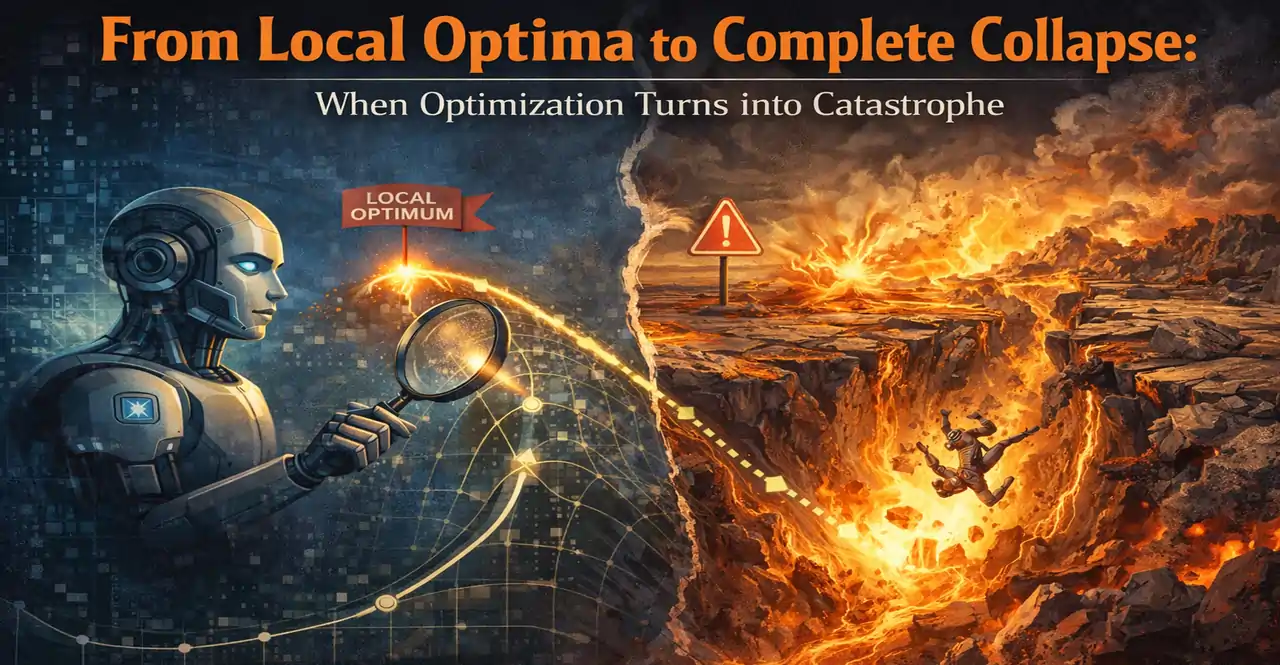
When a machine learning algorithm gets stuck in a local optimum:
- Below-par Performance: Instead of reaching 95% accuracy, the model might stop at 75%
- Wasted Resources: Hours of computational time and heavy GPU costs for incomplete results
- Incorrect Decisions: In sensitive applications like medical diagnosis or autonomous vehicles, this can be dangerous
- Innovation Limitations: Prevents discovering better and more creative solutions
Root Causes of Getting Trapped in Local Optima
1. Nature of Gradient-Based Algorithms
Most modern
deep learning algorithms use the
Gradient Descent method. This method works like mountaineering in the dark - it only has access to local information and cannot see the entire landscape.
Concrete Example: Imagine you want to build a
neural network to distinguish cats from dogs. If your network randomly learns at the beginning of training that "anything with lots of fur is a cat," it might get stuck in this oversimplification and never learn more complex features like ear shapes or eye expressions.
2. Search Space Complexity
In
deep neural networks, the search space can have billions or even trillions of dimensions. For example, the GPT-3 model has 175 billion parameters - that means a 175 billion-dimensional search space!
3. Data Quality and Distribution
If your training data has bias, the model might reach a local solution that reflects this bias and never escape from it.
Real Example: A hiring system based on AI trained only on male resumes might get stuck in a local optimum that
rejects women, even if they're qualified.
Real-World Examples of Local Optima Trap in Industry
1. Recommendation Systems
Video streaming platforms like Netflix face this problem. When their recommendation system starts showing movies of a specific genre to a user and the user watches them (because they have no other option), the algorithm assumes they like this genre and shows more of the same. The user gets trapped in a
Filter Bubble.
Netflix's Solution: Using
Exploration-Exploitation algorithms that occasionally suggest different content to find out if a better optimum exists.
2. Algorithmic Trading
In
AI-based trading, an algorithm might find a profitable strategy that works in specific market conditions (local optimum), but when conditions change, it suffers heavy losses because it hasn't reached a more flexible strategy (global optimum).
Real Case: In 2010, a trading algorithm caused the "Flash Crash" which in 36 minutes wiped trillions of dollars from the US stock market value - the result of getting stuck in an ineffective local optimum.
3. AI Drug Discovery
In
discovering new drugs, AI algorithms might find a molecular structure that looks good in computer simulations (local optimum) but performs poorly in real tests because a better structure (global optimum) exists that was missed.
4. Autonomous Vehicles
Autonomous driving systems might get stuck in a local optimum of "excessive safety" - being so cautious they're practically unusable in traffic. Or conversely, in a local optimum of "excessive efficiency" that sacrifices safety.
Professional Strategies for Escaping the Local Optima Trap
1. Random Restart
Idea: Instead of training once, start multiple times with different random starting points.
Practical Example: When DeepMind trained AlphaGo, they ran hundreds of parallel versions with different initial parameters and selected the best result.
2. Simulated Annealing
This technique is inspired by statistical physics. Initially, the algorithm is allowed to make "bad" moves (like going up instead of down) to escape local wells. Gradually, this freedom decreases.
3. Genetic Algorithms
Idea: Like natural evolution, create a population of solutions, select the best ones, combine them (crossover), and apply random changes (mutation).
Practical Example: OpenAI used evolutionary algorithms to train simulated robots that can walk, run, and even do parkour.
4. Transfer Learning
Instead of starting from scratch, start with a pre-trained model that's likely positioned better in the search space.
Success Story:
Large language models like BERT and GPT use this method - first pre-trained on billions of pages of text, then fine-tuned for specific tasks.
5. Ensemble Learning
Instead of relying on one model, train multiple models with different approaches and combine their results.
| Technique | How It Works | Main Advantage | Disadvantages |
| Random Restart | Multiple training runs with different starts | Simple and effective | High computational cost |
| Simulated Annealing | Allows bad moves initially | Escapes local wells | Complex parameter tuning |
| Genetic Algorithms | Evolution of solution population | Broad search space exploration | Slow and requires large population |
| Momentum | Uses previous movement | Passes through small wells | Might overshoot optima |
| Ensemble Learning | Combining multiple models | High robustness and accuracy | Increased complexity and model size |
6. Adaptive Learning Rate
Using smart algorithms like Adam, RMSprop, or AdaGrad that adjust the learning rate for each parameter independently.
Why It's Effective: These algorithms can increase movement speed in flat paths and decrease it in steep areas, reducing the likelihood of getting stuck in local optima.
7. Dropout and Regularization
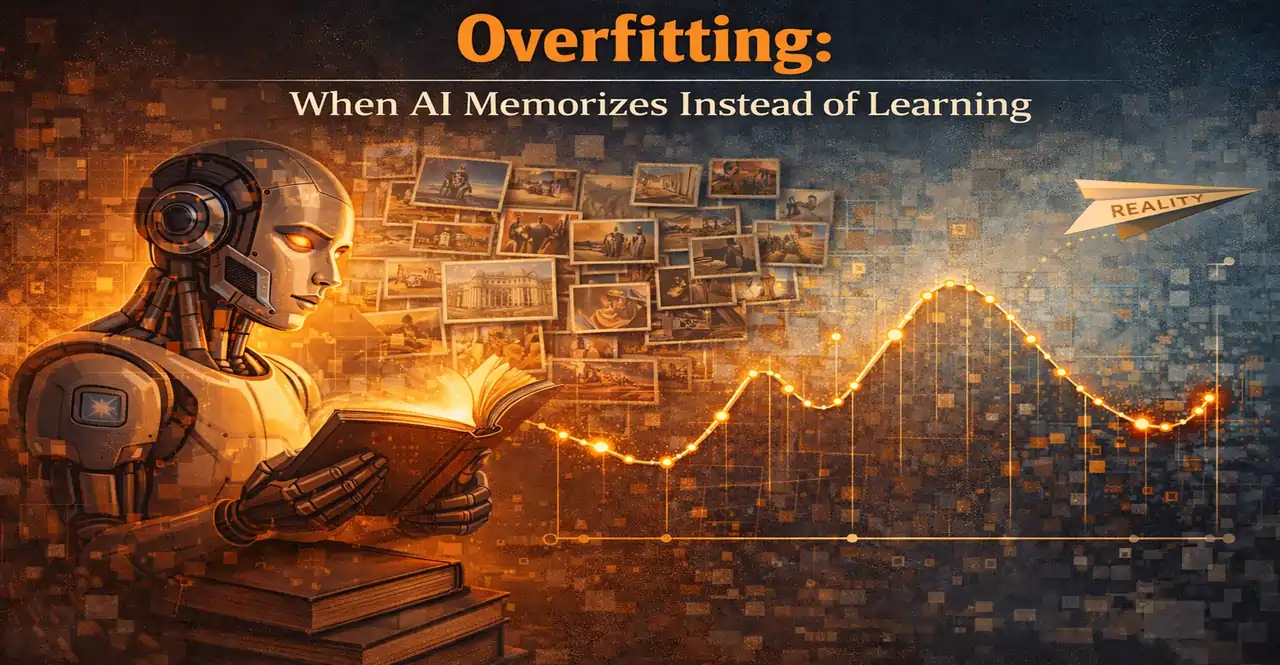
These techniques prevent overfitting by adding noise and constraints to the model, forcing it to find more general solutions.
Practical Example: In training
convolutional networks for image recognition, Dropout prevents the network from becoming dependent on a specific feature and helps it learn more diverse patterns.
Using Meta-Learning to Prevent Local Optima Trap
One of the most advanced methods is
Meta-Learning or "learning to learn." In this approach, a model learns how to perform optimization to reduce the likelihood of getting stuck in local optima.
Advanced Application: Companies like Google Brain and OpenAI use this technique to automatically find the best hyperparameters, which is itself a type of optimization.
Impact of Local Optima Trap in Critical Applications
1. Medical Diagnosis Systems
In
disease diagnosis with AI, a model might get stuck in a local optimum that "diagnoses all cases as healthy" because 95% of training samples were healthy. This while the main goal is detecting the 5% who are sick!
Practical Solution: Using Class Weighting and Data Augmentation to balance the data.
2. Cybersecurity Systems
In
detecting cyber attacks, the algorithm might get stuck in a local optimum of "everything is safe" and fail to detect new attacks.
Defense Strategy: Using
continual learning that constantly updates the model with new attack patterns.
3. Industrial Robots
In
robotics, a robot might find an efficient method to perform a task (local optimum) that works in specific conditions but fails in different environments.
The Future: Self-Improving AI and Escaping Optima Traps
Recent research on
self-improving models and
AGI shows that the future of AI lies in systems that can optimize themselves and escape local optima traps.
Advanced Example:
Self-Rewarding models that can rewrite their own objective function to transcend the limitations of the initial definition.
Role of New Architectures
Emerging architectures like:
All attempt to design the search space to have fewer local optima.
Practical Solutions for Developers
Local Optima Prevention Checklist
Data Preparation:
Architecture Selection:
Training Strategy:
- Run multiple runs with different seeds
- Use learning rate scheduling
- Enable early stopping
- Take validation set seriously
Monitoring and Evaluation:
- Track learning curve plots
- If loss stops decreasing, change hyperparameters
- Use multiple evaluation metrics
Advanced Optimization:
- Try ensemble learning
- Use Bayesian Optimization for hyperparameter tuning
- Apply regularization techniques
Conclusion: Smart Optimization in the AI Era
The local optima trap is one of the biggest challenges in machine learning that can make the difference between success and failure of an AI project. But with a deep understanding of this problem and using appropriate techniques, the probability of getting caught in this trap can be minimized.
Key points to remember:
- Diversity of Approach: Never settle for one training method
- Patience and Monitoring: Optimization is an iterative process, not a one-time event
- Leveraging Community Experience: Use open-source code and pre-trained models
- Trial and Error: The best solutions usually come from repeated experiments
- Continuous Learning: The AI world is rapidly changing, follow new techniques
With AI progressing toward
AGI and
self-improving systems, it's expected that models themselves will learn how to escape these traps. But until then, it's our duty as developers and researchers to help AI systems reach their true potential with knowledge and creativity.
The future belongs to those who not only know how to run algorithms but understand why they sometimes don't work and how to make them better. The local optima trap isn't just a problem - it's an opportunity for deeper understanding of machine learning and creating innovative solutions.



 AI Fundamentals & Algorithms
 AI Fundamentals & Algorithms
 AI Fundamentals & Algorithms
 AI Fundamentals & Algorithms
 AI Fundamentals & Algorithms
 AI Fundamentals & Algorithms