Introduction
Imagine sitting at your laptop without knowing a single line of code, but with a clear idea in your head: an app that tracks your daily expenses and shows you a beautiful chart at the end of the month. Instead of opening a programming textbook, you simply type: "Build me an app that logs my expenses and shows a monthly chart" — and a few minutes later, a real, working, usable application appears in front of you. This is no longer fantasy; it's called Vibe Coding, and it's one of the strangest and most fascinating shifts artificial intelligence has brought to the world of software. In this article, we'll take a deep look at what Vibe Coding actually is, how it works, which tools are leading the way, and why even people with zero programming background can use it.
What Exactly Is Vibe Coding?
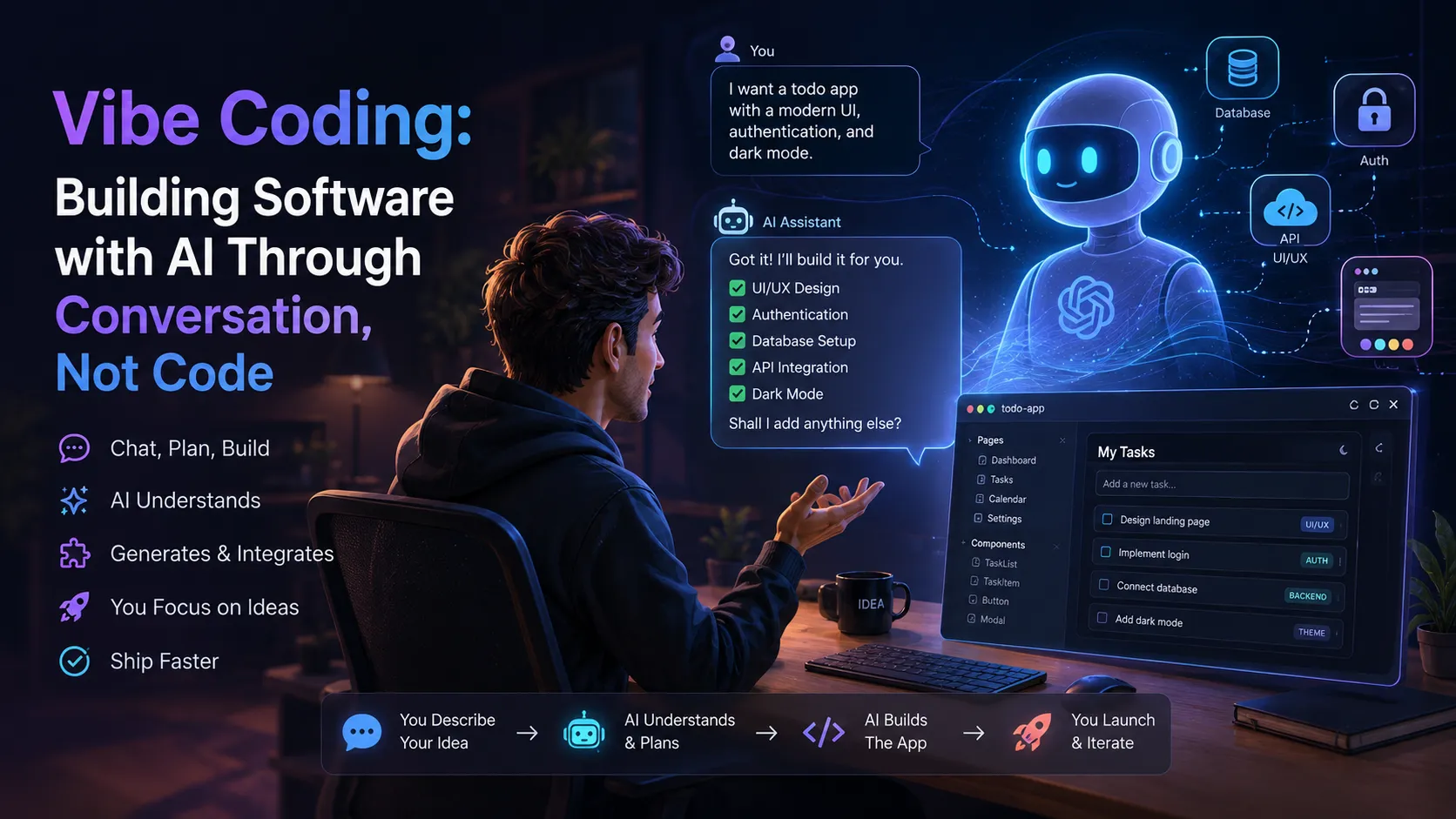
The term Vibe Coding was first popularized by Andrej Karpathy, a well-known figure in AI and one of OpenAI's early founding members. The core idea is simple: instead of a programmer writing, checking, and debugging every line of code by hand, they describe their "vibe" or intent for the software in plain language, and an AI model takes on the responsibility of writing, running, and even fixing the code.
In Vibe Coding, the focus shifts from "how do we write this" to "what do we want to build." The user no longer worries about syntax, variable names, or file structure. They simply converse with the AI, see the result, give feedback ("make this button blue," "the homepage loads slowly, fix it"), and the AI model applies those changes behind the scenes.
This approach can be seen as a new generation of human-machine interaction, closely related to what we've covered in
AI Agents and Smart Future Solutions and
Agentic AI: Autonomous AI Systems. Vibe Coding is, in fact, a direct outcome of the rise of
AI agents capable of planning on their own, writing code, running it, spotting errors, and fixing them — all without a human needing to dive into technical details.
The Simple Formula of Vibe Coding: From a Sentence to a Real App
To understand how this process actually unfolds, let's break it into simple steps:
- Describing the goal: The user explains what they want in a simple, everyday sentence. For example: "Build a shoe store website with a shopping cart."
- AI generates the code: The AI model (such as Claude Code or similar tools) writes the entire project structure, pages, database, and app logic.
- Automatic execution and testing: The tool automatically runs the code, displays it in a real environment (browser or simulator), and even detects and fixes possible errors on its own.
- Natural-language feedback: The user comments in plain sentences: "make the header black," "the homepage is loading slowly," "make the email field required."
- Repeating until the desired result: This conversation-and-refine loop repeats several times until the final product matches exactly what the user had in mind.
Why Is Everyone Talking About Vibe Coding Right Now?
Several factors have combined to turn Vibe Coding from a niche trend into a global wave:
- Advances in AI reasoning models: New models no longer just "copy-paste" code — they genuinely understand program logic, design project architecture, and even decide which technology fits which part of a project.
- The rise of agentic development environments: Tools like Google Antigravity now allow multiple AI agents to work simultaneously on different parts of the same project — just like a real development team.
- The growth of Large Action Models: As explained in Large Action Models (LAM) and Digital Automation, these models don't just generate text — they actually perform tasks in the digital world, including writing and running code.
- Easier access than ever: Vibe Coding tools are no longer exclusive to large companies; even an average person with a free account can build their first project in minutes.
Real, Relatable Examples: When AI Takes the Programmer's Seat
Let's look at a few real, tangible examples to get a better feel for the power of this technology:
1. Building a personal app in under an hour
A language teacher who has never written a line of code simply typed "build me a flashcard app for learning English vocabulary that shows new words daily and tracks scores" — and ended up with a complete educational tool for her classroom, something that once required hiring an entire development team.
2. Designing an online store as a small business owner
The owner of a local café, with no knowledge of HTML or CSS, built an online ordering page with a menu, prices, and a payment button just by describing his products — something he previously had to pay a web designer for.
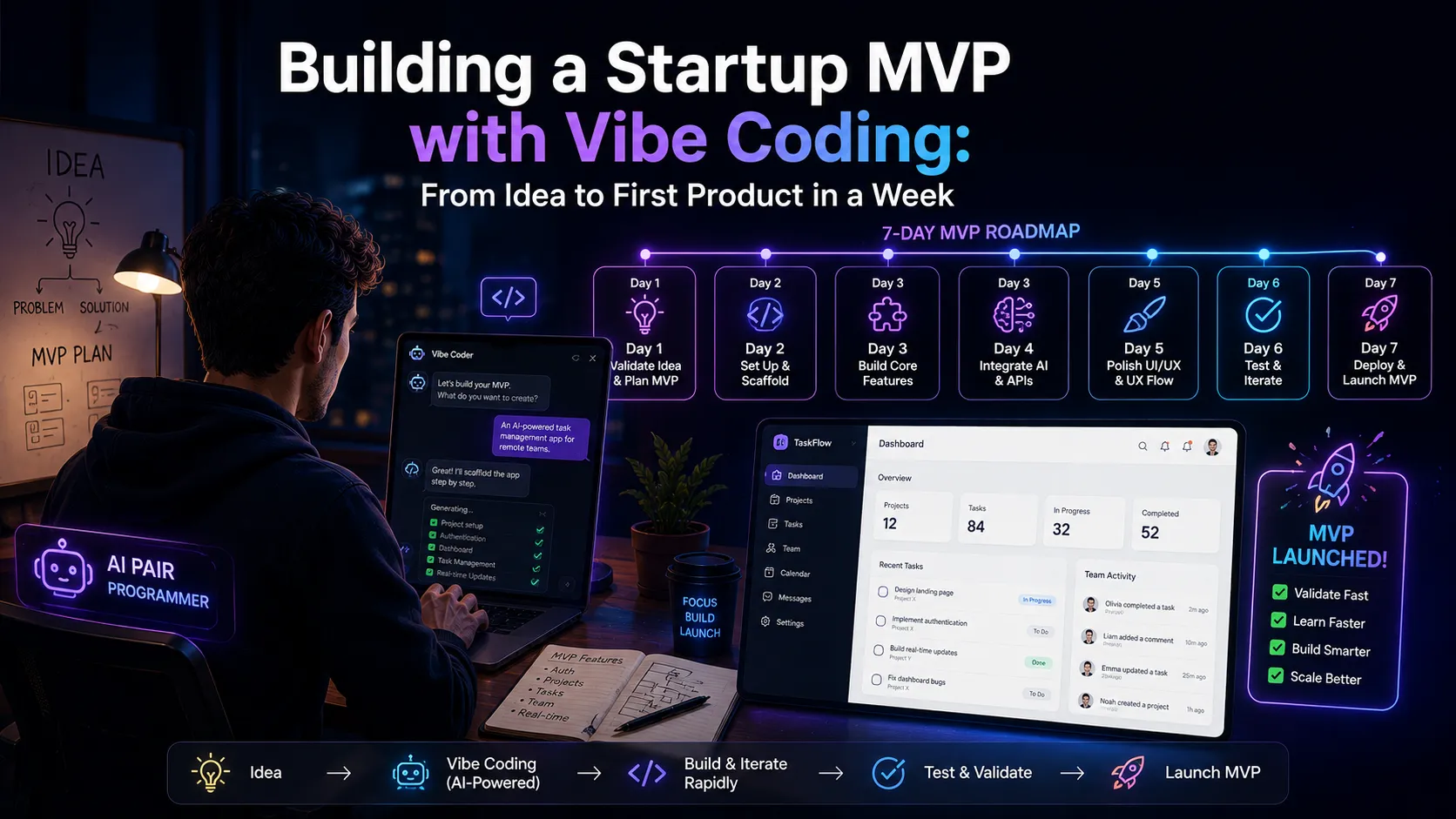
3. Rapid prototyping for startups
Instead of spending weeks building a Minimum Viable Product (MVP), startup teams now build a demo-ready prototype for investors in a matter of hours — a topic we've also explored in
Building Applications with Artificial Intelligence.
4. Building simple games as a hobby, with zero coding background
A high school student described the rules of a simple puzzle game and ended up with a playable browser game — without ever learning what a programming "loop" even is.
These examples show how Vibe Coding has dramatically blurred the line between "having an idea" and "being able to build it."
Leading Tools in the Vibe Coding World
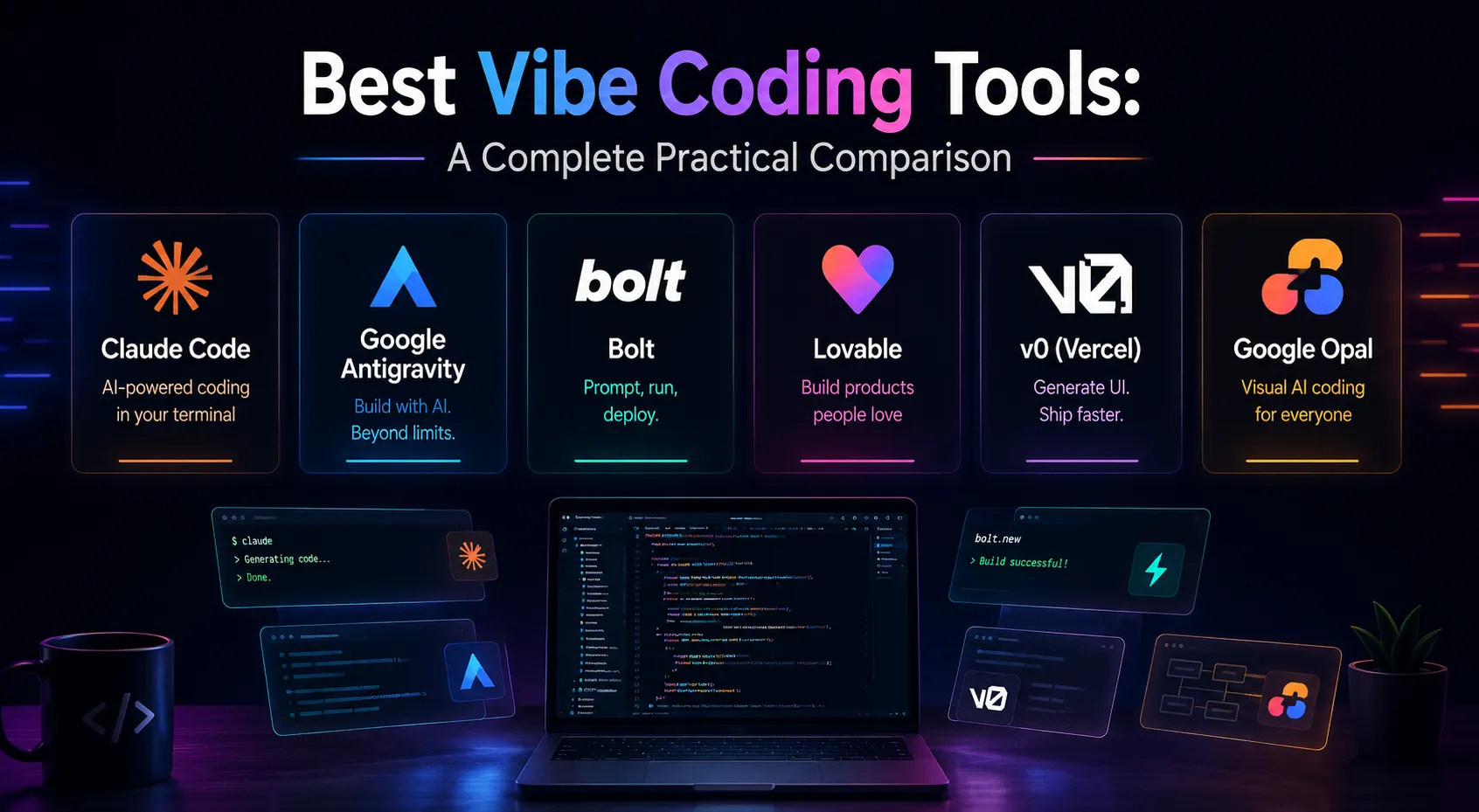
A few tools stand out more than others in this space. Each has its own approach and strengths:
| Tool | Environment | Standout Feature | Best For |
| Claude Code | Terminal / IDE | Deep project understanding, direct command execution | Developers and real-world projects |
| Google Antigravity | Agentic IDE | Multiple agents working on one project simultaneously | Team and complex projects |
| Browser-based tools (Bolt, Lovable, v0) | Online browser | Quick UI generation from text descriptions | Non-technical users and fast prototyping |
| Smart no-code platforms (e.g. Google Opal) | Web | Build apps with drag-and-drop plus description | Fully non-technical users |
Vibe Coding vs. Traditional Programming vs. No-Code Tools
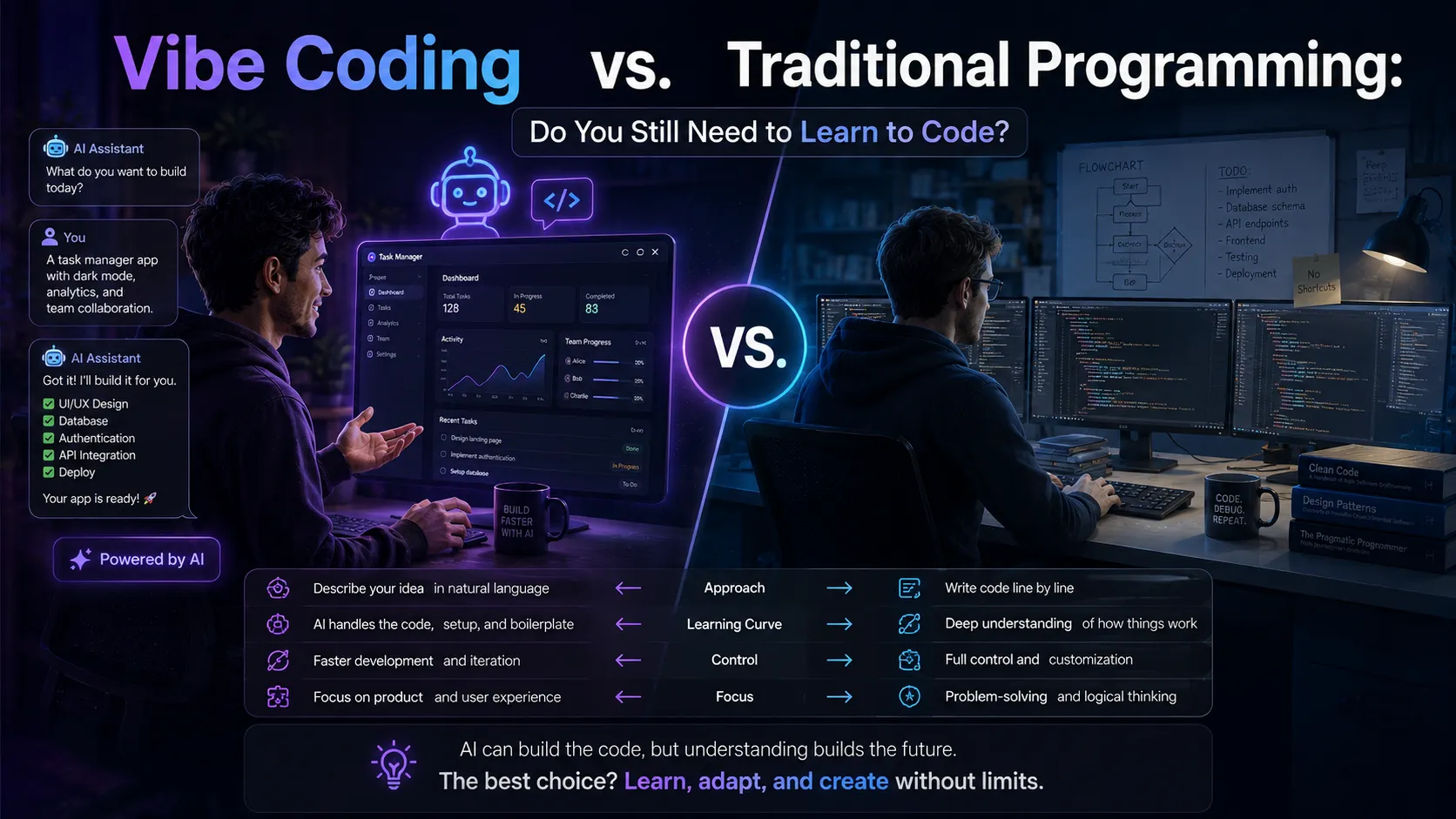
Many people confuse Vibe Coding with old-school no-code tools, but there's a fundamental difference:
| Criteria | Traditional Programming | Traditional No-Code | Vibe Coding |
| Technical knowledge required | High | Low | Nearly zero |
| Control and flexibility | Very high | Limited to pre-built templates | High (real code is generated) |
| Build speed | Slow | Moderate | Very fast |
| Mode of interaction | Writing code line by line | Drag and drop | Natural language conversation |
The key point here is that the output of Vibe Coding is usually real, extendable code, not a closed template — meaning a real developer can pick up that same code and keep building on it if needed. This is an important distinction that separates it from traditional no-code tools and gives it real staying power.
The Remarkable Benefits of Vibe Coding
- Democratizing software creation: Anyone with an idea can now bring it to life without needing a technical team.
- Drastically reduced development time: Projects that once took weeks are now ready in hours.
- Learning while doing: Even users who want to learn programming gradually pick up technical concepts by watching the code the AI generates and its explanations.
- Rapid idea testing: Entrepreneurs can build and test several different ideas in a single day, without heavy development costs.
Challenges and Risks You Shouldn't Ignore
Despite all its appeal, Vibe Coding isn't without risk:
1. "Working" code doesn't always mean "secure" or "maintainable" code. Many projects built this way haven't been security-reviewed and may carry serious vulnerabilities, especially when sensitive user data is involved.
2. Over-reliance and eroding analytical skills. If a user never understands how the code actually works, they'll be completely stuck when facing a complex bug or a major required change. This is exactly the concern raised in
Future Skills AI Cannot Replace.
4. Messy, non-standard code at scale. This usually isn't an issue for simple projects, but as a project grows larger and more complex, the lack of careful human oversight can seriously damage the technical foundation.
Will Vibe Coding Put Programmers Out of Work?
Short answer: not in the way people imagine. Vibe Coding removes the
simplest and most repetitive parts of programming from human hands, but the need for architectural thinking, decisions about scalability, security, and user experience still requires human expertise. In practice, the programmer's role is shifting from "code typist" to "guide and intelligent supervisor of a team of AI agents" — exactly the kind of shift discussed in
Choosing a Major in the AI Era and the Future of Careers.
How to Start Vibe Coding Today
- Pick a small, specific idea. Instead of "build me a social network," start with something simple like "a daily to-do list with reminders."
- Write your instructions clearly and precisely. The more detail you give (colors, structure, button behavior), the more accurate the result — the same principle explained in Prompt Engineering.
- Test the result and give feedback. Instead of accepting the first output, ask for changes in simple sentences.
- Gradually move to more complex projects. Once you're comfortable with the process, you can build more real-world projects like online stores or business management tools.
The Future of Vibe Coding: Where Are We Headed?
With the growth of reasoning models and multi-step agents, the near future will likely bring full teams of AI agents each playing a distinct role: one handles architecture, one writes code, one runs tests, and another checks security — all guided by a single human acting as "project manager." This is exactly the direction pointed to in
Multi-Agent AI Systems.
Conclusion
Vibe Coding shows that the line between "having an idea" and "building that idea" keeps getting thinner every day. This technology isn't just a powerful tool for entrepreneurs and non-technical people — even professional developers use it to speed up their own work. But truly succeeding with it requires a mix of excitement for experimentation and awareness of its security and quality risks. If you've always thought building software was only for specialists, it's time to change that view and try DeepFA's
AI Coding Tool.



 LLMs & AI Agents
 LLMs & AI Agents
 LLMs & AI Agents
 LLMs & AI Agents
 LLMs & AI Agents
 LLMs & AI Agents