Introduction
One of the biggest historical barriers to entrepreneurship has always been the same: you have a good idea, but proving it requires a real product, and building that product usually meant needing a technical co-founder, upfront capital, or months of time. In our previous articles, we covered
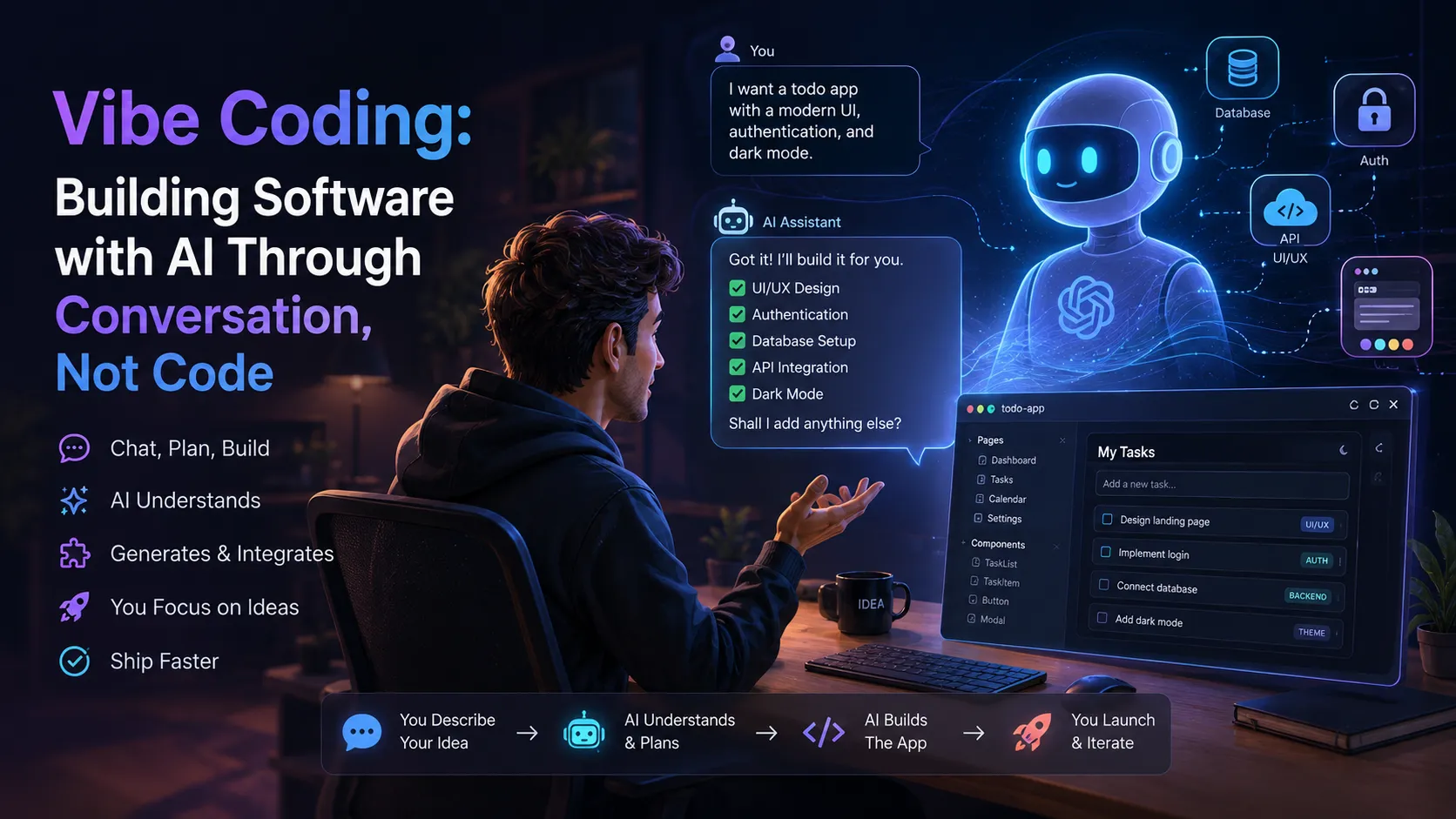
Vibe Coding: Building Software with AI Through Conversation and
Best Vibe Coding Tools. Now it's time to turn that knowledge into a practical, entrepreneurial path: how can you go from a raw idea to a demo-ready first version (MVP) in a short window of time, even without a technical team?
What Exactly Is an MVP, and Why Does It Matter?
MVP stands for Minimum Viable Product — the simplest version of your product that can still demonstrate the core value of your idea to a user or investor. The goal of an MVP isn't completeness; it's to quickly test a hypothesis: do people actually need this idea? Would they pay for it? Would an investor believe in it?
Before Vibe Coding, building even a simple MVP typically took weeks to months and came with significant cost. Today, with the right combination of tools and planning, this process can be compressed into a week or even less.
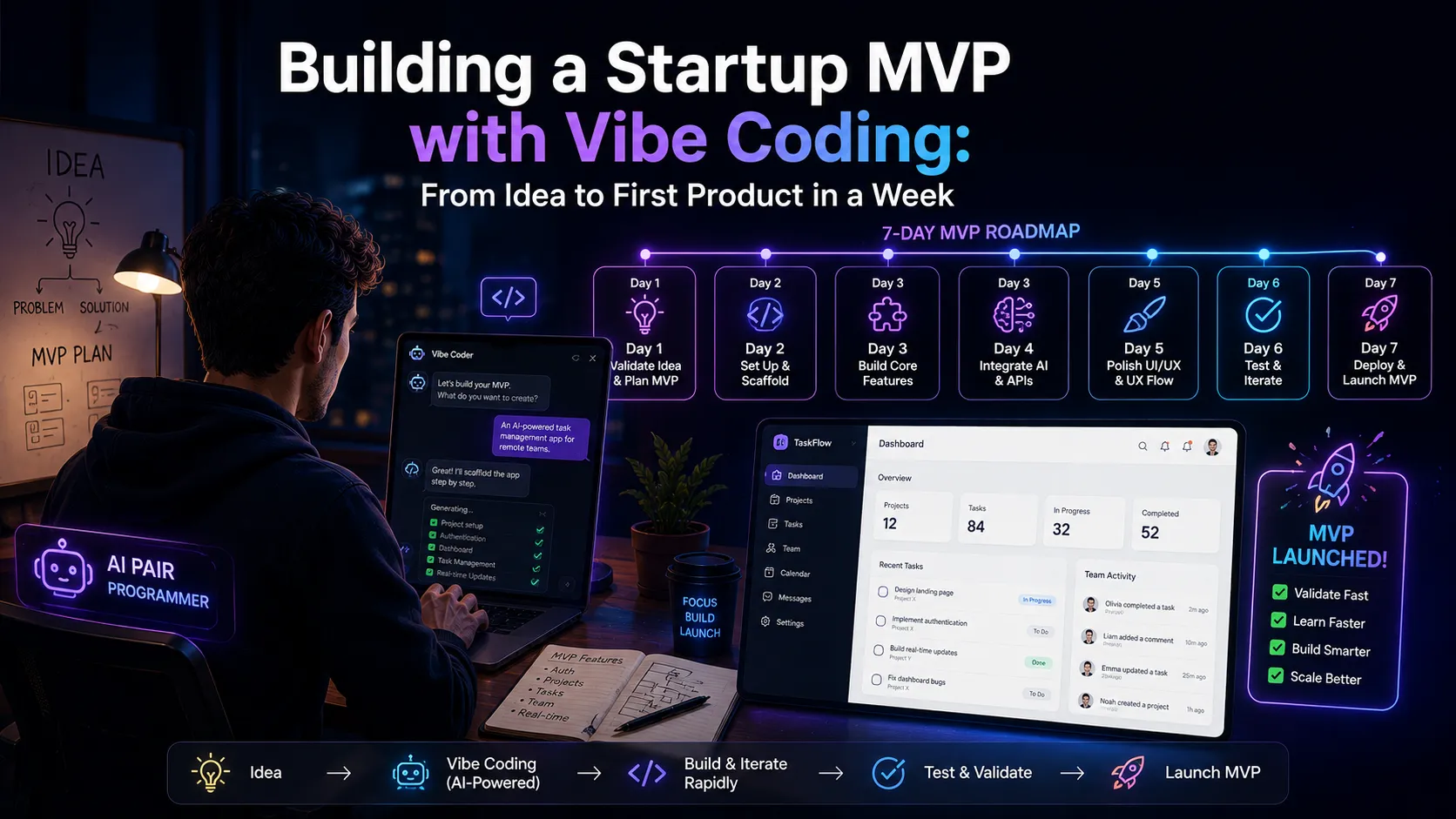
The Seven-Day Roadmap: From Idea to MVP
Let's break this path down into a practical, actionable plan:
Day 1: Clarify the Idea and Define the MVP's Scope
Before opening any tool, you need to know exactly what your MVP is supposed to prove. A common mistake is entrepreneurs trying to cram all the final product's features into the MVP. Instead, pick just one core hypothesis. For example, if your idea is a salon appointment-booking app, the core hypothesis isn't "does the advanced calendar and payment system work" — it's "will hairdressers and customers actually use an online tool to book appointments?"
Day 2: Choose the Right Tool
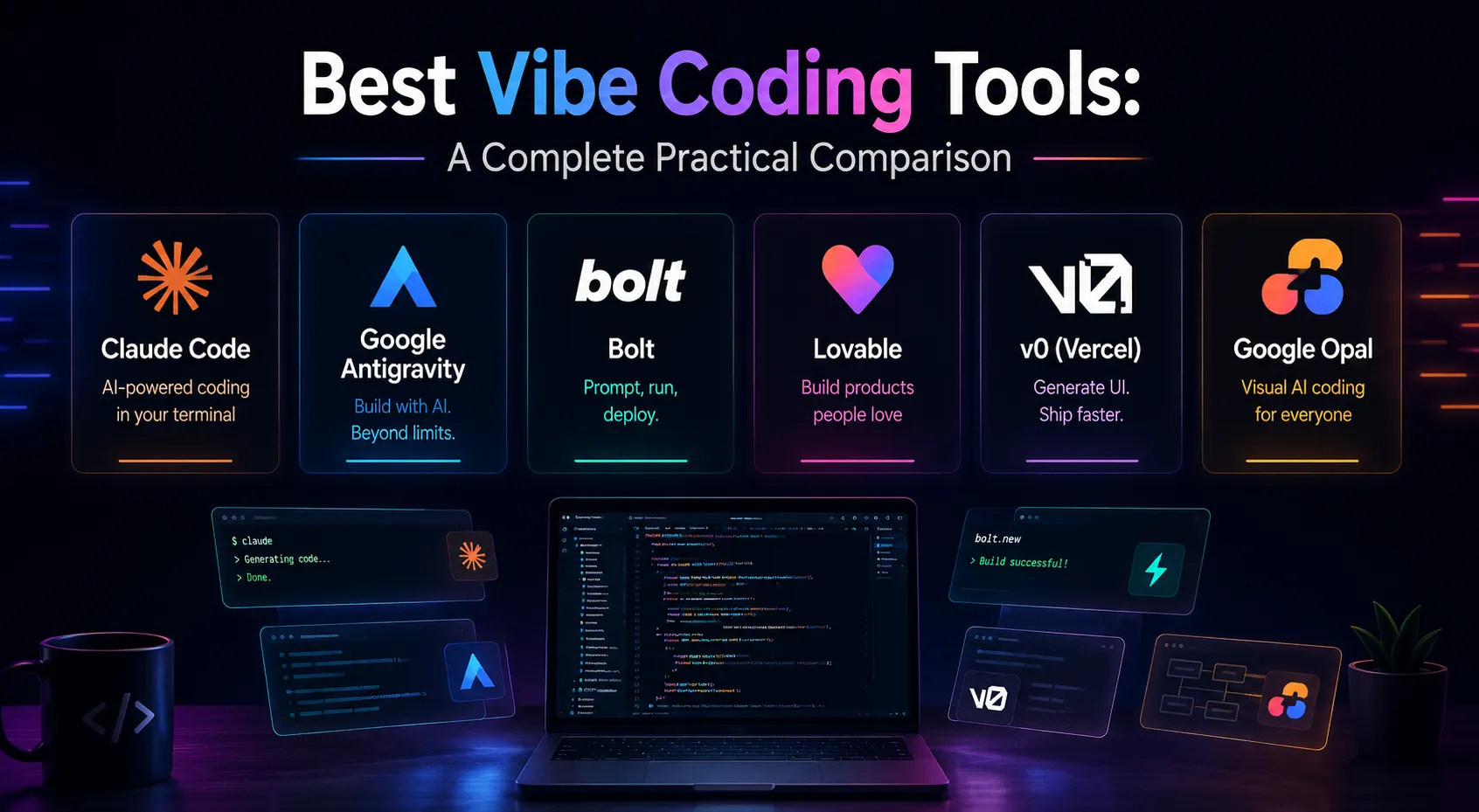
Based on your product type, pick the right tool. If your product is mostly a web app with a simple interface, tools like
Bolt or
Lovable are ideal for a fast start. If you want to build something with an extendable structure from day one (because you expect to raise funding and keep developing), it's better to go straight to
Cursor or
Claude Code. For a detailed comparison of these tools, check out
Best Vibe Coding Tools.
Days 3 and 4: Build the Product's Core
Dedicate these two days to building the single most important feature — the one that tests your core hypothesis. Don't get tempted to add secondary features at this stage. A real example: an entrepreneur with an idea for a shared-expense tracking app for roommates spent these two days focused only on "logging an expense and automatically splitting it among members," completely setting aside monthly reports, notifications, and advanced design.
Day 5: Internal Testing and Bug Fixing
Before showing the product to anyone, test it yourself and, if possible, with a few people around you. At this stage, give feedback directly in plain language to your Vibe Coding tool ("the page shows an error when I click submit" or "this text isn't clearly readable"). This rapid fix-and-iterate loop is exactly what we described in
Vibe Coding: Building Software with AI.
Day 6: Prepare for the Demo
By this stage, your MVP should be stable enough that you can show it to a real user or investor without worrying about it crashing. Add a simple landing page too, explaining the product's core value in a few sentences; you can build this page quickly with tools like v0 or Lovable.
Day 7: Gather Real Feedback
Show the product to a number of actual target users (not friends and family) and collect feedback. This feedback should shape your next development steps, not your personal guesses.
Summary Timeline
| Day | Main Activity | Expected Output |
| Day 1 | Clarify the core hypothesis | A clear sentence describing what needs to be proven |
| Day 2 | Choose the right Vibe Coding tool | Tool and workspace ready |
| Days 3–4 | Build the product's most important feature | A working version of the core |
| Day 5 | Internal testing and bug fixing | A stable version with no critical bugs |
| Day 6 | Build the landing page and prepare for demo | A product ready to show externally |
| Day 7 | Gather feedback from real users | Real data for the next decision |
What Is the Real Cost of This Path?
One of the questions new entrepreneurs always ask is: "Can this really be done without a budget?" The short answer: it depends on your choices. Most Vibe Coding tools offer a free tier with usage limits that's completely sufficient for building a simple MVP. Potential costs usually come from the following:
- Hosting and domain: Many browser-based tools offer a free subdomain for initial display; buying a dedicated domain can be postponed until after the hypothesis is validated.
- Paid AI tool plan: If your project needs a large number of requests or is a multi-file project, you may need a paid plan for tools like Cursor or Claude Code.
- Third-party services: If your MVP needs online payments, SMS sending, or file storage, free or trial services usually cover these needs at the MVP stage.
A Real Example: From Idea to MVP in Practice
An entrepreneur working in the language-learning field had an idea for an app to practice conversation with a random language partner. He had no programming knowledge. On day one, he defined his core hypothesis like this: "Are people willing to be randomly paired with a stranger to practice a language?" Over the following days, using only Bolt, he built a simple page where users could sign up and wait to be paired with a language partner (with no complex matching system). At the end of the week, he shared this MVP in several Telegram groups related to language learning. The result was unexpected: within 48 hours, more than two hundred people had signed up — data he could never have obtained without building this prototype.
A Real Example: Idea to MVP in Practice
An entrepreneur working in language education had an idea for an app that pairs users with a random language-exchange partner for conversation practice. He had zero programming knowledge. On day one, he defined his core hypothesis: "will people actually agree to be randomly paired with a stranger for language practice?" Over the following days, using only Bolt, he built a simple page where users could sign up and wait to be matched with a language partner — with no complex matching system at all. By the end of the week, he shared this MVP in a few language-learning Telegram groups. The result was unexpected: within 48 hours, over two hundred people signed up — data he could never have gathered without building this prototype.
Common Mistakes to Avoid
- Adding unnecessary features: the simpler your MVP, the faster you can build and test it. Any feature that doesn't directly test your core hypothesis should be cut.
- Skipping internal testing: many entrepreneurs show the product straight to real users and then discover even a basic feature doesn't work; this seriously damages user trust.
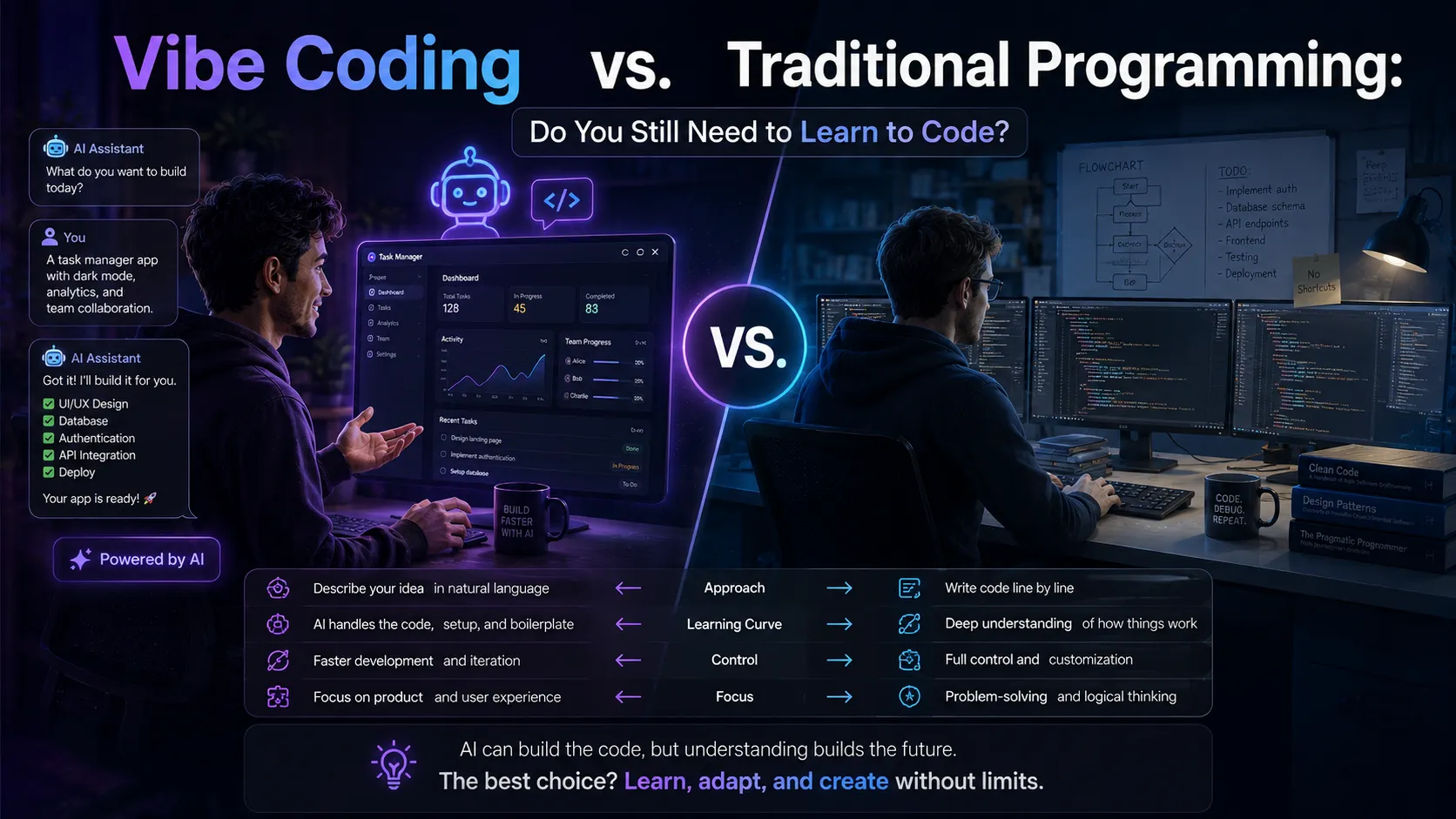
- Ignoring basic data security: even in an MVP, if you're collecting real user information (like email or phone numbers), minimum security practices still need to be in place — the same point we raised in Vibe Coding vs. Traditional Programming.
- Misreading user silence: if users don't react negatively, that doesn't mean they love the product. You need to actively ask for feedback.
After the MVP: What Comes Next?
If the initial feedback is positive, it's time to decide on the product's future direction. This is where the question "do we still need to learn to code?" becomes relevant again; as your product grows, the need for proper architecture, security, and scalability grows with it. At this stage, many startups choose a hybrid path — continuing to build with Vibe Coding while bringing in a skilled developer to review and strengthen the infrastructure — exactly the combined approach we discussed in
Best Vibe Coding Tools.
Frequently Asked Questions
Can you really build a complete MVP in one week?
For most simple, focused ideas, yes. But if your idea requires complex infrastructure from the start (like multi-party online payments or custom AI), this timeline may need to stretch a bit longer.
Do investors take MVPs built with Vibe Coding seriously?
Yes, as long as the MVP clearly proves your core hypothesis. Investors care more about real user data and feedback than about which tool built the product.
If my MVP succeeds, should I keep the same code or rebuild from scratch?
It depends on the quality of the initial code. If it was built with a tool like Claude Code or Cursor and has a reasonably organized structure, you can build on it. If it was built with very simple tools purely for demonstration purposes, rewriting the core parts is usually the smarter move.
Conclusion
Vibe Coding has largely removed one of entrepreneurship's oldest barriers — needing capital or a technical co-founder just to build a first product prototype. But real success still depends on proper planning, focus on a single clear hypothesis, and honesty in gathering and interpreting user feedback — not simply on build speed. If you have an idea you've been waiting years to build, this week might just be the best time to start; you can take the first step with DeepFa's
AI Coding Tool.

 LLMs & AI Agents
 LLMs & AI Agents
 LLMs & AI Agents
 LLMs & AI Agents
 LLMs & AI Agents
 LLMs & AI Agents