Introduction
In a world where
artificial intelligence is advancing at a breathtaking pace, one critical question occupies all our minds:
What skills should we learn that won't become obsolete in 10 years?This isn't just a career concern - it's about your future. Students choosing majors today, professionals building their careers, and parents planning for their children's futures all face this puzzle.
The harsh reality is that many skills valuable today will be
replaced by AI tomorrow.
ChatGPT can write,
Claude Code can code,
Midjourney can design, and this is just the beginning.
But here's the good news: not all skills are replaceable. Some human capabilities exist that AI, despite all its progress, cannot achieve. This article is a comprehensive roadmap for identifying, learning, and strengthening these AI-proof skills.
Understanding the Opponent: What Does AI Excel At?
Before understanding what AI cannot do, we must know what it excels at:
AI's Superpowers
1. Processing and Analyzing Massive Data
- Machine learning can analyze millions of records per second
- Discovers hidden patterns humans cannot see
- Makes accurate predictions based on historical data
2. Repetitive and Algorithmizable Tasks
- Writing standard code
- Translating texts
- Generating simple content
- Answering frequently asked questions
3. Pattern Recognition and Classification
- Machine vision for image recognition
- Face and object detection
- Information categorization
4. Optimization and Complex Calculations
- Solving complex mathematical problems
- Optimizing routes and processes
- Advanced simulations
| Skill Type | AI Capability | Replacement Risk Level |
| Data Entry | Excellent (95%) | 🔴 Very High |
| Simple Translation | Excellent (90%) | 🔴 Very High |
| Simple Coding | Good (80%) | 🟡 High |
| Simple Graphic Design | Good (75%) | 🟡 High |
| Data Analysis | Good (70%) | 🟡 Medium |
| Team Leadership | Weak (20%) | 🟢 Low |
| Deep Empathy | Very Weak (5%) | 🟢 Very Low |
Key Skills AI Cannot Replace
1. Empathy and Emotional Intelligence: The Human Heart
Why AI Cannot:
Artificial intelligence can simulate emotions but
cannot truly feel. Empathy requires lived experience, deep understanding of suffering and joy, and the ability to put yourself in others' shoes.
Real Example:
A therapist talks with a patient suffering from depression. AI can provide appropriate text responses, but cannot:
- Properly adjust tone of voice
- Understand body language
- Create a sense of genuine connection
- Decide with human intuition when to be silent
How to Develop:
- Active listening: Practice listening without judgment
- Diverse experience: Immerse yourself in different social and cultural situations
- Study literature and stories: Novels help us see the world through others' eyes
- Volunteer work: Helping vulnerable people strengthens practical empathy
Related Careers:
- Psychologist and counselor
- Social worker
- Nurse and healthcare provider
- Human resources manager
- Teacher and educator
2. Fundamental Creativity and Out-of-the-Box Thinking
Why AI Cannot:
Generative models work based on
existing patterns. They can create new combinations of existing ideas, but
cannot truly create something unprecedented.
True creativity comes from:
- Unique personal experiences
- Deep emotions and suffering
- Unexpected observations from life
- Intuitive connections between unrelated concepts
Real Example:
When Picasso created the Cubism style, it was a revolution in art that followed no previous pattern. This creativity emerged from his unique perspective on reality - something AI cannot have.
Difference Between AI and Human Creativity:
AI Can:
- Create an image similar to Picasso (by learning from his works)
- Generate new combinations of existing styles
- Apply gradual changes to existing ideas
Humans Can:
- Create a completely new style that never existed before
- Draw inspiration from deep personal experiences
- Break rules and create something different
- Embed deep meaning and message in their work
How to Develop:
- Diverse experiences: Travel, meet different cultures, try new things
- Critical thinking: Question assumptions and existing patterns
- Interdisciplinary combination: Learn from different fields and combine them
- Continuous practice: Dedicate time daily for free creativity
Related Careers:
- Innovator and entrepreneur
- User experience (UX) designer
- Director and filmmaker
- Architect
- Brand strategist
3. Critical Thinking and Ethical Judgment
Why AI Cannot:
AI can follow logic but cannot make ethical evaluations. Decision-making in complex ethical situations requires:
- Deep understanding of human values
- Ability to weigh different consequences
- Accountability
- Wisdom from experience
Real Example:
A doctor must decide whether to recommend aggressive treatment for a patient. AI can calculate the probability of success, but cannot:
- Consider the patient's quality of life
- Understand their personal and cultural values
- Decide when "best treatment" actually means "letting go"
This type of decision-making requires human wisdom.
How to Develop:
- Study philosophy and ethics: Familiarize yourself with different ethical frameworks
- Decision-making experience: Face difficult situations and learn from them
- Discussion and debate: Participate in ethical debates and see different perspectives
- Meditation and reflection: Take time for deep contemplation
Related Careers:
4. Leadership and Inspiration
Why AI Cannot:
Leadership goes beyond management. It's about inspiring, creating vision, and guiding people. AI can analyze data but cannot:
- Build genuine trust
- Create intrinsic motivation
- Influence with charisma
- Keep the team united in tough times
Real Example:
Steve Jobs wasn't just a good manager, but an inspiring leader. He could:
- Build a vision others couldn't see
- Convince the team to make the "impossible" possible
- Create a culture of innovation
- Transform others with his passion and energy
These abilities are deeply human.
How to Develop:
- Self-awareness: Know your strengths and weaknesses
- Strong communication: Learn effective communication and persuasion
- Management experience: Start with small projects and grow gradually
- Learn from great leaders: Study the lives and methods of successful leaders
Related Careers:
5. Negotiation and Conflict Resolution
Why AI Cannot:
Negotiation requires deep understanding of:
- Hidden motivations of the other party
- Power dynamics
- Body language and non-verbal cues
- Strategic timing and silence
AI can suggest negotiation strategies but cannot operate with human intuition and momentary flexibility.
Real Example:
A professional negotiator can:
- Detect hesitation from the tone of the other party's voice
- Build trust by changing strategy in the moment
- Create a space where both parties win
- Use silence as a tool
These skills require real presence and deep human understanding.
How to Develop:
- Active practice: Participate in real negotiations
- Learn body language: Understand non-verbal cues
- Study psychology: Understand human motivations
- Conflict experience: Learn from challenging situations
Related Careers:
- Professional negotiator
- Mediator and arbitrator
- Diplomat
- Trial lawyer
6. Adaptability and Continuous Learning
Why AI Cannot:
It's true that AI can learn, but
machine learning requires data and retraining. Humans can:
- Learn from one experience
- Transfer knowledge to completely new contexts
- Deal with complete uncertainty
- Redefine themselves
Real Example:
Someone who worked in the automotive industry for 20 years can succeed in the tech industry through learning and adaptation. This requires:
- Open-mindedness
- Accepting not knowing
- Fast learning
- Creative use of past experiences
AI cannot have this cognitive flexibility.
How to Develop:
- Growth mindset: Believe you can always learn
- Step out of comfort zone: Experience new things
- Learn meta-learning: Learn how to learn
- Constructive failures: Learn from mistakes
Related Careers:
- Strategic consultant
- Entrepreneur
- Researcher and scientist
7. Culture Building and Meaning Creation
Why AI Cannot:
Humans are meaning-making beings. We need our work to have meaning. AI can create efficiency but cannot:
- Build organizational culture
- Create a sense of belonging
- Reinforce shared values
- Instill meaning and purpose
Real Example:
A good human resources manager can:
- Build a culture where employees feel valued
- Create an environment where innovation flourishes
- Build a team that trusts each other
- Help employees find deeper meaning in their work
This ability is uniquely human.
How to Develop:
- Understand values: Know what truly matters
- Storytelling: Ability to craft inspiring narratives
- Create connection: Link people to a bigger purpose
- Authenticity: Be yourself and be honest
Related Careers:
- Human resources manager
- Organizational coach
- Culture consultant
Practical Roadmap: How to Build These Skills?
Stage 1: Self-Knowledge (1-3 months)
Goal: Understand current strengths and weaknesses
Actions:
- Assess current skills: Where are you?
- Identify real interests: What excites you?
- Analyze job market: Which skills will be valuable in the future?
Tools:
- Personality tests (Myers-Briggs, Big Five)
- Interviews with field experts
- Online platforms for skill assessment
Stage 2: Targeted Learning (6-12 months)
Goal: Systematic development of key skills
Learning Strategy:
| Skill | Learning Method | Time Required |
| Empathy | Volunteer work, study literature, psychology | 6-12 months |
| Creativity | Daily practice, diverse experience, interdisciplinary | 12-24 months |
| Critical Thinking | Study philosophy, solve complex problems, debate | 9-18 months |
| Leadership | Project management, mentoring, case studies | 12-36 months |
| Negotiation | Practical practice, specialized course, observe experts | 6-12 months |
Stage 3: Practical Practice (Ongoing)
Goal: Transform theoretical knowledge into practical skill
The 10,000 Hour Rule:
Research shows that to become an expert in any field, you need about 10,000 hours of deliberate practice. This means:
- 3 hours daily = 10 years
- 5 hours daily = 6 years
- 8 hours daily = 3.5 years
Deliberate practice means:
- Outside your comfort zone
- With continuous feedback
- With complete focus
- With specific goals
Stage 4: Networking and Learning from Others
Goal: Learn from others' experiences and create opportunities
Actions:
- Find a mentor: Someone 10-20 years ahead of you
- Join professional communities: Online and offline
- Attend events: Conferences, workshops
- Collaborate on projects: Practical work with experienced people
Combining Human Skills with AI: The Best Strategy
The reality is that the future belongs to those who can combine human skills with AI. Not those who compete with AI, not those who are completely dependent on it.
Human-AI Collaboration Model
Human Responsible For:
- Setting goals and vision
- Strategic decision-making
- Ethical judgment
- Fundamental creativity
- Human relationships
AI Responsible For:
- Processing massive data
- Repetitive tasks
- Pattern analysis
- Optimization
- Fast execution
Practical Example: UX Designer in the AI Era
Before AI:
- Designer did everything themselves
- Spent a lot of time on repetitive tasks
- Limited to personal experience and knowledge
After AI (Smart Collaboration):
- AI performs user behavior analysis
- Designer uses AI tools to generate initial ideas
- But designer decides which design is meaningful
- Designer optimizes user experience with empathy
Result: 10x productivity + preserved human value
Future Careers: Where to Invest?
High-Security Jobs (10+ years)
These careers require a combination of human skills that AI cannot replace:
1. Mental Health Professionals
- Psychologist, therapist, counselor
- Why safe: Deep empathy, human connection, understanding complex emotions
2. Senior Managers and Leaders
- CEO, COO, strategic managers
- Why safe: Strategic decision-making, leadership, vision creation
3. Creators and Innovators
- Director, writer, experience designer
- Why safe: Fundamental creativity, unique perspective
4. Teachers and Educators
5. Ethics and Policy Specialists
- Judges, lawyers, policymakers
- Why safe: Ethical judgment, complex decision-making
Emerging Careers (5-10 years)
Jobs created with the emergence of AI:
1. Advanced Prompt Engineer
2. AI Ethics Specialist
- Ensuring ethical use of AI
- Evaluating bias and fairness
3. Human-AI Experience Designer
- Designing optimal interactions between humans and AI
- Combining psychology, design, and technology
4. AI Adaptation Coach
- Helping organizations and individuals use AI optimally
- Teaching AI collaboration skills
Common Mistakes to Avoid
Mistake 1: Learning Pure Technical Skills
Mistake: Thinking that learning programming or design is enough
Solution: Learn technical skills + human skills
Mistake 2: Ignoring Soft Skills
Mistake: Thinking soft skills are "unimportant"
Why it's wrong: These are exactly the skills AI cannot replace
Solution: Serious investment in empathy, communication, leadership
Mistake 3: Complete Resistance to AI
Mistake: "I will never use AI"
Why it's wrong: You're competing with people who use AI
Solution: Learn smart use of AI as a tool
Mistake 4: Complete Dependence on AI
Mistake: Using AI for every task
90-Day Program: Start Today
You can't learn everything at once. But you can start today. Here's a 90-day program to begin:
Month 1: Self-Knowledge and Foundation
Weeks 1-2:
- Assess current skills
- Identify strengths and weaknesses
- Choose 2-3 key skills to develop
Weeks 3-4:
- Read related books
- Watch online courses
- Find a mentor or advisor
Month 2: Active Learning
Weeks 5-6:
- Start training courses
- Daily practice (1-2 hours)
- Keep a learning journal
Weeks 7-8:
- Participate in practical projects
- Receive feedback
- Adjust course
Month 3: Implementation and Evaluation
Weeks 9-10:
- Execute real projects
- Collaborate with others
- Build portfolio
Weeks 11-12:
- Evaluate progress
- Plan for next 90 days
- Celebrate successes!
Conclusion: Investing in Your Future
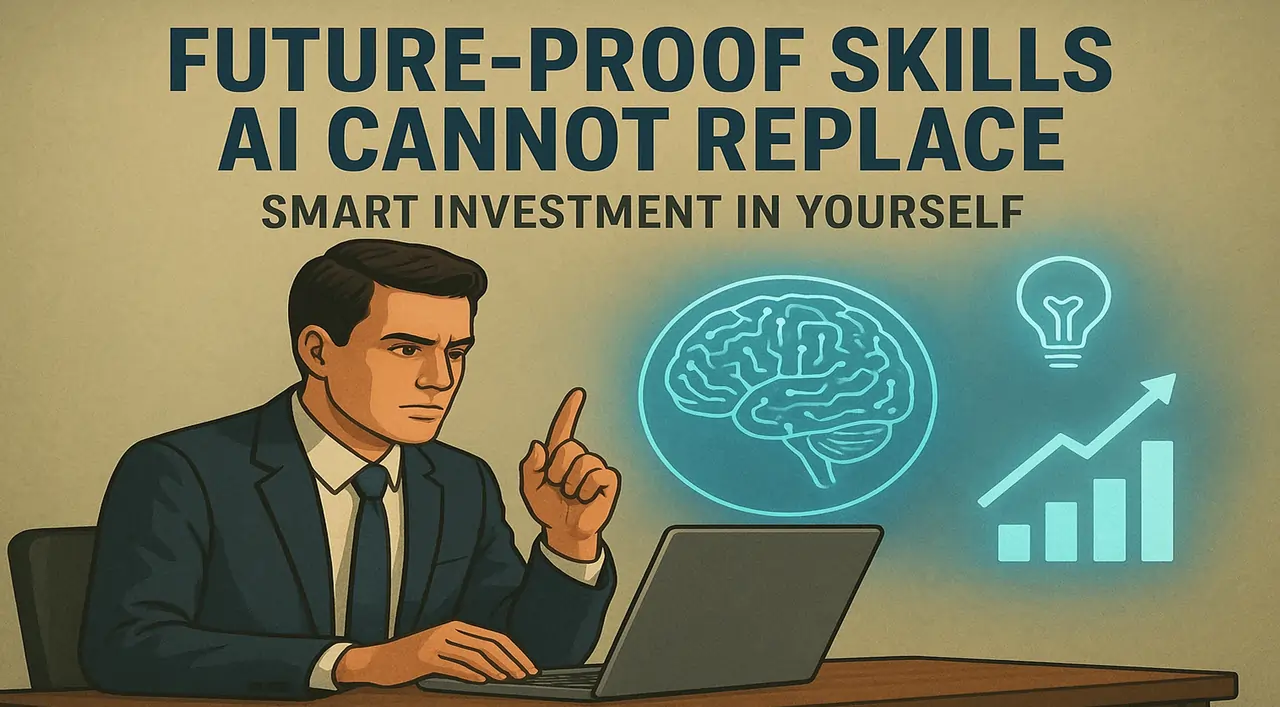
In an era where AI is changing everything, the best investment is investment in yourself. But not any investment - smart investment in skills that are truly valuable.
Skills AI cannot replace are exactly those that make us human:
- Ability to feel and empathize
- True and unprecedented creativity
- Ethical judgment and wisdom
- Leadership and inspiration
- Creating connection and meaning
These skills not only keep you competitive in the job market but also give you
a meaningful life - something no AI can provide.
Final message: The future belongs to those who can combine the human heart with AI power. Start today, because the future will arrive sooner or later - and you want to be ready.



 Social Impact & Future
 Social Impact & Future
 Social Impact & Future
 Social Impact & Future
 Social Impact & Future
 Social Impact & Future