Introduction
The fashion and apparel industry is one of the most profitable and dynamic industries globally, constantly seeking innovation and creativity. Today,
artificial intelligence has entered this arena as a transformative technology, revolutionizing all its aspects from design and production to marketing and sales. Major brands and emerging fashion startups, using complex
machine learning algorithms and
deep neural networks, have created unique experiences for their customers.
This digital transformation has not only increased brand efficiency and profitability but has also elevated customer shopping experiences to an entirely new level. From predicting future trends to complete product personalization, artificial intelligence is redefining the concept of fashion and style.
Predicting Fashion Trends with AI
One of the fundamental challenges in the fashion industry is accurately predicting future trends. Traditionally, this was done by analysts and fashion experts who made decisions based on their experience and intuition. But now, AI algorithms successfully predict emerging trends, and the accuracy of these predictions is far higher than traditional methods.
AI systems can identify hidden patterns by analyzing millions of images from social networks, fashion runways, and street styles. Currently, AI predicts that vibrant orange colors, digital blues, and nature-inspired greens will dominate fashion collections.
This technology helps brands make decisions based on real data rather than guesswork, preventing the production of items that won't sell in the market. This not only reduces costs but also significantly minimizes industry waste.
Designing and Creating Fashion Collections with AI
AI hasn't eliminated designers' roles but has empowered them. More designers are integrating AI as a creative partner that helps them design more distinctive styles while maintaining their unique signature.
- Generate unique fabric designs and patterns
- Suggest innovative color combinations
- Design new cuts and models
- Simulate fabric draping on the body
Personalizing Shopping Experience with AI
One of the most significant AI transformations in the fashion industry is
complete personalization of the shopping experience. Recommendation systems based on
machine learning provide completely personalized suggestions by analyzing customer behavior, preferences, and purchase history.
These systems using predictive algorithms can:
- Identify each customer's personal style
- Suggest products suitable for body size and taste
- Determine the right time to send special offers
- Create a unique experience for each individual
Smart Virtual Try-On Technology
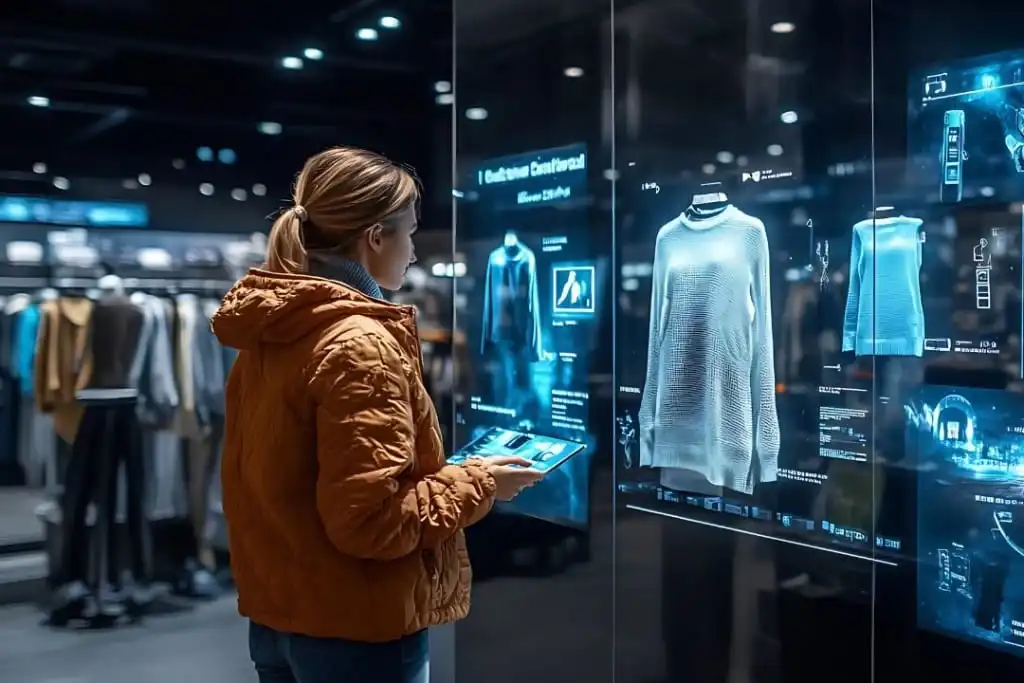
One of the most exciting AI applications in the fashion industry is
Virtual Try-On technology. This technology, using
machine vision and
image processing, allows customers to virtually try on clothes before purchasing and see how they look.
- Estimate accurate body measurements by analyzing images
- Realistically simulate how clothes drape on the body
- Accurately display fabric color and texture
- Enable trying multiple outfits in a short time
Major brands like Google have implemented this technology in their online shopping platforms, allowing customers to use their personal images for trying on clothes.
Inventory Management and Supply Chain with AI
AI plays a critical role in optimizing the supply chain and inventory management. Companies use AI to monitor fabric consumption, minimize excess inventory, and recycle old materials.
Systems based on
deep learning can analyze historical sales data, seasons, trends, and special events to:
- Predict future demand with high accuracy
- Determine optimal inventory levels for each product
- Optimize transportation routes
- Prevent overproduction and waste
Marketing Content Generation with AI
The fashion industry requires attractive and diverse visual content. AI has remarkably met this need. Brands using
content creation tools can:
Intelligent Chatbots and Customer Service
AI-powered chatbots have transformed customer service experience in the fashion industry. These systems using
advanced language models can:
- Answer customer questions at any time of day
- Provide personalized shopping guidance
- Give outfit suggestions based on customer taste
- Resolve after-sales issues
Sentiment Analysis and Customer Feedback
Understanding customer emotions and opinions is vital for success in the fashion industry. AI using
Sentiment Analysis and
natural language processing can:
- Monitor and analyze customer reviews on social networks
- Identify popular trends in real-time
- Discover product weaknesses through user feedback
- Analyze market competition
Fraud Detection and Brand Protection
- Identify counterfeit products with high accuracy
- Track product sources by analyzing images
- Identify unauthorized sellers in online spaces
- Protect brands' intellectual property
Sustainability and Environmental Responsibility
The fashion industry is one of the world's most polluting industries, but AI plays an important role in making this industry sustainable:
- Optimizing fabric consumption and reducing production waste
- Designing biodegradable materials with computer simulations
- Improving recycling processes using AI
- Reducing carbon footprint in the supply chain
Challenges and Ethical Concerns
Despite all the benefits of AI in the fashion industry, challenges and ethical concerns exist:
- Customer privacy: Collection and use of personal data
- Human workforce replacement: Threat to traditional fashion jobs
- Algorithmic biases: Possibility of discrimination in recommendations and advertising
- Beauty standards: Reinforcing unrealistic standards with virtual models
Practical Tools and Frameworks
Various tools and frameworks are available for implementing AI in the fashion industry:
Deep Learning Frameworks:
- TensorFlow: For building complex machine vision models
- PyTorch: For research and developing innovative models
- Keras: For rapid prototyping
Image Processing Libraries:
- OpenCV: For image processing and analysis
- NumPy: For numerical computing
Cloud Platforms:
These tools use
Python as the primary programming language, and the
Google Colab guide is very useful for training models.
Advanced AI Models in Fashion
Fashion brands use advanced AI models to improve performance:
Comparing AI Models for Fashion Applications
Choosing the right model for specific applications in the fashion industry is very important:
The Future of AI in Fashion Industry
The future of AI in the fashion industry is very exciting:
Emerging Technologies:
Intelligent Systems:
Advanced Interactions:
AI Applications in Various Fashion Areas
Production and Manufacturing:
Commerce and Sales:
Successful Examples of AI Application
Major global brands have successfully implemented AI in their businesses:
- Zara uses AI for trend prediction and inventory management
- H&M has an intelligent recommendation system for personalized shopping
- Nike uses AI-based design for custom shoes
- Adidas employs intelligent robotics in its production lines
- Tommy Hilfiger uses AI to analyze color and pattern trends
Practical Solutions for Getting Started with AI
Small and medium-sized brands can also benefit from AI:
- Start with small projects: Like simple chatbots or recommendation systems
- Use ready-made APIs: Such as OpenAI or Anthropic
- Train your team: Using educational resources and practical guides
- Collaborate with startups: For access to technical expertise
Income Opportunities with AI in Fashion
AI has created new entrepreneurial opportunities in the fashion industry:
- Developing AI-based design tools
- Providing consulting services in AI implementation
- Creating virtual try-on platforms
- Producing marketing content using AI
Key Algorithms in Fashion Industry
Several core algorithms play roles in fashion AI applications:
Security and Privacy
With increased AI usage, data security has become more important:
Social and Cultural Impact
AI in fashion has widespread social impacts:
- Impact of AI on Art and Creativity: Redefining creativity
- Democratizing fashion: Easier access to custom design
- Diversity and inclusion: Creating products for all body types and cultures
- Preserving cultural heritage: Digitalizing traditional styles
Conclusion
Artificial intelligence is fundamentally changing the fashion and apparel industry. From design and production to marketing and sales, every part of this industry has been affected by this technology. Brands that adopt this technology in time will have a significant competitive advantage.
However, success in this path requires attention to ethical aspects, privacy protection, and maintaining balance between technology and human creativity.
The future of AI in the fashion industry is bright, and brands that use it intelligently and responsibly will be pioneers in this transformative journey.



 Industry & Business
 Industry & Business
 Industry & Business
 Industry & Business
 Industry & Business
 Industry & Business