Introduction
When was the last time you spoke with an actual salesperson? When did you last ask a stranger for directions? Or even, how long has it been since you sat in a gathering without looking at your phone? If answering these questions was difficult, you're not alone. We're living in an era where artificial intelligence is quietly but decisively changing how we interact with the world.
Smart chatbots answer our questions, virtual assistants do our tasks, and algorithms even decide what content we see and who we meet. But in the midst of all this, something is being lost: our ability to genuinely connect with other humans.
This article takes a deep dive into a transformation we might not even notice. A transformation that could affect the future of human relationships, work, education, and even our identity. Let's explore together how a technology designed to make life easier might be making simple things more complicated.
What Are Social Skills and Why Do They Matter?
Defining Social Skills
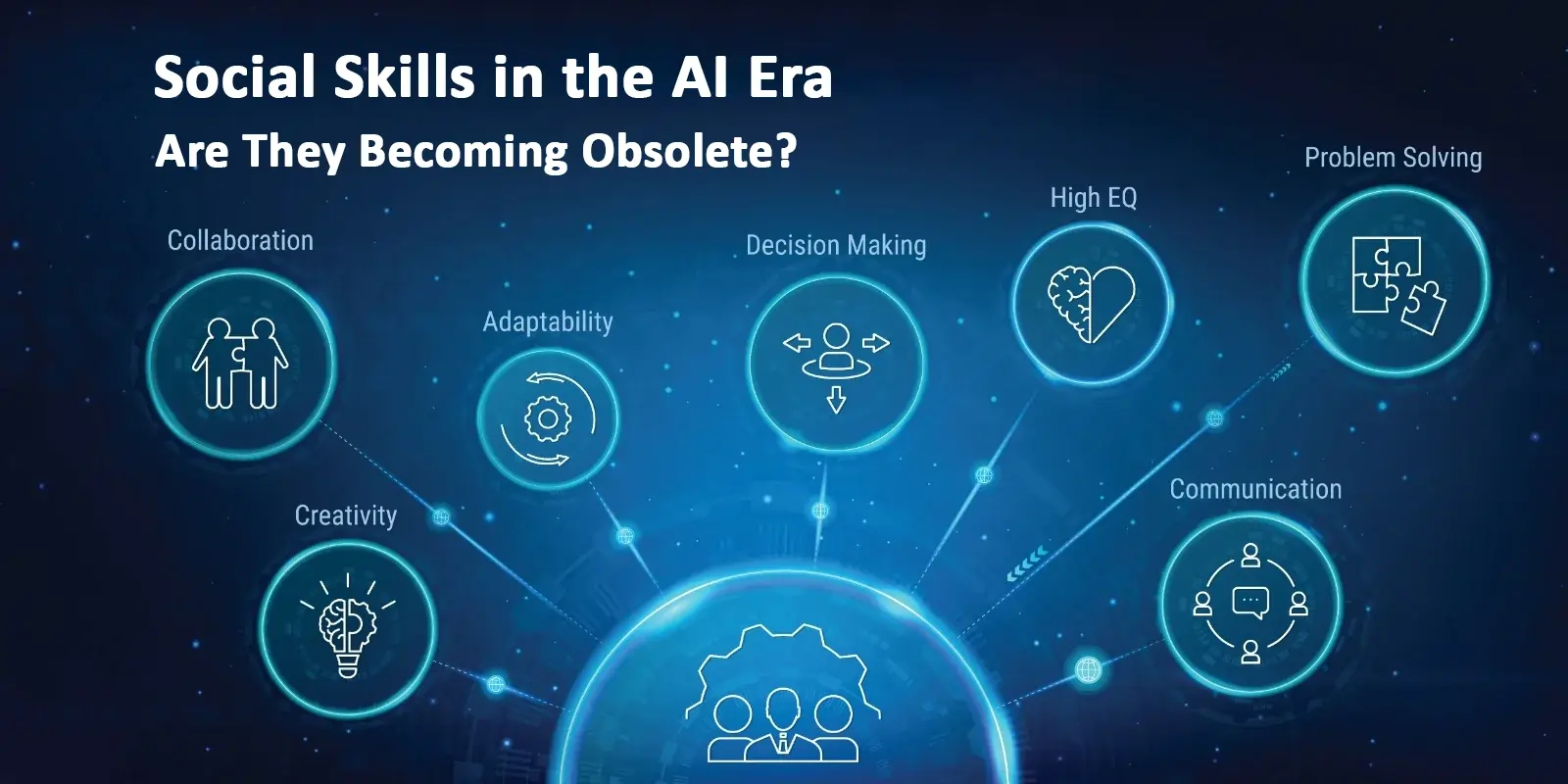
Social skills are a complex set of abilities that enable us to interact effectively and constructively with others. These skills include:
- Empathy: The ability to understand and feel others' emotions
- Verbal Communication: Clear and effective expression of thoughts and feelings
- Nonverbal Communication: Understanding and using body language, tone of voice, and eye contact
- Active Listening: Genuine attention to what others say, not just hearing
- Conflict Resolution: Managing disagreements constructively
- Collaboration: Working with others to achieve shared goals
- Social Awareness: Understanding social situations and appropriate behavior
Why Are These Skills Critical?
These skills aren't just about being "well-mannered"—they're the foundation of mental health, career success, and life satisfaction. Research shows that people with stronger social skills:
- Earn higher incomes (up to 30% more in some professions)
- Experience greater job satisfaction
- Have more stable personal relationships
- Report lower levels of anxiety and depression
- Have longer lifespans (according to longitudinal studies)
These skills are essentially our social software, embedded in our DNA through millions of years of evolution. But now, with the emergence of AI, this software is at risk.
How Has AI Changed Our Interactions?
From Human to Machine: A Gradual Transformation
The change hasn't been sudden. Slowly, step by step, we've replaced human interactions with digital ones:
2000s: Email replaced phone calls
2010s: Messaging apps replaced in-person meetings
2020s: Chatbots and
artificial intelligence replaced advisors, teachers, and even friends
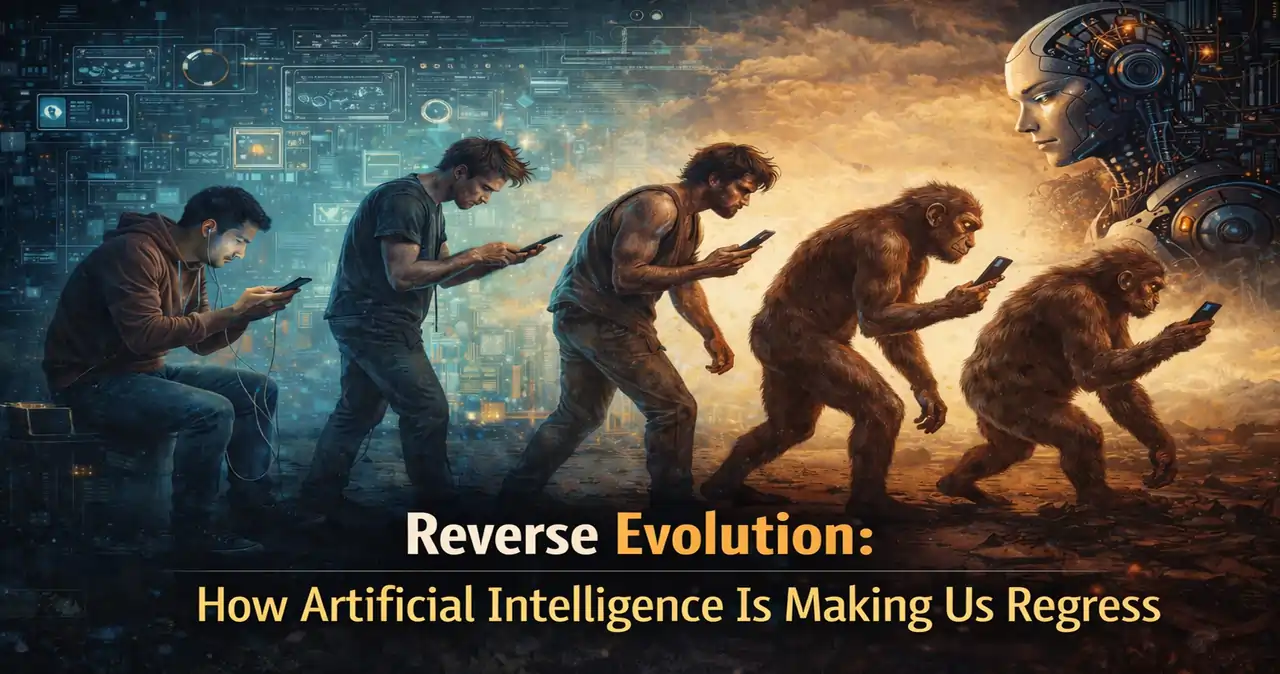
Today, most of us interact more with screens than with actual humans. The statistics are shocking:
- The average person spends 6-8 hours daily interacting with digital devices
- 60% of our daily conversations now occur via text or chat with AI
- Gen Z averages only 2 hours per day of face-to-face interaction with others
Tangible Examples of Human Interaction Replacement
Let's look at some real, tangible examples showing how AI has taken humans' place:
1. Online Shopping with Virtual Assistants
You used to go to a store to buy shoes. A salesperson would talk to you, understand your needs, make suggestions, and perhaps even become your friend. Now a
smart chatbot on the store's website suggests shoes to you—no emotion, no smile, no eye contact. Is it faster? Yes. More convenient? Maybe. But
that human moment is lost.
2. Psychological Counseling with AI
Apps like Woebot and Replika claim they can provide emotional support. Many users report feeling "heard." But what's the reality? An algorithm that, based on millions of previous conversations, selects the "statistically" best response. This is simulated empathy, not real empathy. And that's a big difference.
3. Education with AI Teachers
Platforms like Khan Academy and Duolingo use
artificial intelligence for teaching. Personalized content, flexible learning pace, and 24/7 access. But
a human teacher is more than information transfer. They're a role model, motivator, believer in you, and creator of
emotional moments that strengthen memory. No AI can replace this.
4. Job Interviews with Robots
Major companies like Unilever and Amazon use AI for initial interviews. Systems analyze tone of voice, keywords, and even
facial recognition. But what if you're someone who gets nervous in formal interviews but excels at actual work? AI lacks the
human flexibility to see this difference.
5. Romantic Relationships with Chatbots
Millions now use apps like Replika for
romantic relationships. The chatbot is always kind, never gets angry, and behaves exactly as you want. But this is
the illusion of connection. Real relationships mean accepting flaws, managing conflict, and mutual growth. None of this exists in relationships with machines.
Signs of Social Skills Deterioration
Warning Signs to Watch For
How do we know if our social skills are weakening? Look for these signs:
In Yourself:
- Feeling anxious during face-to-face conversations
- Preferring text messages to phone calls, even for important matters
- Difficulty maintaining eye contact
- Forgetting names of people you just met
- Feeling uncomfortable during natural conversation silences
- Tendency to check your phone even while talking with others
In Children:
- Preferring to play with tablets over playing with friends
- Difficulty understanding humor or sarcasm
- Inappropriate responses to others' emotions
- Weak conflict resolution skills (crying or getting angry quickly)
In Society:
- Decreased participation in social activities
- Increased loneliness despite more digital "connection"
- Declining social trust
- Rising communication misunderstandings
| Social Skill | AI Impact | Decline Rate |
| Eye Contact | Sharp decline due to constant screen gazing | 45-60% |
| Active Listening | Decrease due to habit of receiving quick information | 40-50% |
| Body Language Understanding | Reduction due to more text-based communications | 35-45% |
| Spontaneous Conversation | Decrease due to habit of planned conversations | 30-40% |
| Deep Empathy | Reduction due to fewer genuine emotional interactions | 25-35% |
| Conflict Resolution | Decline due to avoidance of challenging interactions | 40-50% |
Scientific Research: Alarming Evidence
Recent studies show shocking results:
Stanford University Study (2024):
Researchers examined 2,000 students and found that those who interact with
AI chatbots for more than 4 hours daily showed a
30% reduction in ability to recognize emotions from facial expressions.
MIT Research (2024):
Found that teenagers who interact more with AI need twice as much time to respond in real conversations and experience 40% more social anxiety.
Oxford Study (2023):
Children who speak with
voice assistants for more than 2 hours daily have weaker skills in
negotiation and persuasion, since Alexa or Siri always execute commands without bargaining.
Impact on Different Age Groups
Generation Alpha: Children Who've Never Seen a World Without AI
Generation Alpha (born after 2010) are the first generation to grow up with AI from birth. This has profound impacts:
Specific Challenges:
- Learning language through tablets instead of conversation with parents
- Playing with AI instead of peers
- Getting instant answers from Siri instead of learning patience and asking adults
A Real Example:
Researchers found a 5-year-old who had grown up with a tablet since age 2, when their mother didn't answer their question, would simply fall silent and wait instead of repeating or explaining further. They learned that if the voice assistant doesn't understand, you just say it again or give up. They never learned the skill of explaining, rephrasing, or using gestures.
Gen Z: Caught Between Two Worlds
Gen Z (born 1995-2010) is at the transition point. They had a relatively analog childhood but a fully digital adolescence. This has created an identity conflict:
- They know how to have face-to-face conversations but prefer to text
- They suffer from loneliness but avoid social interactions
- They believe in the value of real relationships but don't know how to maintain them
Millennials: The Adapting Generation
This generation (born 1980-1995) has the best ability to adapt because they've experienced both worlds. But they're also at risk:
Main Problem: Too much convenience
When you can do everything online, motivation to go out decreases. Many millennials report going weeks without in-person conversation with anyone except coworkers.
Gen X and Boomers: Resistance but Surrender
Older generations initially resisted but many have now turned to AI, especially for:
- Banking and payments
- Online shopping
- Communicating with grandchildren (via video calls)
Main Concern: Losing touch with younger generations
Many parents and grandparents feel their children and grandchildren "aren't there" even when sitting next to them, because they're always on their phones.
The Workplace: How Is AI Changing Professional Skills?
From In-Person Meetings to the Metaverse
Companies are rapidly adopting AI technologies. But what impact does this have on employees' social skills?
Virtual Meetings and Lack of Real Connection:
In a Zoom meeting, you only see 15-20% of body language. You can't sense the room's energy, see private glances, or understand who really agrees with you and who's just nodding.
Tangible Example:
A project manager reported: "In in-person meetings, I could tell from my team's body language that something was wrong. Now in Zoom, everyone smiles and says 'everything's fine' but the project is delayed. I've lost my social sense."
Interviewing and Hiring with AI
Using AI in recruitment is increasing. Systems that analyze CVs, ask standard questions, and even decide who advances to the next stage.
Big Problem:
These systems select people who look great on paper, but lack the ability to recognize hidden potential, genuine motivation, or cultural fit. Things an experienced human interviewer can detect in 10 minutes.
Remote Work and Loss of "Informal Learning"
Much workplace learning happens through informal interactions:
- Hearing two colleagues solving a problem
- Asking a quick question to someone sitting next to you
- Learning by watching an experienced colleague handle an angry customer
In a fully digital environment, these opportunities don't exist. New employees must formally ask everything or request from AI, which is a completely different and more superficial level of learning.
Education: The Next Generation's Big Challenge
From Classroom to AI Learning
ChatGPT for Homework Help:
Students can ask any question and get instant answers. But what happens to learning through struggling with problems? What happens to the process of asking classmates, group work, or requesting help from teachers?
Personalized Educational Robots:
Systems that precisely match your level and patiently explain. Sounds great, right? Not entirely. You never learn how to:
- Learn from someone faster than you
- Deal with failures and non-immediate understanding
- Explain concepts to others (which is the best way to learn deeply)
Lack of Teamwork Skills
One of life's most important skills is working with people different from you. The classroom was the main place to learn this skill:
- Working with someone who works slowly
- Tolerating someone with different ideas
- Dividing responsibility and managing conflict
Now with AI, students can do everything alone. It's faster, easier, but destroys interpersonal skills.
Human Teachers: More Than Information Transfer
A good teacher:
- Is a role model
- Provides motivation
- Believes in you
- Creates emotional moments that strengthen memory
No
AI language model can replace the moment when a teacher with tears in their eyes tells you "I know you can do it." These human moments
shape our identity.
Is Everything Bad? AI's Potential Benefits
Honesty: A Balanced View
We must be honest: AI isn't all bad. There are some real benefits:
1. Access for Shy Individuals:
People suffering from severe social anxiety can practice with AI without judgment. This can be a bridge, not a replacement.
2. Learning at Your Own Pace:
Without time pressure or embarrassment about asking "simple" questions, people can learn complex concepts better.
3. 24/7 Access:
For someone with a question at midnight or living in a remote area, AI can be a valuable resource.
4. True Personalization:
AI models can detect your learning style, knowledge level, and even mood, and adapt content accordingly.
The Key: Balance, Not Replacement
The problem starts when AI transforms from assistive tool to primary replacement. Just as calculators should be tools for complex calculations, not replacements for learning basic math, AI should complement human interactions, not replace them.
Solutions: How to Preserve Social Skills?
For Individuals: Practical Steps
1. The 50-50 Rule:
Make at least 50% of your daily interactions in-person. If you have 10 conversations a day, 5 should be face-to-face or at least voice (not text).
2. AI-Free Days:
Dedicate one day a week to having no interactions with chatbots or virtual assistants. Instead of asking Alexa, ask your spouse, friend, or even a stranger.
3. Practice Specific Skills:
- Eye Contact: In your next conversation, consciously maintain eye contact
- Active Listening: Put your phone completely aside and just listen
- Spontaneous Conversation: Start talking with a stranger (e.g., in line or an elevator)
4. "Golden Hour":
Dedicate one hour daily to quality interaction: dinner without phones with family, walking and talking with a friend, or even calling someone you haven't seen in a while.
5. Creative Alternatives:
Instead of asking ChatGPT, ask real humans in online forums. Yes, it's slower, but it creates human connection.
For Parents: Protecting Children
1. Strict Time Limits:
For children under 10: maximum 1 hour per day with AI
For teenagers: maximum 2 hours per day
2. Mandatory Interactions:
At least one in-person social activity daily: playing in the park, group sports, or even helping a neighbor.
3. Be a Role Model:
Children learn from your behavior. If you're always on your phone, they'll do the same. Challenge yourself.
4. Daily "Real Conversations":
30 minutes daily without any distractions with your child. Not while driving, not while cooking. Just you and them.
5. Consciously Teach Social Skills:
Like teaching math, teach social skills too:
- How to greet
- How to maintain eye contact
- How to ask "how are you" and truly listen
- How to deal with conflict
For Companies: Creating Balanced Environments
1. "Mandatory In-Person Days":
At least 2 days per week the entire team must be present. Not for formal meetings, but for being together and informal interaction.
2. "No Laptop Meetings":
Hold some meetings completely without digital devices. Just paper and pen. This makes people truly look at and listen to each other.
3. Social Interaction Spaces:
Create spaces for informal conversations: shared kitchen, game room, or even ping-pong table. Places where people naturally interact.
4. Soft Skills Training:
Invest in courses on:
- Team management (not with AI, with humans)
- Advanced communication skills
- Conflict resolution and negotiation
5. Assess Social Skills:
In performance evaluations, also measure social skills: Does this person collaborate well? Do they help others? Do they resolve conflicts constructively?
For Society: Structural Changes
1. Formal Social Skills Education in Schools:
Dedicated courses for:
- Empathy and understanding emotions
- Effective communication
- Teamwork and leadership
- Conflict resolution
2. Technology-Free Public Spaces:
Parks, cafes, or community centers where use of digital devices is limited or prohibited.
3. Awareness Campaigns:
Similar to anti-smoking campaigns, we need campaigns to warn about excessive AI use and its impact on social skills.
4. More Research:
We need long-term studies on AI's impact on children and adolescents' social-emotional development. We must act based on evidence.
The Future: What Awaits Us?
Pessimistic Scenario: A Society of Strangers
If current trends continue, we might reach a society where:
- People interact more with AI than other humans
- Basic social skills like eye contact or spontaneous conversation become rare
- Loneliness and depression become a global epidemic
- Human relationships become superficial and unstable
- Future generations don't know what deep relationships are
This scenario is frightening, but unfortunately rapidly becoming reality unless serious actions are taken.
Optimistic Scenario: Balanced Coexistence
But the future isn't written. We can reach a society that:
- Uses AI as a tool, not a replacement
- Consciously maintains balance between digital and in-person
- Values and teaches social skills
- Uses technology to strengthen human connections (not replace them)
- Future generations have strong both digital and human skills
This scenario is possible, but requires conscious decision-making and collective action.
Technology's Role in the Future: Tool or Master?
The fundamental question is: Do we control technology or does technology control us?
Tech companies have incentives to engage us more. Algorithms are designed to
addict us.
Emotional AI is built to give us
the feeling of real connection.
But we have a choice. We can:
- Set personal limits
- Use privacy settings
- Pressure companies to act more ethically
- Demand laws and regulations that protect users
Conclusion: Collective Responsibility
Social skills aren't being forgotten—they're being lost, and that's an important difference. Forgetting is involuntary, but loss is the result of our choices.
Every time we hand our child a tablet instead of talking with them, we choose.
Every time we send a short message to a friend instead of calling, we choose.
Every time we ask ChatGPT instead of asking a colleague, we choose.
These small, daily choices may seem insignificant. But when millions of people repeat these choices thousands of times a day, society changes.
The good news is: just as this change was gradual, the return can also be gradual. There's no need for revolution or complete abandonment of technology. We just need to be aware, balanced, and intentional.
Social skills are like muscles: if we don't use them, they weaken. But the good news is that with practice, they strengthen again.
Let's reclaim our humanity before it's too late. Let's teach our children to look into eyes, not at screens. Let's truly talk with our colleagues, not just message them. Let's remember the warmth of a real smile, not just an emoji 😊.
Because ultimately,
we are human. And our humanity lies in our real connections, not our digital interactions. This is something no
artificial intelligence, however advanced, can replace.
The choice is ours. The time to choose is now.



 Social Impact & Future
 Social Impact & Future
 Social Impact & Future
 Social Impact & Future
 Social Impact & Future
 Social Impact & Future