Introduction
Building an intelligent system for tasks like housing price prediction, medical image diagnosis, or supply-chain optimization once required a team of machine-learning experts, weeks of trial and error, and deep knowledge of complex algorithms. Today, AutoML has transformed this workflow by automating much of the process, making it faster, more accessible, and significantly more efficient.
AutoML truly democratizes artificial intelligence. This technology enables even people without deep programming knowledge or data science expertise to build powerful machine learning models. From small businesses to large corporations, from doctors to digital marketers, everyone can harness the power of artificial intelligence without needing to hire expensive teams.
In this article, you'll become fully acquainted with AutoML, how it works, its benefits, challenges, tools, and practical applications. Are you ready to see how you can accomplish in just a few hours what used to take weeks?
What is AutoML?
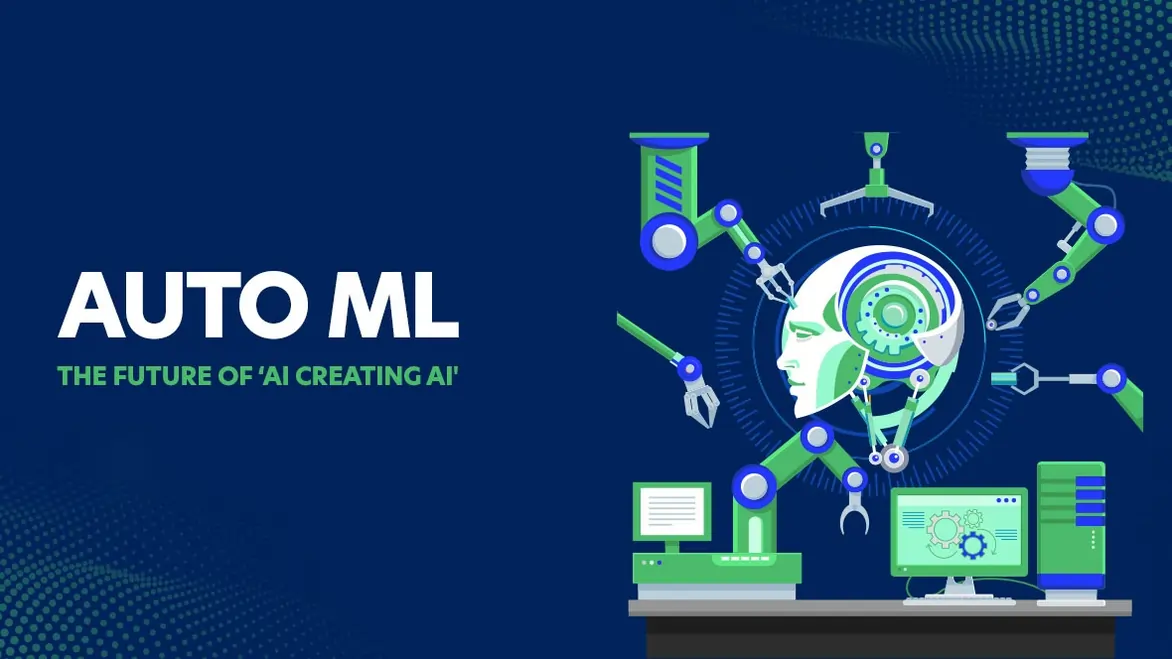
AutoML or Automated Machine Learning is the process of automating the time-consuming and complex stages of building machine learning models. This technology automatically performs all stages from data preprocessing to model selection, parameter tuning, and performance evaluation.
In the traditional approach, a data scientist must:
- Clean and prepare the data
- Extract appropriate features
- Try several different algorithms
- Tune the hyperparameters of each model
- Evaluate and compare models
- Select and perform final optimization on the best model
Why is AutoML Revolutionary?
Democratizing Artificial Intelligence
One of AutoML's most important achievements is making artificial intelligence accessible to non-experts. A small business owner can build a system to predict product demand without hiring a data science team. A doctor can develop a model to assist in disease diagnosis. A marketer can predict customer behavior.
Significant Time Savings
What used to take weeks or even months can now be done in just a few hours. AutoML can test hundreds of different models in a short time and identify the best ones. This is especially valuable for companies that need rapid product development.
Reduced Development Costs
Hiring a specialized data science team can bring heavy expenses. With AutoML, companies can work with smaller teams or even advance
artificial intelligence projects with their existing experts.
Improved Model Quality
AutoML is not only faster but also produces better models than manual methods in many cases. These systems can try complex combinations of algorithms that might not occur to a data scientist.
How AutoML Works
AutoML divides the machine learning process into several key stages and automates each one:
1. Data Preprocessing
The first and perhaps most important stage is data preparation. AutoML automatically:
- Identifies and fills missing values (using mean, median, or more advanced methods)
- Detects and removes or corrects outliers
- Performs normalization and standardization so all features are on the same scale
- Converts categorical variables to numbers (One-Hot Encoding or Label Encoding)
2. Feature Engineering
This stage involves creating new and useful features from existing data. AutoML can:
- Perform mathematical transformations like logarithm, power, or square root
- Create combined features from multiple different columns
- Extract temporal features like day of week, season, or hour
- Perform dimensionality reduction using techniques like PCA
3. Algorithm Selection
AutoML tests an extensive library of algorithms:
The system intelligently decides which algorithm is more suitable for your problem type (classification, regression,
clustering).
4. Hyperparameter Tuning
Each algorithm has multiple parameters that must be tuned. AutoML uses advanced methods such as:
- Bayesian optimization to find the best parameter combination
- Grid Search for comprehensive parameter space search
- Random Search for random but effective exploration
- Hyperband to combine speed and accuracy
5. Model Evaluation and Selection
AutoML evaluates models using various metrics:
- Accuracy
- F1-Score
- AUC-ROC
- Mean Squared Error (MSE)
- And other criteria depending on the problem type
The system uses Cross-Validation techniques to ensure the model will perform well on new data too.
6. Model Ensembling (Ensemble Learning)
One of AutoML's most powerful capabilities is the ability to combine multiple models to achieve better results. This technique, called
Ensemble Learning, includes methods such as:
- Bagging: Combining similar models trained on different data subsets
- Boosting: Sequential training of models where each corrects previous mistakes
- Stacking: Using model outputs as inputs to a final model
Comparison of AutoML with Traditional Approach
| Feature | Traditional Approach | AutoML |
| Development Time | Weeks to months | Hours to days |
| Required Expertise | Very high | Low to medium |
| Development Cost | Very high | Low to medium |
| Models Tested | Limited (5-10 models) | Extensive (100+ models) |
| Interpretability | High | Medium (depends on tool) |
| Fine Control | Complete | More limited |
| Coding Required | Extensive | Minimal or no-code |
| Suitable For | Complex and custom projects | Standard and rapid projects |
Most Popular AutoML Tools
Google Cloud AutoML
Google offers one of the most powerful AutoML platforms including:
- AutoML Vision: For image classification and object detection
- AutoML Natural Language: For natural language processing
- AutoML Tables: For tabular data
- AutoML Video: For video analysis
Main advantage: Using powerful
Google Cloud infrastructure and high scalability capability.
H2O.ai
H2O is a powerful open-source platform that:
- Is free and Open Source
- Supports Python and R
- Has advanced AutoML capabilities
- Is suitable for professional Data Scientists
Auto-sklearn
This tool is built on the famous scikit-learn library and:
- Is completely free and open source
- Integrates well with the Python ecosystem
- Uses advanced techniques like Bayesian Optimization
TPOT (Tree-based Pipeline Optimization Tool)
TPOT uses genetic algorithms to optimize machine learning pipelines:
- Open source and free
- Produces understandable Python code
- Suitable for learning and education
Microsoft Azure AutoML
Microsoft also offers a comprehensive platform:
- Deep integration with Azure Machine Learning
- Simple graphical user interface
- Support for various types of problems
DataRobot
One of the pioneers of commercial AutoML:
- Very user-friendly interface
- Model explainability capabilities (Explainable AI)
- Suitable for large companies
Real and Tangible Applications of AutoML
1. Healthcare Sector
A medium-sized hospital can use AutoML to:
- Build a patient readmission prediction system that reduces readmission rates by up to 30%
- Perform early sepsis detection from patient vital signs that can save hundreds of lives
- Optimize operating room scheduling to reduce wait times and increase productivity
Real example: Mount Sinai Hospital in New York used AutoML to predict drug side effects and was able to significantly reduce medication errors.
2. Retail and E-commerce
An online store can:
- Build a product recommendation system that increases conversion rates by up to 40%
- Implement dynamic pricing to optimize profit and competitiveness
- Perform inventory prediction to prevent stockouts or overstocking
- Detect counterfeit products from product images
Real example: A clothing chain store using AutoML was able to improve demand forecasting by 25% and significantly reduce warehousing costs.
3. Financial and Banking Industry
Banks and financial institutions can:
- Perform fraud detection in transactions in real-time
- Conduct credit scoring of loan applicants with higher accuracy and without discrimination
- Perform churn prediction and take preventive action
- Execute algorithmic trading to optimize portfolios
Real example: A digital bank using AutoML was able to increase the detection rate of suspicious transactions from 75% to 95% while reducing False Positives by 40%.
4. Digital Marketing
Marketers can:
- Predict Customer Lifetime Value for optimal budget allocation
- Perform customer segmentation for personalized campaigns
- Optimize advertising by predicting click and conversion rates
- Conduct sentiment analysis on social media
Real example: A marketing agency using AutoML was able to increase the ROI of client advertising campaigns by an average of 60%.
5. Manufacturing Industry
Factories can:
- Predict equipment failure before it occurs (Predictive Maintenance)
- Implement automatic quality control using machine vision
- Optimize production processes to reduce waste
- Perform demand forecasting for production planning
Real example: An auto parts manufacturing plant using AutoML was able to reduce waste by 35% and reduce equipment downtime by 50%.
6. Human Resources and Recruitment
HR departments can:
- Screen resumes automatically and without discrimination
- Predict employee success in different roles
- Identify employees at risk of leaving for timely action
- Optimize the interview process
7. Smart Agriculture
Farmers can:
- Predict crop yield based on weather and soil conditions
- Detect plant diseases from leaf images
- Optimize irrigation and fertilization to increase productivity
- Predict product prices for better planning
Challenges and Limitations of AutoML
Despite its many advantages, AutoML has limitations that should be known:
1. Black Box Problem
Many AutoML systems produce complex models whose decision-making process is difficult to understand. This can be problematic in industries like healthcare or banking that require justification of decisions.
2. Need for Quality Data
AutoML cannot work miracles. If your data is low quality, incomplete, or biased, the resulting model will also be flawed. The golden rule still applies: Garbage In, Garbage Out.
3. Computational Cost
Testing hundreds of different models requires significant computational resources. This can increase cloud costs, especially for large datasets.
4. Lack of Complete Flexibility
For very complex or non-standard problems, AutoML may not be able to find the optimal solution. In these cases, intervention by a human expert is still necessary.
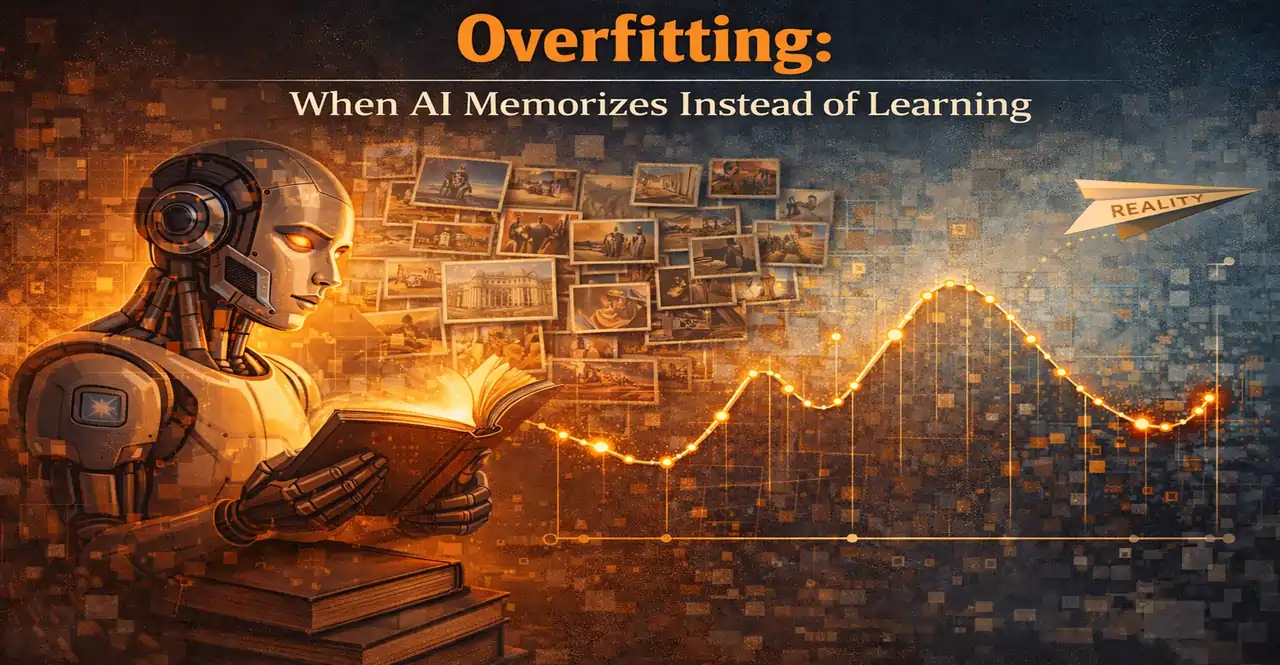
5. Risk of Over-fitting
Some AutoML systems may build models that perform excellently on training data but poorly on new data.
Best Practices for Using AutoML
To use AutoML effectively, follow these tips:
1. Careful Data Preparation
Even with AutoML, data quality is very important:
- Keep your data clean and consistent
- Check for outliers and missing values
- Ensure class balance
- Provide sufficient data for training
2. Clear Problem Definition
Specify:
- What is your goal (classification, regression, clustering)
- What is the main evaluation metric (accuracy, speed, interpretability)
- What are the resource constraints
3. Accurate Model Evaluation
Don't just rely on automatic metrics:
- Test the model on real new data
- Examine performance under different conditions
- Use techniques like Confusion Matrix for deeper understanding
4. Continuous Monitoring
Machine learning models can lose their performance over time:
- Monitor model performance regularly
- Retrain the model with new data
- Use Drift Detection to identify changes
5. Combine with Human Expertise
AutoML is not a complete replacement for experts:
- Use knowledge from domain experts
- Compare results with business logic
- Maintain human intervention in critical decisions
The Future of AutoML
AutoML is rapidly evolving and new trends are emerging:
1. AutoML for Deep Learning
Automating the design of reinforcement learning agents for problems like games, robotics, and automated systems.
3. Integration with Edge AI
Developing optimized models for running on resource-limited devices like mobile and IoT.
4. Explainable AutoML
New tools are being developed that not only build models but also provide understandable explanations of how they work.
Combining AutoML with federated learning to train models without transferring sensitive data to a central server.
Developing systems that can automatically work with different data types (image, text, audio) simultaneously.
When to Use AutoML?
AutoML is ideal for:
- Proof of concept (PoC) projects that need rapid development
- Standard tasks like classification, regression, time series forecasting
- Teams with limited resources who don't have access to data science experts
- Multiple projects that need to build similar models
- Rapid idea testing before investing in custom solutions
AutoML is less suitable for:
- Very complex and unique problems that require custom architectures
- Research projects that need complete control
- Cases where complete interpretability is mandatory (unless Explainable AutoML tool is used)
- Very limited computational resources where extensive testing cannot be performed
Getting Started with AutoML: Step-by-Step Guide
Step 1: Choose the Right Tool
To get started, we recommend:
- Beginners: Google Cloud AutoML or Microsoft Azure AutoML
- Python programmers: H2O.ai or Auto-sklearn
- Large businesses: DataRobot or Google Cloud
Step 2: Data Preparation
- Prepare your data in CSV or Excel format
- Specify the target column
- Have at least a few hundred rows of data (the more, the better)
Step 3: Upload and Initial Settings
- Upload data to the AutoML platform
- Specify the problem type (classification/regression)
- Select the evaluation metric
Step 4: Run AutoML
- Set the time or computational budget
- Start the process and wait
- Monitor progress
Step 5: Evaluation and Deployment
- Review results and metrics
- Test the model on test data
- If satisfied, deploy the model
Conclusion
AutoML is a real transformation in the world of artificial intelligence that has opened the gates of machine learning to everyone. This technology not only reduces development time and cost but also enables more individuals and organizations to benefit from the power of artificial intelligence.
However, AutoML is not a complete replacement for human experts but rather a powerful tool to strengthen and accelerate their work. Combining AutoML with domain expertise and business knowledge brings the best results.
If you haven't tried AutoML yet, now is the best time to start. With free and open-source tools available, you can experience the power of this technology without initial investment. Whether you're a business owner, developer, or researcher, AutoML can transform your work.
The world of artificial intelligence is no longer exclusive. AutoML has made it accessible to everyone. Are you ready to take advantage of this opportunity?



 AI Fundamentals & Algorithms
 AI Fundamentals & Algorithms
 AI Fundamentals & Algorithms
 AI Fundamentals & Algorithms
 AI Fundamentals & Algorithms
 AI Fundamentals & Algorithms