Introduction
Google Cloud AI provides a suite of advanced
artificial intelligence tools and services that enable developers and businesses to leverage the power of machine learning and
AI to solve complex problems. By offering pre-trained models, analytics services, and custom model-building tools, this platform simplifies the AI implementation process.
This article reviews the key tools of Google Cloud AI, their applications, and how they help businesses boost productivity and drive innovation.
Core Google Cloud AI Services
1. AutoML
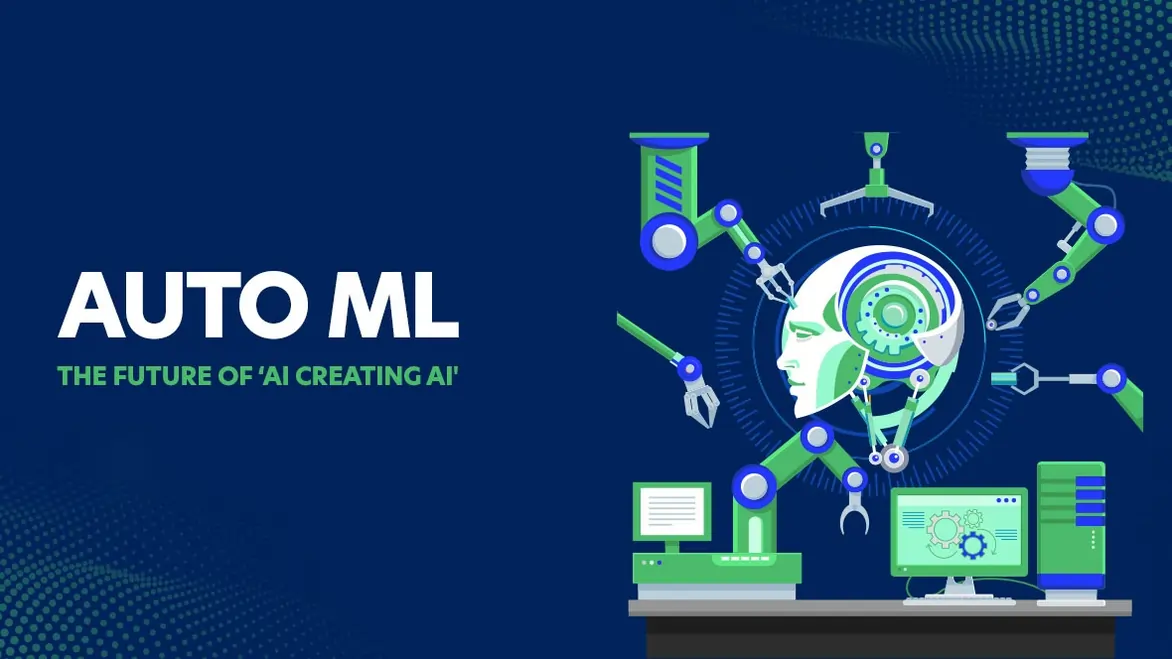
Google AutoML is a tool for non-experts in machine learning, allowing them to build customized AI models. With its simple UI, complex model training becomes possible without deep coding knowledge.
Benefits:
- High-accuracy models from limited data
- Automated feature selection and hyperparameter tuning
- Supports image classification, text translation, and sentiment analysis
2. Cloud Vision API
Cloud Vision API is used for analyzing and recognizing content in images. It helps with object, text, and face detection and other visual features.
Use Cases:
- Product identification in retail images
- Facial expression sentiment analysis
- Optical character recognition (OCR) for text extraction
3. Cloud Natural Language API
Practical Examples:
- Analyzing customer feedback sentiment
- Identifying keywords and key entities in articles
- Automatically categorizing emails by content
4. Cloud Speech-to-Text API
This tool converts speech to text in real time or from audio files. With multi-language support, it's used in voice assistants and translation apps.
5. Cloud Text-to-Speech API
This tool generates natural speech from text. Powered by WaveNet, its output sounds human-like, ideal for voice assistants and automated response systems.
6. AI Platform
The
AI Platform offers training and deployment tools for machine learning models. It helps developers train models and deploy them into production environments.
Features:
- Run models on large datasets
- Train with TensorFlow and other frameworks
- Use Explainable AI for model interpretation
7. Dialogflow
Dialogflow is a tool for building chatbots and voice assistants based on natural language processing. It creates intelligent conversational experiences in both text and voice.
Features:
- Multi-language support
- Easy integration with platforms like Google Assistant
- Intent recognition and complex conversation management
Business Applications of Google Cloud AI Tools
1. Customer Service & Support
Companies can use Dialogflow to build intelligent chatbots that understand user intent and automatically provide appropriate responses, improving customer experience.
2. Feedback Analysis
Cloud Natural Language API automates customer feedback analysis, identifying positive, negative, and neutral sentiments.
3. Fraud Detection in Financial Transactions
Using machine learning models on AI Platform, banks and financial institutions can detect unusual patterns and reduce fraud risk.
4. Content Management & Advanced Search
Cloud Vision API can auto-tag images in CMS platforms and enhance visual search capabilities.
Advantages and Disadvantages of Google Cloud AI
Advantages:
- Seamless Integration: Easily integrates with other Google Cloud services and external tools.
- Pre-Trained Models: Quickly leverage ready-made models for common tasks.
- High Scalability: Suitable for both small and large projects with auto-scaling resources.
Disadvantages:
- High Cost: Some services can be expensive for long-term or large-scale projects.
- Vendor Lock-In: Reliance on Google’s ecosystem may limit flexibility.
Conclusion
Google Cloud AI offers a powerful set of AI and machine learning tools. From NLP and image analysis to custom model building, these tools help developers and businesses turn innovations into reality quickly. Despite potential challenges, the platform’s power and flexibility make it a popular choice for AI projects.


 AI Fundamentals & Algorithms
 AI Fundamentals & Algorithms
 AI Fundamentals & Algorithms
 AI Fundamentals & Algorithms
 AI Fundamentals & Algorithms
 AI Fundamentals & Algorithms