Blogs / The Data War: Why Your Citizens' Information Is the Most Valuable Natural Resource of AI
The Data War: Why Your Citizens' Information Is the Most Valuable Natural Resource of AI

Introduction
In 1859, a farmer in Pennsylvania was drilling on his land when he struck a black, viscous substance. That day, neither he nor anyone else knew that this "black mud" would transform the world within decades — that wars would be fought over it, and the fate of nations would be tied to having it or not.
Today, the same story is repeating itself with a different substance. Not oil, not gas, not gold — but data. The information you generate every day, every moment, with every search, every message, every online purchase, and every step you take.
But this time there is one fundamental difference: most people don't know they have this wealth. And worse, most countries don't realize they are giving it away for free.
The AI economy has proven one reality time and again: AI models are nothing without data. And the data that builds these models comes from the daily lives of citizens. This means any nation that loses control of its citizens' data has, in effect, already surrendered the future of its AI models.
How Does Data Build Models?
To understand why data matters so much, we need to take one step back and see how a large language model actually "learns."
When a company like OpenAI trains a GPT model, it essentially shows the model billions of sentences, paragraphs, and texts and asks it to find patterns. The model learns that "sky" is typically followed by "blue," how someone speaks when they're upset, what a professional email looks like, and thousands of other patterns.
This process requires three types of data:
Text data: Billions of pages of text in different languages — books, articles, conversations, code, poetry, news. The more diverse and high-quality these texts, the better the model.
Interaction data: Every time you chat with a chatbot and rate its answer, or when you click a search result and ignore the others — these are interaction data points that tell the model which answer is "good."
Specialized data: Medical, legal, engineering, and scientific information that transforms a model from a "shallow know-it-all" into a genuine specialist.
Now the important question: Where does all this data come from? From your life.
How Do We Know Data Is Truly the "New Oil"?
This isn't merely a poetic metaphor. Look at the real numbers:
Meta (Facebook) announced in 2023 that it used publicly available internet information — and according to some reports, user content — to train the Llama 2 model. The value of that data? So enormous that Meta later released Llama for free in exchange for receiving free feedback from millions of users.
Google processes billions of searches every day. These searches reveal what people around the world are thinking, what questions they have, and what matters to them. This same data built Gemini.
OpenAI has signed contracts with major publishers including Associated Press, The Atlantic, and Axel Springer for access to high-quality data — with reported values reaching hundreds of millions of dollars. What is all that money for? Buying the same "digital black mud."
The Core Problem: Where Does National Data Go?
Now let's ask the uncomfortable question: Where does the data generated by a country's citizens ultimately end up?
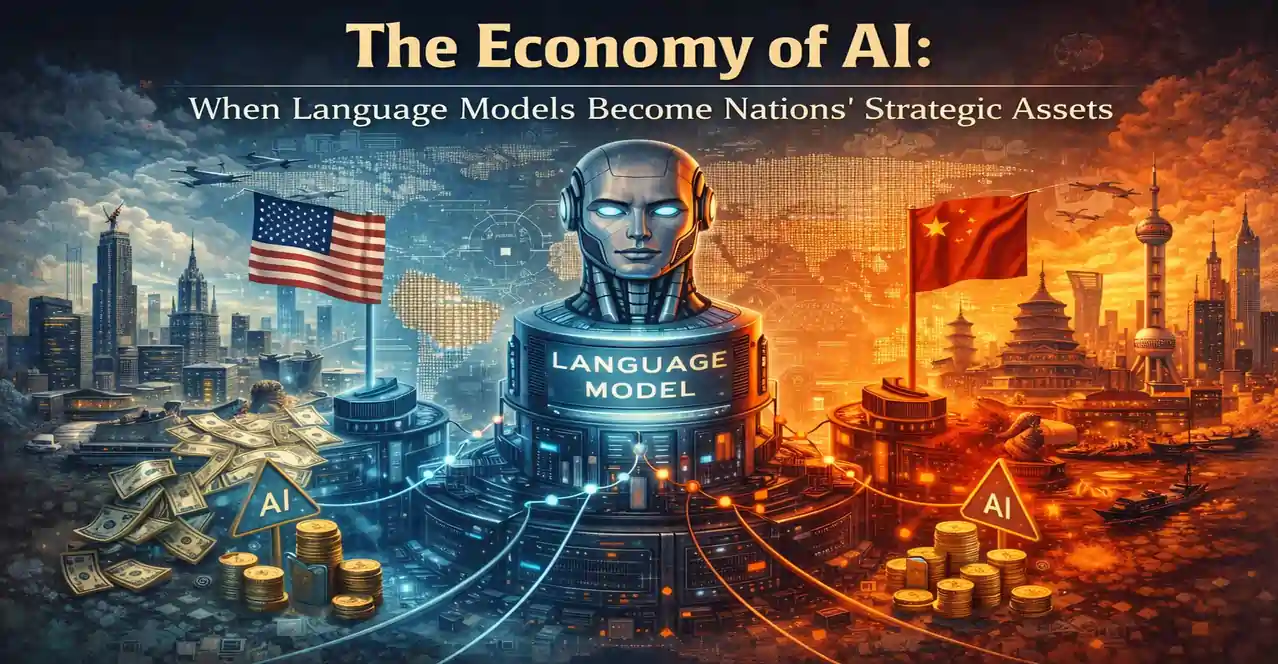
In most countries across the world — including most of the Middle East, Africa, Asia, and Latin America — the answer is: on the servers of American or Chinese companies.
Every time an Iranian, a Turk, a Brazilian, or a Nigerian:
- Searches something on Google
- Converses with ChatGPT
- Posts on Instagram
- Navigates with Google Maps
Data is generated that helps train American AI models. These models are later sold back to those very same countries. A cycle in which digital wealth flows from developing countries to developed ones.
This is precisely what happened in classical colonialism: raw materials were extracted from colonies, processed into products in European factories, and sold back to the colonies — at several times the price.
Which Type of Data Is the Most Valuable?
Not all data is equal. The following table shows the strategic value of different data types:
| Data Type | Example | Value for AI | Risk of Loss |
|---|---|---|---|
| Medical data | Hospital records, imaging, lab results | Very high | 🔴 Critical |
| Financial data | Bank transactions, purchase patterns | Very high | 🔴 Critical |
| Linguistic-cultural data | Literary texts, conversations, native content | High | 🟠 Serious |
| Legal-judicial data | Court rulings, contracts, legislation | High | 🟠 Serious |
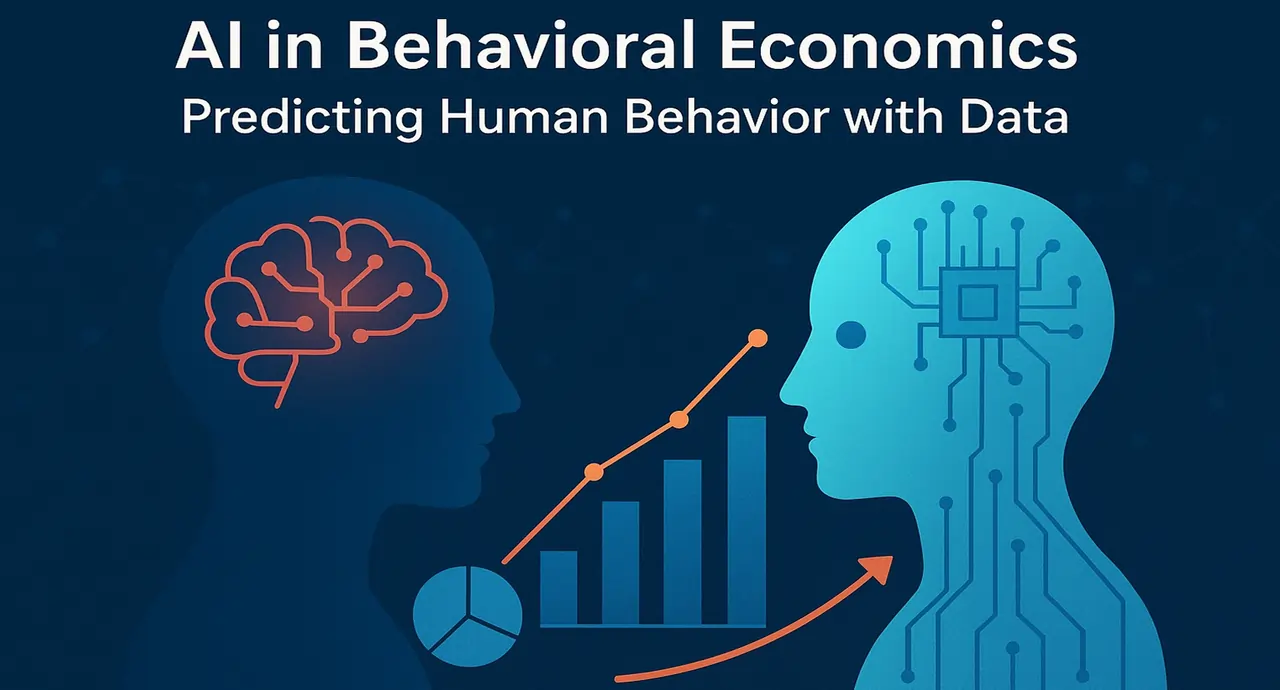
| Behavioral data | Search patterns, content consumption, navigation | Medium to high | 🟡 Moderate |
| Scientific-research data | Academic research, experimental results | High | 🟠 Serious |
Medical data holds a particularly special position. AI in diagnosis and treatment requires enormous volumes of medical images, lab results, and patient records to learn to identify diseases. A country that gives this data away is effectively helping foreign companies build better medical systems — which are then sold back to that country.
Real Examples: When Data Became Power
China and the Data-Driven Strategy
China may be the largest data laboratory in human history. With 1.4 billion people who mostly use native platforms (WeChat, Baidu, Alipay), it holds a volume of data that no other country can access.
The result? Chinese models in certain domains — especially image recognition and Chinese language processing — have surpassed their American counterparts. This superiority comes directly from data superiority.
China's facial recognition systems, today among the most accurate in the world, achieved this level not because of better algorithms — but because of more and more diverse data from Asian faces.
Estonia: Small but Smart
Estonia, with a population of 1.3 million, has one of the world's most advanced national data infrastructures. The country's X-Road system manages all government data securely and in an integrated manner — from medical records to taxes and voting.
This infrastructure is now helping Estonia train native AI models on high-quality national data. A small country that has carved out its place in the AI economy through smart data governance.
India: Strategic Pivot with IndiaAI
India launched the national IndiaAI program in 2024 with a one-billion-dollar budget. The goal? Creating a national data repository that Indian companies can use to train native models.
Notably, India has explicitly stated its desire to transition from being a "raw data exporter" to an "AI product exporter." This is the same industrialization logic — instead of exporting iron ore, export steel.
The Data Paradox: More Is Not Always Better
There is a subtle point that is often overlooked: data quality matters more than quantity.
Early GPT models were trained on massive volumes of internet text — including misinformation, biases, and low-quality content. The result was a model that sometimes stated incorrect things with confidence. This phenomenon is known as AI hallucination.
For countries seeking to build native models, this is an opportunity: less data but of higher quality can build better models than large volumes of contaminated data.
This means a country with a population of 80 million — if it properly manages, cleans, and organizes its data — can build models that qualitatively compete with those of the tech giants.
Privacy vs. Power: An Unsolved Equation
This is where one of the greatest tensions of our era takes shape: the more data collected, the better the models built — but the more citizens' privacy is at risk.
Europe responded with GDPR and the AI Act: restrictions on data collection, the right to be forgotten, and citizen control over personal information. But this approach has costs — European models have fallen behind American competitors due to data limitations.
China gave the opposite answer: maximum data collection, limited privacy, more powerful models. But citizens pay the price of this approach with the loss of civil liberties.
Ethics in artificial intelligence examines precisely this tension: there are no simple answers. Each society must resolve this equation according to its own values.
A Third Way: Data Sovereignty Without Sacrificing Privacy
Can a nation simultaneously preserve its national data, protect citizens' privacy, and build powerful models? The answer — at least in theory — is yes. And technologies are emerging that make this third way possible:
Federated Learning: Rather than sending user data to a central server, the model goes to the data — training on the user's own device and sending only "learned insights" (not raw data). Federated learning is one of the most promising answers to this equation.
Confidential Computing: Data is processed in an encrypted state. Even the company running the model cannot see the raw data.
Synthetic Data: Using GAN networks, realistic data can be generated that contains no real citizen information but is sufficiently useful for training models.
These technologies are still maturing, but they point the way: a future where national data can build national power without citizens paying a price for it.
Linguistic Data: A Treasure Being Overlooked
One of the most undervalued data assets of any country is its linguistic heritage.
Persian has one of the richest literary and philosophical traditions in the world. A thousand years of poetry, philosophy, history, and knowledge are documented in this language. This volume of high-quality text — to which American and Chinese models have insufficient access — could form the foundation of an exceptional Persian language model.
Natural language processing when combined with rich cultural data builds models that are superior not only technically, but culturally. When ChatGPT speaks Persian, it is a mental translation from English. A native Persian model can think differently — and more deeply.
What Is to Be Done? A Practical Roadmap
For countries wishing to reclaim their data sovereignty, several practical steps exist:
Step 1 — National data audit: First, determine what data exists, where it is, and who currently has access to it. Most governments don't have precise answers to this question.
Step 2 — National data infrastructure: Creating native servers and platforms where citizens' data remains within the country's borders. This is expensive, but the cost of not having it is greater.
Step 3 — Data participation: Creating a mechanism by which citizens voluntarily share their data to build national models — in exchange for benefits such as free access to native AI services.
Step 4 — Regional cooperation: Smaller countries can pool their data to build joint models — without losing their data independence.
Conclusion: A War Before We Know It Is One
The greatest characteristic of this war is that most countries don't even know they're in it.
Oil was visible — wells, refineries, tankers. But data is invisible. Every search, every click, every bank transaction, like a drop of oil slowly rising from the ground — except instead of being stored in a national reservoir, it flows directly into a pipeline that ends at foreign servers.
The future of artificial intelligence is brighter for countries that understand this reality today: your citizens' data is your national treasure. The only question is whether you want to manage it, or let others manage it for you.