Introduction
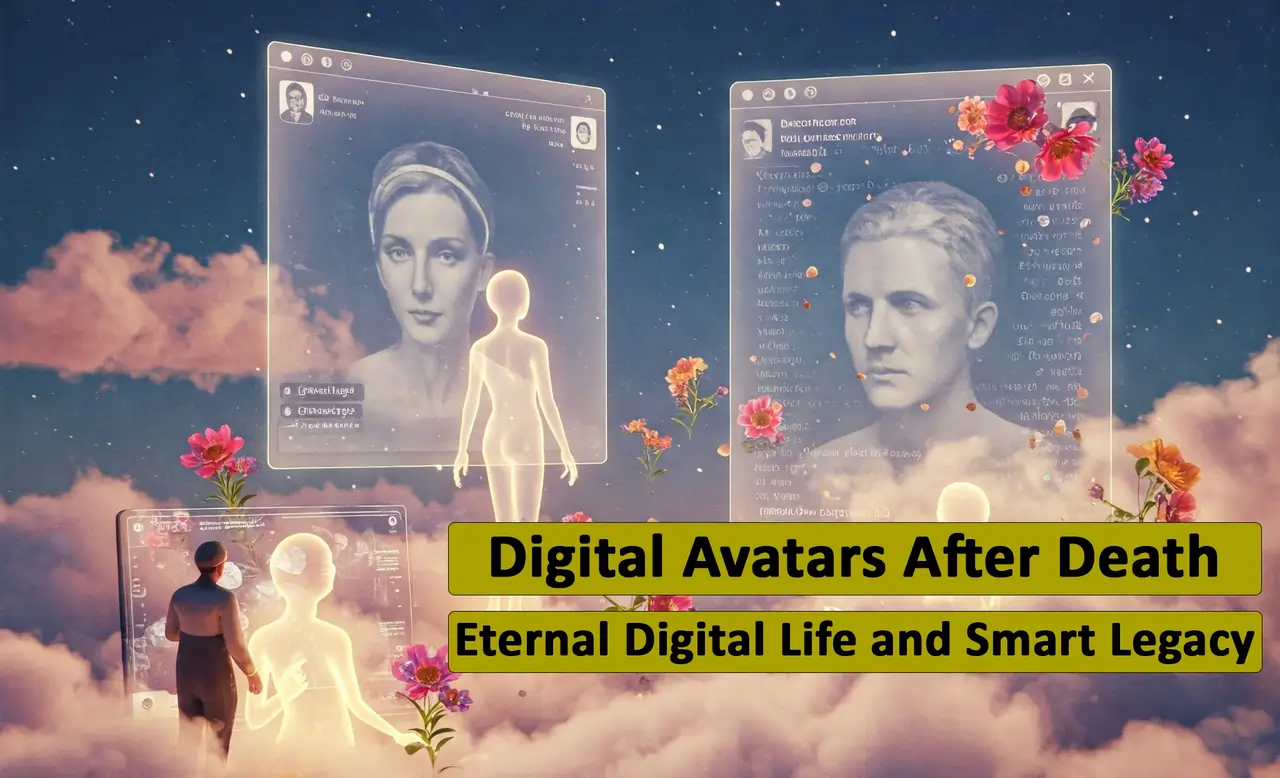
A grandfather who passed away years ago can still talk with his grandchildren. Not as a memory or recorded video, but as an intelligent avatar that can answer questions, tell new stories, and even give personalized advice. Or imagine a famous writer who, decades after death, still publishes new books—not by ghostwriters, but by their digital avatar that continues their writing style, thoughts, and even intellectual evolution.
This is no longer science fiction. With remarkable advances in
artificial intelligence and
deep learning, we're on the threshold of an era where
death is no longer the absolute end—at least not in the digital world.
Post-death avatars or "digital legacy" are becoming one of the most controversial and profound topics of the AI age. This technology not only transforms how we memorialize loved ones but also challenges the very definition of death. But what ethical, psychological, and philosophical challenges does this transformation bring? Can the digital continuation of a person after death truly be "them"?
In this article, we'll explore the deepest layers of this phenomenon—from the technologies that make it possible to fundamental questions about the meaning of life, death, and identity.
Technology of Post-Death Avatars: How Do They Work?
Steps to Building a Legacy Avatar
Creating a post-death
avatar that truly resembles the original person is a complex multi-stage process:
1. Personal Data Collection
To build an authentic avatar, we need massive amounts of personal data:
- Text and Writing: Emails, messages, notes, articles, social media posts
- Audio and Video: Audio recordings, family videos, interviews, speeches
- Social Interactions: Communication patterns, responses to different situations
- Personality Information: Values, beliefs, memories, experiences, political and social opinions
- Sensory Data: Even body movements, facial expressions, and micro-expressions
Some companies ask people to actively generate data for their avatar before death—such as recording answers to thousands of different questions or conducting deep interviews about their life and thoughts.
2. Personality Analysis and Modeling
- Identify and mimic the person's speaking style
- Model thinking patterns and reasoning methods
- Predict emotional reactions to different situations
- Understand intellectual evolution and opinion changes over time
This process is far more complex than a simple chatbot. Using techniques like
Fine-tuning and
LoRA enables deep customization of language models.
3. Creating Visual and Audio Presence
For the avatar to truly look like the original person:
- Face Reconstruction: Using Diffusion Models and GANs, photorealistic images are created
- Voice Simulation: Advanced Text-to-Speech technologies can accurately reconstruct a person's voice
- Movement Animation: Using Convolutional Neural Networks (CNNs) to simulate lip movements, facial expressions, and body language
4. Continuous Learning and Evolution
- Learn from new interactions with people
- Respond to new world events
- Evolve their opinions (within the framework of the original personality)
This raises a profound question: Is an avatar that learns and changes still the same original person?
Leading Companies and Projects
1. Replika and HereAfter AI
Replika is one of the most popular platforms for creating "digital companions" that many users employ to preserve the memory of deceased loved ones. HereAfter AI specifically focuses on recording life stories and creating interactive avatars.
2. StoryFile and Eternime
These companies enable people to create interactive video banks of themselves before death. Survivors can ask questions, and the AI system selects the most appropriate answer from recorded videos or creates new responses based on the person's personality.
3. Project December and GPT-3 Memorial Bots
Project December uses GPT-3 (and now GPT-4) to enable the creation of chatbots from deceased individuals. Users can create an interactive version by providing information about their deceased loved one.
One famous story is of a young man who, after his fiancée's death, used this technology and thousands of text messages they had exchanged to create an avatar of her and talked with it for months—an experience that was both healing and painful.
4. Microsoft and the "Chatbot from the Dead" Patent
Microsoft filed a patent in 2021 that described enabling chatbot creation from deceased individuals using social media data, images, and videos. This patent sparked intense ethical reactions, and Microsoft announced it has no plans to commercialize it for now.
Comparison Table: Types of Legacy Avatars
| Avatar Type | Complexity Level | Capabilities | Approximate Cost |
| Simple Text Chatbot | Low | Answer questions, simulate writing style | $10-50/month |
| Voice Avatar | Medium | Voice conversation, tone and emotion simulation | $50-200/month |
| Pre-recorded Video Avatar | Medium | Select answers from video bank, limited to pre-recorded questions | $500-2000 (one-time) |
| Interactive 3D Avatar | High | Metaverse presence, realistic movements, free interaction | $1000-5000 + subscription |
| Complete Digital Twin | Very High | Continuous learning, personality evolution, real-world presence (AR) | $10,000+ (currently limited) |
Practical Applications: Beyond Memorializing Loved Ones
1. Preserving Cultural and Scientific Heritage
Imagine being able to talk with Albert Einstein about relativity theory, or ask Mozart about his musical creative process. Legacy avatars can preserve the knowledge and wisdom of past generations in an interactive format.
Real Example: The Holocaust Museum uses AI technology to record survivor stories. Visitors can ask questions and interactive holograms of these survivors respond—even decades after their death.
2. Consulting and Knowledge Transfer
Business leaders, scientists, and experts can preserve decades of their knowledge in avatar form. A skilled surgeon can have an avatar that advises young surgeons even after retirement or death.
3. Continuing Artistic and Creative Works
Writers, musicians, and artists can create avatars that continue their artistic style. A writer can have an avatar that writes new books based on their writing style or answers questions about their works.
Ethical Challenge: Is an artwork produced by a deceased artist's avatar still their "work"?
4. Maintaining Family Connections
For children who lose a parent, legacy avatars can enable them to still connect with their parents, ask questions, and receive advice.
Real Story: A mother who knew she would soon die recorded thousands of videos and audio messages for her daughter—from her first birthday to her wedding day and even moments when she becomes a mother herself. Now an AI avatar of this mother has been created that her daughter can talk with.
Deep Psychological Challenges
1. Grieving Process and Accepting Loss
One of psychologists' biggest concerns is that post-death avatars might disrupt the natural grieving process. Grieving is a necessary process for accepting loss and continuing life.
Key Question: If you can talk with your deceased loved one's avatar every day, can you truly "let them go"?
- Complicated grief: Inability to accept the reality of death
- Emotional dependence on machines: Replacing real human relationships with digital interactions
- Identity confusion: Especially in children who may not understand the difference between the real person and avatar
2. Emotional "Uncanny Valley"
When an avatar is very similar to the original person but not exactly like them, it can create a sense of intense discomfort and strangeness. This state, known in cognitive sciences as the "uncanny valley," can be very painful in post-death avatars.
3. Emotional Exploitation
Exploitation Risk: Companies can exploit people's grief and sorrow by selling expensive subscription services to "keep loved ones alive"—a business model that capitalizes on emotional vulnerability.
Ethical and Philosophical Challenges
1. Consent of the Deceased
Fundamental Question: Is it ethical to create a digital avatar of someone without their explicit consent?
Some people may not want a digital version of themselves to exist after death. But what if the family wants to do this?
2. Manipulation and Misuse
Who has avatar control? Can families program the avatar to say things the real person would never say?
Dangerous Scenario: A deceased politician whose avatar is controlled by certain individuals and exploited for political purposes.
3. Legal Rights of Avatars
Does an avatar have legal personality? Can it own property? Can it testify? Can it vote?
4. Evolution and Personality Change
If an avatar can learn and evolve, at what point is it no longer "the same person"? If your grandfather's avatar who died in 2020 has different opinions in 2050, is it still "him"?
Religious and Cultural Perspectives
Christianity
Many Christian thinkers worry that post-death avatars might conflict with concepts of resurrection and afterlife. Is creating a digital version of someone whose "soul has gone to heaven" respectful?
Islam
In Islam, respect for the dead and accepting divine decree is very important. Many Muslim scholars believe that attempting to "keep the dead alive" digitally might conflict with accepting the reality of death.
Buddhism
Buddhism emphasizes freedom from attachment. From this perspective, post-death avatars can be obstacles to liberation and accepting the impermanence of existence.
Japanese Culture
In Japanese culture, the concept of respect for ancestors is very strong. Japanese are among pioneers of legacy avatar technology, and some believe this technology is a new form of respecting ancestors.
Technical and Security Challenges
1. Sensitive Data Security
To build a legacy avatar, massive amounts of personal information must be stored on servers. This data includes:
- Private and sensitive memories
- Financial and banking information
- Personal and family relationships
- Medical and genetic information
Major Risk: Hacking this data could lead to post-death identity theft. Cybercriminals could create fake avatars or use information for fraud.
Solutions include using
blockchain and advanced encryption to protect this data.
2. Long-term Persistence and Maintenance
A company that builds your legacy avatar today may not exist 10 or 50 years from now. What happens to the avatars?
Need for:
- Open standards that enable avatar transfer between platforms
- Decentralized backup systems like distributed storage
- Smart contracts that guarantee the avatar remains active for a specified time
3. Quality and Authenticity
How can we ensure an avatar's authenticity? How can we be sure our grandfather's avatar was truly built based on his personality and hasn't been manipulated?
Proposed Solutions:
- Using advanced biometrics for identity verification
- Blockchain-based authentication systems
- "Digital authenticity certificates" showing the avatar is legitimate
Ethical and Legal Solutions
1. Digital Will
People should be able to specify in their will:
✅ Do they want a digital avatar created of them?
✅ Who can interact with their avatar?
✅ How long should the avatar remain active?
✅ Can the avatar learn and evolve?
✅ Under what conditions should the avatar be deleted?
2. New Legal Frameworks
Governments must establish specific laws for post-death avatars:
- Intellectual property rights: Who owns works produced by the avatar?
- Legal liability: If the avatar says something offensive or illegal, who is responsible?
- Right to deletion: Who can decide the avatar should be deleted?
- Usage restrictions: What can't the avatar be used for?
3. Ethical Standards for Companies
Companies providing these services must:
- Have complete transparency in how avatars work
- Support user control over the avatar
- Respect data collection limitations
- Avoid unethical commercial use
4. Psychological Counseling
Using post-death avatars should be accompanied by mental health professional guidance. People should receive informed counseling before creating or interacting with these avatars.
Looking to the Future: 2030 and Beyond
1. Integration with Augmented Reality
By 2030, with AR glasses advancement, post-death avatars can be present in our physical world. Imagine your grandfather sitting beside you as a hologram talking with you.
2. Complete Digital Twins
Advanced
digital twins can simulate not only personality but even
cognitive and emotional processes. These avatars can answer questions that even the original person didn't know the answers to—using deep understanding of personality and thought patterns.
3. Self-improving Avatars with AGI
As we approach
Artificial General Intelligence (AGI), post-death avatars may reach intelligence levels beyond ordinary humans.
Deep Question: If your grandfather's avatar is smarter than him, is it still "him"?
4. Avatar Economic Market
By the next decade, a complete economy will form around post-death avatars:
- Avatar rental market: Renting famous people's avatars for events
- Avatar consulting services: Expert avatars providing specialized services
- Avatar artwork: Music, paintings, and literature created by deceased artists' avatars
5. Collective and Family Avatars
Instead of individual avatars, family avatars are created containing memories, wisdom, and experiences of multiple generations—a kind of family collective memory that never disappears.
Practical Guide: If You Want to Build a Legacy Avatar
For those who want to build a legacy avatar for themselves or loved ones, key points:
Before Death (Planning)
1. Comprehensive Documentation
- Record diverse videos of yourself in different situations
- Write personal notes about beliefs, values, and experiences
- Record audio conversations on various topics
- Save messages, emails, and personal writings
2. Choose Appropriate Platform
- Research different companies and compare their services
- Review privacy and security policies
- Ensure long-term persistence and support
- Review costs and subscription models
3. Set Boundaries
- Specify who can interact with the avatar
- Determine content limitations (e.g., private family matters)
- Decide about avatar learning and evolution
4. Digital Will
- Include specific instructions in your will
- Designate someone responsible for managing the avatar after death
- Specify duration of avatar activity
After Death (For Survivors)
1. Information Gathering
- Collect all photos, videos, and audio recordings
- Search messages, emails, and social media
- Interview friends and family to gather memories
2. Receive Counseling
- Consult with psychologist to ensure psychological readiness
- Discuss the decision with family members
- Get legal advice about legal aspects
3. Start Gradual Interaction
- Begin with simple, short interactions
- Gradually increase interaction level based on emotional comfort
- Watch for signs of disruption in grieving process
4. Continuous Evaluation
- Regularly review psychological impact of avatar on self and family
- Be prepared to stop or limit use if needed
- Maintain balance between memorial and accepting loss
Real Stories: Human Experiences
Story 1: Digital Fiancée
A young man, after his fiancée's sudden death in an accident, created a chatbot of her using thousands of text messages they had exchanged. He talked with this avatar for months.
His Reflection: "At first it was comforting. I could say things I never had the chance to say. But then I realized I was fooling myself. This wasn't her—just a digital ghost of her. I finally decided to delete it and continue the real grieving process."
Story 2: Virtual Grandfather
A family created an avatar of their grandfather for grandchildren who never met him. Children could ask him about family history, war stories, and life wisdom.
Mother's Reflection: "It was amazing for my children. They feel they know their grandfather. But I always remind them this is a digital version, not him."
Story 3: Enduring Scientist
A prominent scientist created a complete avatar of himself before death. Now students worldwide can ask him questions and he still participates in research.
Colleagues' Opinion: "It's amazing we can still learn from him. But sometimes it's concerning—is this him or just an advanced database?"
Deep Philosophical Questions
Is the Avatar "Alive"?
What is the definition of life? If an avatar can think, learn, evolve, and interact with its environment, is it somehow "alive"?
Is the Avatar "Me"?
If an avatar thinks exactly like you, speaks like you, and has your memories, is it "you"? Or just a copy?
Philosophers call this the "problem of identity continuity." Is our identity dependent on our physical brain or information patterns?
Does Death Still Have Meaning?
If parts of us can continue digitally forever, what does death mean? Is it just the end of the physical body?
Some philosophers believe death is what gives life meaning. If we can continue forever (at least digitally), does life's value decrease?
Conclusion: Life, Death, and Legacy in the Digital Age
Post-death avatars are one of the deepest challenges of the AI age—not only technologically but humanly, ethically, and spiritually.
This technology has amazing potential for preserving human heritage. Imagine being able to discuss philosophy with Plato, ask Shakespeare about writing, or hear stories from a grandfather you never met.
But simultaneously, this technology has serious risks:
⚠️ Disruption of natural grieving process
⚠️ Exploitation of deceased identities
⚠️ Diminishing value of death and consequently life
⚠️ Emotional dependence on machines
⚠️ Non-acceptance of loss reality
The key to success is finding balance:
✅ Preserving memories without denying death's reality
✅ Respecting legacy without imprisoning the dead in the digital world
✅ Using technology without replacing real human relationships
✅ Memorializing loved ones without disrupting healing and life continuation
Perhaps the most important lesson is that no avatar can replace a real human. Avatars can be tools for preserving memories and legacy, but shouldn't be obstacles to living, accepting loss, and continuing the journey.
Ultimately, what makes us human isn't just our memories and information, but the lived experience of being—with all our emotions, vulnerabilities, changes, and incompleteness. And perhaps it's this very transience that gives our lives value and meaning.
Final Question for Reflection: If you died today and your digital avatar remained forever, how would you want to be remembered? What about you is worth lasting? And what should be buried with you?



 Social Impact & Future
 Social Impact & Future
 Social Impact & Future
 Social Impact & Future
 Social Impact & Future
 Social Impact & Future