مقدمه
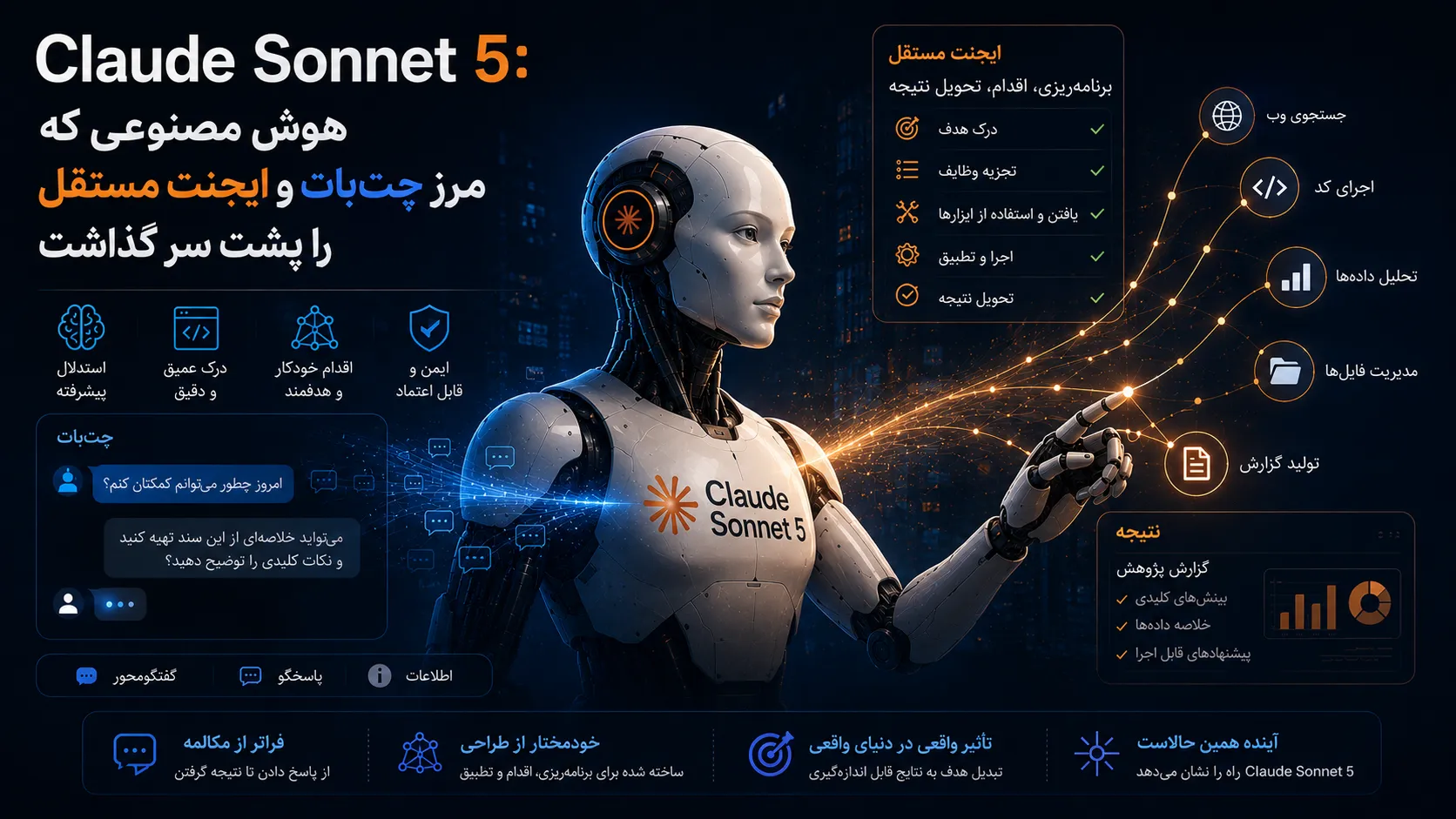
در سالهای اخیر، مدلهای هوش مصنوعی از نقش یک چتبات ساده فراتر رفتهاند. اکنون کاربران انتظار دارند دستیارهای هوشمند نهتنها به سؤالات پاسخ دهند، بلکه برنامهریزی کنند، از ابزارهای مختلف استفاده کنند، مرورگر را کنترل کنند و وظایف پیچیده را از ابتدا تا انتها انجام دهند. Claude Sonnet 5، جدیدترین مدل آنتروپیک، دقیقاً با همین هدف توسعه یافته و مرز میان چتباتهای سنتی و عاملهای هوشمند (AI Agents) را بیش از هر زمان دیگری کمرنگ کرده است.
این مدل در ۳۰ ژوئن ۲۰۲۶ معرفی شد و نه تنها یک آپگرید ساده نسبت به Sonnet 4.6 است، بلکه نمایانگر یک جهش مفهومی است: گذر از چتبات به ایجنت مستقل. آنچه چند ماه پیش تنها از مدلهای گرانقیمتتر مثل Opus 4.8 برمیآمد، حالا با قیمت Sonnet در دسترس است.
اگر با دنیای هوش مصنوعی آشنا هستید، میدانید که این یک پیشرفت کوچک نیست — این تغییر قواعد بازی است.
Sonnet 5 کجای خانواده کلود قرار دارد؟
- Haiku: کوچک، سریع، اقتصادی — برای وظایف ساده و حجم بالا
- Sonnet: تعادل قدرت و هزینه — پیشنهاد اول برای اکثر کاربردها
- Opus / Fable / Mythos: قدرتمندترین مدلها برای سختترین وظایف
Sonnet 5 جدیدترین نماینده رده میانی است که جای Sonnet 4.6 را میگیرد. اما این جانشینی تنها یک ارتقای فنی نیست.
برای اولین بار در تاریخ خانواده Sonnet، این مدل در برخی بنچمارکهای مهم — بهویژه کار دانشمحور حرفهای — با Opus 4.8 برابری میکند یا حتی از آن پیشی میگیرد. آنتروپیک صراحتاً میگوید: Sonnet 5 برای اکثر توسعهدهندگان و کسبوکارها باید نقطه شروع پیشفرض باشد.
پنج قابلیت اصلی که Sonnet 5 را متفاوت میکند
۱. ایجنتیک واقعی: از پاسخ دادن به کار کردن
مهمترین ویژگی Sonnet 5 این نیست که چقدر خوب جواب میدهد — بلکه این است که چقدر خوب کار میکند. تفاوت ظریف اما بنیادی است.
یک چتبات سنتی: «برو این کارها را انجام بده.» ← «باشه، اینجاست که باید انجام دهی.»
یک ایجنت واقعی: «این کار را انجام بده.» ← [برنامهریزی] ← [استفاده از ابزار] ← [بررسی خروجی] ← [تصحیح اشتباه] ← [اتمام کار]
Sonnet 5 برای
گردش کارهای چندمرحلهای طراحی شده که نیاز به انسجام پایدار و تصمیمگیری تطبیقی دارند. مدل میتواند برنامهریزی کند، ابزارها را انتخاب کند، بازخورد محیطی دریافت کند و بر اساس آن مسیر را تنظیم کند. این همان چیزی است که در مباحث
هوش مصنوعی ایجنتیک به آن میپردازیم: توانایی عمل مستقل و پیوسته در دنیای واقعی.
آنتروپیک میگوید: «Sonnet 5 میتواند برنامهریزی کند، از ابزارهایی مثل مرورگر و ترمینال استفاده کند و در سطحی مستقل کار کند که چند ماه پیش نیازمند مدلهای بزرگتر و گرانقیمتتر بود.»
۲. کنترل کامپیوتر و مرورگر: هوشی که «میبیند» و «کلیک میکند»
Sonnet 5 میتواند مرورگر وب را مستقیماً کنترل کند: صفحات را باز کند، فرمها پر کند، اطلاعات جمعآوری کند، رقبا را آنالیز کند، فرایندهای onboarding مشتریان را خودکار کند و حتی جریانهای کاری خرید و تدارکات را انجام دهد.
روی معیار OSWorld-Verified که وظایف واقعی کامپیوتری را شبیهسازی میکند، Sonnet 5 به ۸۱.۲٪ رسیده است. این عدد را در نظر بگیرید: Sonnet 4.6 روی ۷۸.۵٪ بود و Opus 4.8 بهعنوان قدرتمندترین مدل ۸۳.۴٪ دارد. Sonnet 5 فقط ۲.۲ درصد از بهترین مدل آنتروپیک فاصله دارد.
این یعنی برای ایجنتهای مرورگر در محیطهای تجاری، Sonnet 5 میتواند پایه محکم و مقرونبهصرفهای باشد.
۳. کدنویسی پیشرفته: از تشخیص باگ تا تست، بدون دستور اضافه
در Terminal-Bench 2.1 که کدنویسی واقعی در محیط ترمینال را ارزیابی میکند، Sonnet 5 از ۶۷٪ Sonnet 4.6 به ۸۰.۴٪ رسیده — یک پیشرفت ۱۳.۴ درصدی که برای توسعهدهندگانی که ایجنتهای CLI-based میسازند، کاملاً ملموس است.
یکی از تسترهای واقعی این سناریو را گزارش داده: «از Claude Sonnet 5 خواستم یک باگ را بررسی کند. بدون هیچ دستوری اضافی، خودش یک تست تولید کرد که مشکل را reproducible کرد، باگ را رفع نمود، و سپس تست را برگرداند تا ثابت کند بدون fix باگ برمیگردد — همه اینها در یک پاس واحد.»
اگر با
Claude Code آشنایی دارید، Sonnet 5 تجربه کدنویسی اتوماتیک را به سطح کاملاً جدیدی میرساند. روی
SWE-bench Verified (معیار استاندارد کدنویسی) نیز به
۷۲.۷٪ رسیده در مقابل ۶۲.۳٪ Sonnet 4.6 — پیشرفت ۱۰.۴ درصدی.
۴. پنجره زمینه یک میلیون توکن: حافظهای که کل پروژه را در بر میگیرد
Sonnet 5 با پنجره زمینه یک میلیون توکن عرضه شده. برای اینکه این عدد ملموستر شود: یک میلیون توکن تقریباً برابر با ۷۵۰ هزار کلمه است — یا یک کتاب ۲۵۰۰ صفحهای. در عمل این یعنی:
- میتوانید کل codebase یک پروژه بزرگ نرمافزاری را به مدل بدهید
- میتوانید ماهها تاریخچه ایمیل یا اسناد را بهطور همزمان تحلیل کنید
- میتوانید گزارشهای مالی چند ساله را در یک پرسش واحد بررسی کنید
۵. تفکر تطبیقی همیشه فعال (Adaptive Thinking)
یکی از تغییرات معماری مهم Sonnet 5 این است که adaptive thinking بهصورت پیشفرض فعال است — یعنی مدل خودش تشخیص میدهد چه زمانی نیاز به تفکر عمیقتر دارد و چه زمانی میتواند سریع پاسخ دهد. این با نسلهای قبلی که تفکر عمیق باید بهصورت دستی فعال میشد تفاوت مهمی دارد.
توسعهدهندگان میتوانند سطح effort را بهصورت دستی تنظیم کنند:
- low: برای وظایف ساده با سرعت بالا
- medium: تعادل سرعت و دقت
- high (پیشفرض): برای اکثر وظایف تخصصی
- xhigh: برای پیچیدهترین وظایف با حداکثر استدلال
بنچمارکها: Sonnet 5 در مقابل Sonnet 4.6 و Opus 4.8
اعداد زیر از اعلامیه رسمی Anthropic گرفته شدهاند. هنوز ارزیابی مستقل شخصثالث برای تمام معیارها منتشر نشده، اما روندها قابل اطمینان هستند.
| معیار ارزیابی | Sonnet 5 | Sonnet 4.6 | Opus 4.8 |
| کدنویسی ایجنتیک (SWE-bench Pro) | 63.2٪ | 58.1٪ | 69.2٪ |
| استفاده از کامپیوتر (OSWorld-Verified) | 81.2٪ | 78.5٪ | 83.4٪ |
| ترمینال و CLI (Terminal-Bench 2.1) | 80.4٪ | 67.0٪ | 82.7٪ |
| آزمون دانش سخت — با ابزار (HLE) | 57.4٪ | 46.8٪ | 57.9٪ |
| کدنویسی استاندارد (SWE-bench Verified) | 72.7٪ | 62.3٪ | 79.4٪ |
| کار دانشمحور (GDPval-AA v2) | 1,618 ✅ | — | 1,615 |
چند نکته کلیدی از این جدول:
یک: Sonnet 5 در تمام معیارها از Sonnet 4.6 بهتر است — هیچ استثنایی وجود ندارد.
دو: در HLE با ابزار (57.4٪ در برابر 57.9٪)، Sonnet 5 عملاً با Opus 4.8 برابر است — این یک تعادل آماری است.
سه: در GDPval-AA v2 که کار دانشمحور حرفهای را ارزیابی میکند، Sonnet 5 با ۱,۶۱۸ از Opus 4.8 با ۱,۶۱۵ جلو میزند. این نخستین باری است که یک مدل Sonnet در یک بنچمارک مهم از Opus پیشی میگیرد.
چهار: «اثر ابزار» یک درس مهم است: وقتی ابزارها در حلقه کار هستند، فاصله Sonnet 5 از Opus 4.8 بهشدت کاهش مییابد. وقتی ابزاری وجود ندارد (HLE بدون ابزار)، Opus 4.8 با ۴۹.۸٪ در برابر ۴۳.۲٪ Sonnet 5 برتری خود را حفظ میکند.
چهار سناریوی واقعی که قدرت Sonnet 5 را لمسپذیر میکنند
سناریو ۱: مدیریت CRM خودکار — Salesforce
یک کسبوکار از Sonnet 5 خواست دو کار موازی انجام دهد: اول، حسابهای مشتریان را در Salesforce بر اساس سطحبندی جدید آپدیت کند. دوم، یک ایمیل اطلاعرسانی برای مشتریان سازمانی درباره لانچ محصول ارسال کند.
Sonnet 5 این وظیفه دوقسمتی را از ابتدا تا انتها به پایان رساند. طبق گزارش آنتروپیک، این کار قبلاً در نیمهراه متوقف میشد — مشکل کلاسیک مدلهای میانرده که در وسط یک workflow پیچیده از مسیر خارج میشدند.
سناریو ۲: بررسی Pull Request — Lovable
Lovable پلتفرم ساخت نرمافزار با میلیونها کاربر است. آنها Sonnet 5 را در برابر دهها pull request پیچیده آزمایش کردند. مدل هر یک را تا نتیجه نهایی با تست و تأیید مستقل به اتمام رساند — مهندسان آزاد شدند تا بر قضاوت و تصمیمگیری نهایی تمرکز کنند.
به گفته بنیانگذار Lovable: «در Lovable، ابزارهای قدرتمند را در دست میلیونها سازنده میگذاریم. مدلی که میداند کِی 'نه' بگوید به همان اندازه مهم است که مدلی که میداند چطور بسازد.»
سناریو ۳: تحلیل داده زنده — ClickHouse
ClickHouse از Sonnet 5 برای ایجنتهای تحلیل داده استفاده میکند که اطلاعات زنده را در لحظه بررسی میکنند و بینشهای کاربردی تولید میکنند.
نتیجه ملموس: مدل در «گامهای استدلال کوتاهتر» کار میکند و سرعت رسیدن کاربران به پاسخ بهشکل محسوس افزایش یافته. در تحلیل دادههای مالی یا عملیاتی که هر ثانیه تأخیر هزینه دارد، این تفاوت واقعی است.
سناریو ۴: گردش کار بیمه — Pace
Pace ایجنتهای مبتنی بر Sonnet 5 را برای گردش کارهای عملیاتی اجرا میکند: پذیرش درخواست بیمه، پردازش خسارت اولیه (FNOL) و گزارشهای زیان — روی سیستمهای داخلی که تیمهای عملیاتی از آنها استفاده میکنند.
Sonnet 5 بهطور مداوم اقدام درست را انجام میدهد — و سریع. به گفته Pace: «این چیزی است که کار بیمه واقعی طلب میکند.»
این نوع استفادهها نشان میدهد که
آینده ایجنتهای هوش مصنوعی دیگر فقط یک مفهوم نظری نیست — بلکه امروز در سازمانهای واقعی در حال اجراست.
ایمنی: مدلی که «نه» گفتن را بلد است
یکی از ستونهای اصلی معماری آنتروپیک همیشه ایمنی بوده. Sonnet 5 در این زمینه پیشرفتهای مشخصی نسبت به Sonnet 4.6 دارد:
بهبودهای ایمنی Sonnet 5:
- نرخ هالوسیناسیون پایینتر: مدل کمتر اطلاعات نادرست تولید میکند
- سیکوفانسی کمتر: مدل کمتر صرفاً برای راضیکردن کاربر با او موافق میشود، حتی وقتی کاربر اشتباه میکند
- مقاومت بیشتر در برابر تزریق پرامپت: وقتی ایجنت وبسایتهای خارجی را بررسی میکند، محتوای مخرب آن سایتها نمیتواند رفتار مدل را تغییر دهد
- رد تمیزتر درخواستهای مخرب: بهجای مدیریت مبهم، بهطور قاطع و واضح درخواستهای مضر را رد میکند
- پادمانهای سایبری پیشفرض: یک لایه حفاظتی که استفادههای خطرناک سایبری را در لحظه تشخیص میدهد و مسدود میکند
محدودیتهای صادقانهای که آنتروپیک اعلام کرده:
Sonnet 5 از نظر رفتارهای ناهماهنگ هنوز از
Opus 4.8 و
Claude Mythos Preview کمی ضعیفتر است. همچنین توانایی انجام وظایف سایبری خطرناک در Sonnet 5 بهطور عمدی پایینتر از Opus نگه داشته شده — این یک طراحی آگاهانه است، نه نقص. برای آشنایی با مدلهای پیشرفتهتر آنتروپیک میتوانید
مقاله Claude Mythos و Fable را مطالعه کنید.
قیمتگذاری و نقشه دسترسی
| مدل | ورودی (هر میلیون توکن) | خروجی (هر میلیون توکن) | توضیح |
| Sonnet 5 — مقدماتی (تا ۳۱ اوت ۲۰۲۶) | $2 | $10 | فرصت محدود |
| Sonnet 5 — استاندارد (پس از ۳۱ اوت) | $3 | $15 | — |
| Sonnet 4.6 | $3 | $15 | نسل قبلی |
| Opus 4.8 | $5 | $25 | مدل پرچمدار |
توجه مهم — tokenizer جدید: Sonnet 5 از یک tokenizer بهروز شده استفاده میکند. همان متن ممکن است به ۱ تا ۱.۳۵ برابر توکن بیشتر تبدیل شود. آنتروپیک قیمت مقدماتی را طوری تنظیم کرده که این تغییر از نظر هزینه تقریباً خنثی باشد. همچنین:
- تا ۹۰٪ صرفهجویی با prompt caching
- تا ۵۰٪ صرفهجویی با batch processing
کجا میتوان دسترسی داشت؟
- Claude.ai: مدل پیشفرض برای کاربران Free و Pro — هماکنون فعال است
- کاربران Max، Team، Enterprise: در دسترس است
- Claude API: با model string به صورت
claude-sonnet-5
- Claude Code: برای گردش کارهای کدنویسی ایجنتیک
- Amazon Bedrock، Google Cloud، Microsoft Foundry: برای سازمانها
- Cursor و VS Code: برای توسعهدهندگان نرمافزار
Sonnet 5 یا Opus 4.8؟ راهنمای انتخاب واقعبینانه
این سؤال مهمی است که بسیاری از توسعهدهندگان و مدیران فنی با آن روبهرو میشوند:
Sonnet 5 را انتخاب کنید اگر:
- گردش کارهای ایجنتیک با ابزار (مرورگر، ترمینال، API) دارید
- کدنویسی، debug، یا code review اتوماتیک انجام میدهید
- حجم بالا دارید و هزینه اهمیت دارد
- اکثر وظایف حرفهای روزانه را خودکار میکنید
- پروژههای نرمافزاری بزرگ با پنجره زمینه وسیع دارید
Opus 4.8 را انتخاب کنید اگر:
- به استدلال خالص بدون ابزار در بالاترین سطح نیاز دارید (HLE بدون ابزار: Opus 4.8 = ۴۹.۸٪ در برابر Sonnet 5 = ۴۳.۲٪)
- کارهای امنیت سایبری مجاز انجام میدهید که نیاز به تواناییهای بالاتر دارد
- دقت در سختترین وظایف agentic search اهمیت حیاتی دارد
- هزینه اولویت ثانویه است
نکته کلیدی: با ابزار در حلقه، فاصله این دو مدل بهشدت کم میشود. اگر workflow شما ابزار استفاده میکند، Sonnet 5 در اکثر موارد عملکردی نزدیک به Opus 4.8 دارد — با حدود نیمی از هزینه.
جایگاه Sonnet 5 در رقابت بزرگ هوش مصنوعی
Sonnet 5 بخشی از یک موج گستردهتر در صنعت هوش مصنوعی است. OpenAI با GPT-5.6 Sol روی تواناییهای چندعاملی تمرکز کرده و Google با Gemini 3.5 Flash ابزاری معرفی کرده که «برنامهریزی، ساخت و تکرار» را بر گفتگوی صرف ترجیح میدهد.
به گفته TechCrunch، Sonnet 5 «تأییدی است که توانایی ایجنتیک خط پایه انتظارات در هر سطح قیمتی شده.» این جمله اهمیت زیادی دارد: نبرد هوش مصنوعی دیگر صرفاً بر سر «چه کسی بنچمارک بهتری دارد» نیست، بلکه بر سر «چه کسی میتواند کارهای واقعی را با هزینه کمتر و قابلیت اطمینان بیشتر انجام دهد» است.
برتری کلیدی آنتروپیک در اینجاست: Sonnet 5 ثابت کرد که نیازی نیست بین قدرت و مقرونبهصرفه بودن یکی را انتخاب کنید — حداقل وقتی ابزارها در دسترس هستند. این همان جملهای است که صنعت هوش مصنوعی مدتهاست منتظر شنیدنش بود.
نتیجهگیری
Claude Sonnet 5 نقطه عطفی است که نشان میدهد هوش مصنوعی از پاسخ دادن به انجام دادن رسیده است. مدلی که نه فقط پاسخ میدهد، بلکه برنامهریزی میکند، کامپیوتر را کنترل میکند، کد مینویسد و اشتباهاتش را بدون راهنمایی خارجی تصحیح میکند — همه اینها با قیمتی که اکثر سازمانها میتوانند توجیه اقتصادی برای آن داشته باشند.
اگر میخواهید همین امروز شروع کنید، کافی است به claude.ai مراجعه کنید — Sonnet 5 مدل پیشفرض برای کاربران Free و Pro است. برای توسعهدهندگان، تنها کاری که باید بکنید تغییر model string به claude-sonnet-5 است.
عصر ایجنتهای هوش مصنوعی رسیده است — و Sonnet 5 یکی از در دسترسترین و قدرتمندترین نقاط ورود به این عصر است.



 مدلهای زبانی و ایجنتها
 مدلهای زبانی و ایجنتها
 مدلهای زبانی و ایجنتها
 مدلهای زبانی و ایجنتها
 مدلهای زبانی و ایجنتها
 مدلهای زبانی و ایجنتها